

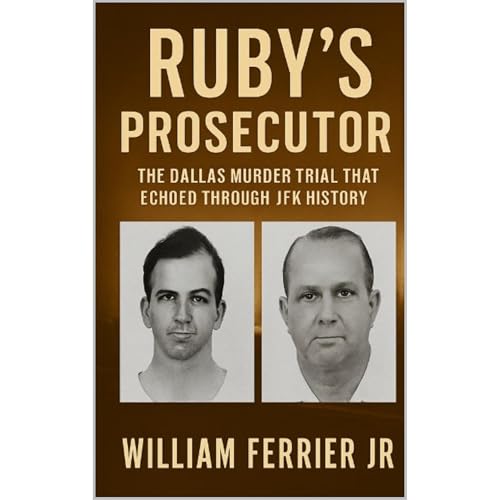
Ruby’s Prosecutor
The Dallas Murder Trial that Echoed Through JFK History
No se pudo agregar al carrito
Add to Cart failed.
Error al Agregar a Lista de Deseos.
Error al eliminar de la lista de deseos.
Error al añadir a tu biblioteca
Error al seguir el podcast
Error al dejar de seguir el podcast
$0.00 por los primeros 30 días

Ruby’s Prosecutor
Compra ahora por $3.99
-
Narrado por:
-
Virtual Voice

Este título utiliza narración de voz virtual
Ruby’s Prosecutor thrusts you inside the courtroom no camera ever captured—and into the conscience of the man who tried the most infamous killer on live television.
Dallas, March 1964. Assistant District Attorney Jim Bowie stands a heartbeat from the nation’s rawest wound, determined to prove that nightclub owner Jack Ruby murdered Lee Harvey Oswald with cold intent. Every fact you remember from the headlines is here—captured shells, time-stamped Western Union slip, KRLD film flashing its muzzle-bloom frame by frame. So are the moments the public never saw: late-night strategy sessions, juror index cards smudged with nervous sweat, the appeal brief Bowie signs while the country rages about conspiracy.
But Bowie’s victory costs him more than the world suspects. Four decades later—long after the conviction is overturned and Ruby dies of cancer—he begins taping a private memoir for his granddaughter. Those cassettes unspool the secrets buried beneath the official record: a forgotten tip that might have sealed the basement door, a marriage strained by a city’s obsession, and a sealed envelope marked 2039 that could rewrite the narrative one last time.
Meticulously sourced from trial transcripts, newspaper archives, and newly released JFK files, Ruby’s Prosecutor marries documentary precision to the pulse of a legal thriller. Author William Ferrier Jr. lets the historical scaffolding stand—dates, exhibits, real-world reversals—then fills its hidden rooms with the imagination of a seasoned storyteller.
Fans of Killers of the Flower Moon, 11/22/63, and The Lincoln Lawyer will devour this intimate, propulsive journey from the smoke of Dealey Plaza to the silence of a final taped confession.
Justice was served in front of the cameras. Conscience rendered its verdict in the dark.