

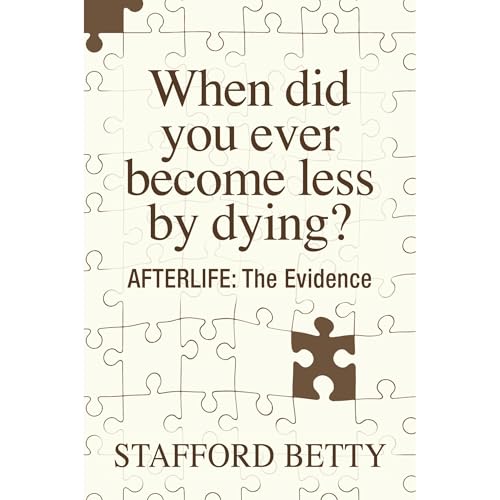
When Did You Ever Become Less By Dying? AFTERLIFE: The Evidence
No se pudo agregar al carrito
Solo puedes tener X títulos en el carrito para realizar el pago.
Add to Cart failed.
Por favor prueba de nuevo más tarde
Error al Agregar a Lista de Deseos.
Por favor prueba de nuevo más tarde
Error al eliminar de la lista de deseos.
Por favor prueba de nuevo más tarde
Error al añadir a tu biblioteca
Por favor intenta de nuevo
Error al seguir el podcast
Intenta nuevamente
Error al dejar de seguir el podcast
Intenta nuevamente
$0.00 por los primeros 30 días
POR TIEMPO LIMITADO
Obtén 3 meses por US$0.99 al mes
La oferta termina el 16 de diciembre de 2025 11:59pm PT.
 Exclusivo para miembros Prime: ¿Nuevo en Audible? Obtén 2 audiolibros gratis con tu prueba.
Solo $0.99 al mes durante los primeros 3 meses de Audible Premium Plus.
1 bestseller o nuevo lanzamiento al mes, tuyo para siempre.
Escucha todo lo que quieras de entre miles de audiolibros, podcasts y Originals incluidos.
Se renueva automáticamente por US$14.95 al mes después de 3 meses. Cancela en cualquier momento.
Elige 1 audiolibro al mes de nuestra inigualable colección.
Escucha todo lo que quieras de entre miles de audiolibros, Originals y podcasts incluidos.
Accede a ofertas y descuentos exclusivos.
Premium Plus se renueva automáticamente por $14.95 al mes después de 30 días. Cancela en cualquier momento.

When Did You Ever Become Less By Dying? AFTERLIFE: The Evidence
Narrado por:
Virtual Voice
Compra ahora por $9.99
-
Narrado por:
-
Virtual Voice
-
De:
-
Stafford Betty

Este título utiliza narración de voz virtual
Voz Virtual es una narración generada por computadora para audiolibros..
Todavía no hay opiniones