

Hard Science Fiction
Hard science fiction builds its stories on real science and technology, grounded in physics, astronomy, engineering, and other disciplines. Authors in this genre prioritize accuracy and plausibility, exploring what could actually happen given our current understanding of the universe. Expect detailed explanations of how spacecraft work, what life might look like on distant planets, or how future societies might solve complex technical problems. The appeal lies in intellectual rigor and imaginative realism. These stories challenge you to think deeply about humanity's relationship with science and the cosmos, offering speculation that feels both ambitious and achievable.
- Perfect fit if you love stories grounded in real physics, engineering, and plausible scientific extrapolation.
- Especially satisfying if you enjoy problem solving through technical detail and rigorous scientific accuracy.
- You may want to skip if dense technical explanations or slower pacing frustrate you.
Most popular hard science fiction audiobooks

-
2001
- A Space Odyssey
- De: Arthur C. Clarke
- Narrado por: Dick Hill
- Duración: 6 h y 42 m
- Versión completa
-
General12,493
-
Narración:10,890
-
Historia10,859
It has been 40 years since the publication of this classic science-fiction novel that changed the way we look at the stars and ourselves. From the savannas of Africa at the dawn of mankind to the rings of Saturn as man adventures to the outer rim of our solar system, 2001: A Space Odyssey is a journey unlike any other.
-
-
The Movie Makes More Sense Now
- De Douglas en 10-12-08
De: Arthur C. Clarke

-
Foundation
- De: Isaac Asimov
- Narrado por: Scott Brick
- Duración: 8 h y 38 m
- Versión completa
-
General19,365
-
Narración:16,689
-
Historia16,707
The first novel in Isaac Asimov’s classic science-fiction masterpiece, the Foundation series THE EPIC SAGA THAT INSPIRED THE APPLE TV+ SERIES FOUNDATION Nominated as one of America’s best-loved novels by PBS’s The Great American Read For twelve thousand years the Galactic Empire has...
-
-
An unabridged classic but "Psychologist?!!"
- De Roger Lee en 07-04-13
De: Isaac Asimov

-
Dune
- De: Frank Herbert
- Narrado por: Scott Brick, Orlagh Cassidy, Euan Morton, y otros
- Duración: 21 h y 2 m
- Versión completa
-
General126,593
-
Narración:109,054
-
Historia108,944
Here is the novel that will be forever considered a triumph of the imagination. Set on the desert planet Arrakis, Dune is the story of the boy Paul Atreides, who would become the mysterious man known as Maud'dib. He would avenge the traitorous plot against his noble family and would bring to fruition humankind's most ancient and unattainable dream.
-
-
This classic deserves better
- De Matthew Salvo en 01-07-21
De: Frank Herbert

-
Ender's Game
- Special 20th Anniversary Edition
- De: Orson Scott Card
- Narrado por: Stefan Rudnicki, Harlan Ellison, Gabrielle de Cuir
- Duración: 11 h y 57 m
- Versión completa
-
General44,604
-
Narración:33,542
-
Historia33,787
Why we think it’s a great listen: It’s easy to say that when it comes to sci-fi you either love it or you hate it. But with Ender’s Game, it seems to be you either love it or you love it.... The war with the Buggers has been raging for a hundred years, and the quest for the perfect general has been underway for almost as long. Enter Andrew "Ender" Wiggin, the result of decades of genetic experimentation.
-
-
6 titles in the series so far
- De Kapila Wimalaratne en 29-01-03
De: Orson Scott Card

-
Ringworld
- De: Larry Niven
- Narrado por: Tom Parker
- Duración: 11 h y 15 m
- Versión completa
-
General8,790
-
Narración:6,807
-
Historia6,831
Welcome to Ringworld, an intermediate step between Dyson Spheres and planets. The gravitational force created by a rotation on its axis of 770 miles per second means no need for a roof. Walls 1,000 miles high at each rim will let in the sun and prevent much air from escaping. Larry Niven's novel, Ringworld, is the winner of the 1970 Hugo Award for Best Novel, the 1970 Nebula Award for Best Novel, and the 1972 Ditmars, an Australian award for Best International Science Fiction.
-
-
Genuinely Creative
- De Kennet en 25-05-03
De: Larry Niven

-
Seveneves
- A Novel
- De: Neal Stephenson
- Narrado por: Mary Robinette Kowal, Will Damron
- Duración: 31 h y 55 m
- Versión completa
-
General25,780
-
Narración:23,552
-
Historia23,545
A catastrophic event renders the earth a ticking time bomb. In a feverish race against the inevitable, nations around the globe band together to devise an ambitious plan to ensure the survival of humanity far beyond our atmosphere, in outer space.
-
-
Odd narrator choice
- De Josh Mitchell en 30-05-15
De: Neal Stephenson
-
2001
- A Space Odyssey
- De: Arthur C. Clarke
- Narrado por: Dick Hill
- Duración: 6 h y 42 m
- Versión completa
-
General12,493
-
Narración:10,890
-
Historia10,859
It has been 40 years since the publication of this classic science-fiction novel that changed the way we look at the stars and ourselves. From the savannas of Africa at the dawn of mankind to the rings of Saturn as man adventures to the outer rim of our solar system, 2001: A Space Odyssey is a journey unlike any other.
-
-
The Movie Makes More Sense Now
- De Douglas en 10-12-08
De: Arthur C. Clarke
-
Foundation
- De: Isaac Asimov
- Narrado por: Scott Brick
- Duración: 8 h y 38 m
- Versión completa
-
General19,365
-
Narración:16,689
-
Historia16,707
The first novel in Isaac Asimov’s classic science-fiction masterpiece, the Foundation series THE EPIC SAGA THAT INSPIRED THE APPLE TV+ SERIES FOUNDATION Nominated as one of America’s best-loved novels by PBS’s The Great American Read For twelve thousand years the Galactic Empire has...
-
-
An unabridged classic but "Psychologist?!!"
- De Roger Lee en 07-04-13
De: Isaac Asimov
-
Dune
- De: Frank Herbert
- Narrado por: Scott Brick, Orlagh Cassidy, Euan Morton, y otros
- Duración: 21 h y 2 m
- Versión completa
-
General126,593
-
Narración:109,054
-
Historia108,944
Here is the novel that will be forever considered a triumph of the imagination. Set on the desert planet Arrakis, Dune is the story of the boy Paul Atreides, who would become the mysterious man known as Maud'dib. He would avenge the traitorous plot against his noble family and would bring to fruition humankind's most ancient and unattainable dream.
-
-
This classic deserves better
- De Matthew Salvo en 01-07-21
De: Frank Herbert
-
Ender's Game
- Special 20th Anniversary Edition
- De: Orson Scott Card
- Narrado por: Stefan Rudnicki, Harlan Ellison, Gabrielle de Cuir
- Duración: 11 h y 57 m
- Versión completa
-
General44,604
-
Narración:33,542
-
Historia33,787
Why we think it’s a great listen: It’s easy to say that when it comes to sci-fi you either love it or you hate it. But with Ender’s Game, it seems to be you either love it or you love it.... The war with the Buggers has been raging for a hundred years, and the quest for the perfect general has been underway for almost as long. Enter Andrew "Ender" Wiggin, the result of decades of genetic experimentation.
-
-
6 titles in the series so far
- De Kapila Wimalaratne en 29-01-03
De: Orson Scott Card
-
Ringworld
- De: Larry Niven
- Narrado por: Tom Parker
- Duración: 11 h y 15 m
- Versión completa
-
General8,790
-
Narración:6,807
-
Historia6,831
Welcome to Ringworld, an intermediate step between Dyson Spheres and planets. The gravitational force created by a rotation on its axis of 770 miles per second means no need for a roof. Walls 1,000 miles high at each rim will let in the sun and prevent much air from escaping. Larry Niven's novel, Ringworld, is the winner of the 1970 Hugo Award for Best Novel, the 1970 Nebula Award for Best Novel, and the 1972 Ditmars, an Australian award for Best International Science Fiction.
-
-
Genuinely Creative
- De Kennet en 25-05-03
De: Larry Niven
-
Seveneves
- A Novel
- De: Neal Stephenson
- Narrado por: Mary Robinette Kowal, Will Damron
- Duración: 31 h y 55 m
- Versión completa
-
General25,780
-
Narración:23,552
-
Historia23,545
A catastrophic event renders the earth a ticking time bomb. In a feverish race against the inevitable, nations around the globe band together to devise an ambitious plan to ensure the survival of humanity far beyond our atmosphere, in outer space.
-
-
Odd narrator choice
- De Josh Mitchell en 30-05-15
De: Neal Stephenson

-
The Forever War
- De: Joe Haldeman
- Narrado por: George Wilson
- Duración: 9 h y 18 m
- Versión completa
-
General8,513
-
Narración:7,175
-
Historia7,192
William Mandella is a soldier in Earth's elite brigade. As the war against the Taurans sends him from galaxy to galaxy, he learns to use protective body shells and sophisticated weapons. He adapts to the cultures and terrains of distant outposts. But with each month in space, years are passing on Earth. Where will he call home when (and if) the Forever War ends?
-
-
A classic.
- De John en 24-09-08
De: Joe Haldeman

-
Blindsight
- De: Peter Watts
- Narrado por: T. Ryder Smith
- Duración: 11 h y 47 m
- Versión completa
-
General4,043
-
Narración:3,490
-
Historia3,483
Set in 2082, Peter Watts' Blindsight is fast-moving, hard SF that pulls readers into a futuristic world where a mind-bending alien encounter is about to unfold. After the Firefall, all eyes are locked heavenward as a team of specialists aboard the self-piloted spaceship Theseus hurtles outbound to intercept an unknown intelligence.
-
-
Gothic Horror Hard Science Fiction
- De Doug D. Eigsti en 24-06-15
De: Peter Watts

-
A Fire Upon the Deep
- De: Vernor Vinge
- Narrado por: Peter Larkin
- Duración: 21 h y 37 m
- Versión completa
-
General3,317
-
Narración:2,821
-
Historia2,829
A Fire Upon the Deep is the big, breakout book that fulfills the promise of Vinge's career to date: a gripping tale of galactic war told on a cosmic scale. Thousands of years hence, many races inhabit a universe where a mind's potential is determined by its location in space, from superintelligent entities in the Transcend, to the limited minds of the Unthinking Depths, where only simple creatures and technology can function.
-
-
What a wild, wacky, awesome book!
- De Noah Smith en 20-06-10
De: Vernor Vinge

-
The Three-Body Problem
- De: Cixin Liu, Ken Liu - translator
- Narrado por: Luke Daniels
- Duración: 13 h y 26 m
- Versión completa
-
General31,340
-
Narración:27,441
-
Historia27,444
The inspiration for the Netflix series 3 Body Problem! WINNER OF THE HUGO AWARD FOR BEST NOVEL Over 1 million copies sold in North America “A mind-bending epic.”—The New York Times “War of the Worlds for the 21st century.”—The Wall Street Journal “Fascinating.”—TIME ...
-
-
They create a computer using a 30 million man Army
- De Josh P en 07-12-14
De: Cixin Liu, y otros

-
Childhood's End
- De: Arthur C. Clarke
- Narrado por: Eric Michael Summerer, Robert J. Sawyer - introduction
- Duración: 7 h y 43 m
- Versión completa
-
General10,058
-
Narración:8,409
-
Historia8,461
The Overlords appeared suddenly over every city - intellectually, technologically, and militarily superior to humankind. Benevolent, they made few demands: unify earth, eliminate poverty, and end war. With little rebellion, humankind agreed, and a golden age began.
-
-
Food for Thought
- De Kindle Customer en 17-11-08
De: Arthur C. Clarke

-
The Gods Themselves
- De: Isaac Asimov
- Narrado por: Scott Brick
- Duración: 11 h y 26 m
- Versión completa
-
General2,252
-
Narración:1,999
-
Historia2,001
In the twenty-second century Earth obtains limitless, free energy from a source science little understands: an exchange between Earth and a parallel universe, using a process devised by the aliens. But even free energy has a price. The transference process itself will eventually lead to the...
-
-
Almost Didn't Make It Through
- De C.P.G. en 28-05-16
De: Isaac Asimov
- Arthur C. Clarke - 2001: A Space Odyssey
- Isaac Asimov - Foundation
- Frank Herbert - Dune
- Orson Scott Card - Ender's Game
- Larry Niven - Ringworld
- Neal Stephenson - Seveneves
- Joe Haldeman - The Forever War
- Peter Watts - Blindsight
- Vernor Vinge - A Fire Upon the Deep
- Cixin Liu - The Three-Body Problem
- Arthur C. Clarke - Childhood's End
- Isaac Asimov - The Gods Themselves
- Poul Anderson - Tau Zero
- Frederik Pohl - Gateway
- Robert L. Forward - Dragon's Egg
- Neal Stephenson - Anathem
How hard science fiction evolved
Hard science fiction emerged as a distinct tradition in the mid-20th century, when writers began treating scientific principles not just as backdrop but as the foundation of their storytelling. The genre matured alongside the Space Age, drawing inspiration from real breakthroughs in rocketry, computing, and molecular biology. Over time, it has expanded beyond tales of exploration to include stories about climate engineering, artificial intelligence, and the ethical dilemmas that arise when technology outpaces our ability to control it. Today's hard SF continues to evolve with scientific discovery, incorporating newer fields like quantum mechanics and synthetic biology into narratives that feel both speculative and grounded.
Within the genre, you'll find different approaches to how science shapes the story. Some works focus on problem solving, where characters must use ingenuity and technical knowledge to survive hostile environments or repair failing systems. Others explore first contact scenarios, imagining how humanity might communicate with alien life or adapt to radically different ecosystems. Still others examine the long-term consequences of technological change, tracing how innovations ripple through economies, governments, and daily life across generations. The common thread is a commitment to showing the work, making the science integral rather than incidental.
Hard science fiction often intersects with military SF, space opera, and near-future thrillers, borrowing elements while maintaining its focus on plausibility. Characters tend to be scientists, engineers, astronauts, or colonists, people whose expertise becomes central to the plot. The tone can range from optimistic visions of human ingenuity to cautionary tales about unintended consequences. Many stories unfold at a deliberate pace, allowing time for technical detail and reflection, which makes them well suited to listening during commutes or quiet evenings when you can settle in and absorb the ideas.
Start here: hard science fiction essentials

-
The Martian
- De: Andy Weir
- Narrado por: Wil Wheaton
- Duración: 10 h y 59 m
- Versión completa
-
General42,660
-
Narración:38,014
-
Historia37,910
Six days ago, astronaut Mark Watney became one of the first people to walk on Mars. Now, he's sure he'll be the first person to die there. After a dust storm nearly kills him and forces his crew to evacuate while thinking him dead, Mark finds himself stranded and completely alone with no way to even signal Earth that he’s alive - and even if he could get word out, his supplies would be gone long before a rescue could arrive. But Mark isn't ready to give up yet.
-
-
I love Wil Wheaton but why not R. C. Bray?
- De L. Newman en 11-01-20
De: Andy Weir

-
Contact
- De: Carl Sagan
- Narrado por: Laurel Lefkow
- Duración: 14 h y 45 m
- Versión completa
-
General5,863
-
Narración:5,276
-
Historia5,276
The Pulitzer Prize-winning author of Cosmos and renowned astronomer Carl Sagan’s international bestseller about the discovery of an advanced civilization in the depths of space remains the “greatest adventure of all time” (Associated Press). The future is here…in an adventure of cosmic...
-
-
Technical problems with this recording - skips...
- De Matt en 28-11-12
De: Carl Sagan

-
Rendezvous with Rama
- De: Arthur C. Clarke
- Narrado por: Peter Ganim, Robert J. Sawyer - introduction
- Duración: 9 h y 4 m
- Versión completa
-
General10,918
-
Narración:9,324
-
Historia9,330
At first, only a few things are known about the celestial object that astronomers dub Rama. It is huge, weighing more than ten trillion tons. And it is hurtling through the solar system at inconceivable speed. Then a space probe confirms the unthinkable: Rama is no natural object. It is, incredibly, an interstellar spacecraft. Space explorers and planet-bound scientists alike prepare for mankind's first encounter with alien intelligence.
-
-
Domo Arigato Mr. Roboto
- De Fredrik Pettersen en 03-08-09
De: Arthur C. Clarke

-
The Moon Is a Harsh Mistress
- De: Robert A. Heinlein
- Narrado por: Lloyd James
- Duración: 14 h y 12 m
- Versión completa
-
General11,183
-
Narración:9,194
-
Historia9,211
In what is considered one of Heinlein's most hair-raising, thought-provoking, and outrageous adventures, the master of modern science fiction tells the strange story of an even stranger world. It is 21st-century Luna, a harsh penal colony where a revolt is plotted between a bashful computer and a ragtag collection of maverick humans, a revolt that goes beautifully until the inevitable happens. But that's the problem with the inevitable: it always happens.
-
-
Heinlein's Masterpiece
- De Peter en 04-12-06
-
The Martian
- De: Andy Weir
- Narrado por: Wil Wheaton
- Duración: 10 h y 59 m
- Versión completa
-
General42,660
-
Narración:38,014
-
Historia37,910
Six days ago, astronaut Mark Watney became one of the first people to walk on Mars. Now, he's sure he'll be the first person to die there. After a dust storm nearly kills him and forces his crew to evacuate while thinking him dead, Mark finds himself stranded and completely alone with no way to even signal Earth that he’s alive - and even if he could get word out, his supplies would be gone long before a rescue could arrive. But Mark isn't ready to give up yet.
-
-
I love Wil Wheaton but why not R. C. Bray?
- De L. Newman en 11-01-20
De: Andy Weir
-
Contact
- De: Carl Sagan
- Narrado por: Laurel Lefkow
- Duración: 14 h y 45 m
- Versión completa
-
General5,863
-
Narración:5,276
-
Historia5,276
The Pulitzer Prize-winning author of Cosmos and renowned astronomer Carl Sagan’s international bestseller about the discovery of an advanced civilization in the depths of space remains the “greatest adventure of all time” (Associated Press). The future is here…in an adventure of cosmic...
-
-
Technical problems with this recording - skips...
- De Matt en 28-11-12
De: Carl Sagan
-
Rendezvous with Rama
- De: Arthur C. Clarke
- Narrado por: Peter Ganim, Robert J. Sawyer - introduction
- Duración: 9 h y 4 m
- Versión completa
-
General10,918
-
Narración:9,324
-
Historia9,330
At first, only a few things are known about the celestial object that astronomers dub Rama. It is huge, weighing more than ten trillion tons. And it is hurtling through the solar system at inconceivable speed. Then a space probe confirms the unthinkable: Rama is no natural object. It is, incredibly, an interstellar spacecraft. Space explorers and planet-bound scientists alike prepare for mankind's first encounter with alien intelligence.
-
-
Domo Arigato Mr. Roboto
- De Fredrik Pettersen en 03-08-09
De: Arthur C. Clarke
-
The Moon Is a Harsh Mistress
- De: Robert A. Heinlein
- Narrado por: Lloyd James
- Duración: 14 h y 12 m
- Versión completa
-
General11,183
-
Narración:9,194
-
Historia9,211
In what is considered one of Heinlein's most hair-raising, thought-provoking, and outrageous adventures, the master of modern science fiction tells the strange story of an even stranger world. It is 21st-century Luna, a harsh penal colony where a revolt is plotted between a bashful computer and a ragtag collection of maverick humans, a revolt that goes beautifully until the inevitable happens. But that's the problem with the inevitable: it always happens.
-
-
Heinlein's Masterpiece
- De Peter en 04-12-06
The Martian by Andy Weir follows astronaut Mark Watney, stranded alone on Mars after his crew evacuates during a storm. Watney must use his botanical and engineering knowledge to survive until rescue becomes possible. Weir builds the story around actual science, showing how someone might grow food, create water, and solve life-threatening problems using only the equipment from a Mars mission. The book explains each challenge and solution clearly, making complex science accessible without talking down to readers.
Contact by Carl Sagan centers on astronomer Ellie Arroway, who detects an unmistakable signal from the star Vega. The message contains instructions for building a mysterious machine, sparking global debate about science, faith, and humanity's place in the cosmos. Sagan, a renowned scientist himself, explores how first contact might actually unfold through political negotiations, scientific verification, and public reaction. The story balances big ideas about existence with a personal journey, making it approachable for anyone curious about what meeting alien intelligence could really mean.
Rendezvous with Rama by Arthur C. Clarke begins when astronomers spot a massive cylindrical object entering our solar system. A crew is dispatched to explore the artifact before it swings past the sun and disappears forever. Clarke focuses on the methodical process of discovery as the team maps the interior, encounters strange phenomena, and tries to understand the purpose of this alien construct. The book reads like a genuine scientific expedition, emphasizing observation and deduction over action, perfect for readers who enjoy mysteries solved through careful investigation.
The Moon Is a Harsh Mistress by Robert A. Heinlein takes place in a lunar penal colony where computer technician Mannie becomes involved in a revolution against Earth's control. Heinlein weaves detailed speculation about lunar living, from ice mining to low gravity agriculture, into a story about political independence. The book explores practical questions about how a moon society would function economically and socially. Heinlein presents his engineering background through everyday details of life on the moon, making the setting feel lived in and real.
Stories that celebrate human ingenuity
-
Project Hail Mary
- De: Andy Weir
- Narrado por: Ray Porter
- Duración: 16 h y 10 m
- Versión completa
-
General267,693
-
Narración:248,557
-
Historia248,006
Ryland Grace is the sole survivor on a desperate, last-chance mission - and if he fails, humanity and the Earth itself will perish. Except that right now, he doesn't know that. He can't even remember his own name, let alone the nature of his assignment or how to complete it. All he knows is that he's been asleep for a very, very long time. And he's just been awakened to find himself millions of miles from home, with nothing but two corpses for company.
-
-
Bazinga
- De Davidgonzalezsr en 04-05-21
De: Andy Weir

-
Leviathan Wakes
- De: James S. A. Corey
- Narrado por: Jefferson Mays
- Duración: 20 h y 56 m
- Versión completa
-
General33,780
-
Narración:30,092
-
Historia30,012
From a New York Times bestselling and Hugo award-winning author comes a modern masterwork of science fiction, introducing a captain, his crew, and a detective as they unravel a horrifying solar system wide conspiracy that begins with a single missing girl. Now a Prime Original series. Humanity...
-
-
Started a love affair with hard sci fi
- De NH en 30-07-17

-
Red Mars
- De: Kim Stanley Robinson
- Narrado por: Richard Ferrone
- Duración: 23 h y 51 m
- Versión completa
-
General5,290
-
Narración:4,241
-
Historia4,256
Winner of the Nebula Award for Best Novel, Red Mars is the first book in Kim Stanley Robinson's best-selling trilogy. Red Mars is praised by scientists for its detailed visions of future technology. It is also hailed by authors and critics for its vivid characters and dramatic conflicts.
For centuries, the red planet has enticed the people of Earth. Now an international group of scientists has colonized Mars. Leaving Earth forever, these 100 people have traveled nine months to reach their new home. This is the remarkable story of the world they create - and the hidden power struggles of those who want to control it.
-
-
very long
- De Dana en 17-07-08

-
The Long Way to a Small, Angry Planet
- Wayfarers, Book 1
- De: Becky Chambers
- Narrado por: Rachel Dulude
- Duración: 14 h y 23 m
- Versión completa
-
General4,609
-
Narración:4,043
-
Historia4,041
Winner of the Hugo Award for Best Series! The acclaimed modern science fiction masterpiece, included on Library Journal's Best SFF of 2016, the Barnes & Nobles Sci-Fi Fantasy Blog Best Books of 2015, the Tor.com Best Books of 2015, Reader’s Choice, as well as nominated for the Arthur C. Clarke...
-
-
Unbearable narrator.
- De Christian Woolley en 18-06-19
De: Becky Chambers
-
Project Hail Mary
- De: Andy Weir
- Narrado por: Ray Porter
- Duración: 16 h y 10 m
- Versión completa
-
General267,693
-
Narración:248,557
-
Historia248,006
Ryland Grace is the sole survivor on a desperate, last-chance mission - and if he fails, humanity and the Earth itself will perish. Except that right now, he doesn't know that. He can't even remember his own name, let alone the nature of his assignment or how to complete it. All he knows is that he's been asleep for a very, very long time. And he's just been awakened to find himself millions of miles from home, with nothing but two corpses for company.
-
-
Bazinga
- De Davidgonzalezsr en 04-05-21
De: Andy Weir
-
Leviathan Wakes
- De: James S. A. Corey
- Narrado por: Jefferson Mays
- Duración: 20 h y 56 m
- Versión completa
-
General33,780
-
Narración:30,092
-
Historia30,012
From a New York Times bestselling and Hugo award-winning author comes a modern masterwork of science fiction, introducing a captain, his crew, and a detective as they unravel a horrifying solar system wide conspiracy that begins with a single missing girl. Now a Prime Original series. Humanity...
-
-
Started a love affair with hard sci fi
- De NH en 30-07-17
-
Red Mars
- De: Kim Stanley Robinson
- Narrado por: Richard Ferrone
- Duración: 23 h y 51 m
- Versión completa
-
General5,290
-
Narración:4,241
-
Historia4,256
Winner of the Nebula Award for Best Novel, Red Mars is the first book in Kim Stanley Robinson's best-selling trilogy. Red Mars is praised by scientists for its detailed visions of future technology. It is also hailed by authors and critics for its vivid characters and dramatic conflicts.
For centuries, the red planet has enticed the people of Earth. Now an international group of scientists has colonized Mars. Leaving Earth forever, these 100 people have traveled nine months to reach their new home. This is the remarkable story of the world they create - and the hidden power struggles of those who want to control it.
-
-
very long
- De Dana en 17-07-08
-
The Long Way to a Small, Angry Planet
- Wayfarers, Book 1
- De: Becky Chambers
- Narrado por: Rachel Dulude
- Duración: 14 h y 23 m
- Versión completa
-
General4,609
-
Narración:4,043
-
Historia4,041
Winner of the Hugo Award for Best Series! The acclaimed modern science fiction masterpiece, included on Library Journal's Best SFF of 2016, the Barnes & Nobles Sci-Fi Fantasy Blog Best Books of 2015, the Tor.com Best Books of 2015, Reader’s Choice, as well as nominated for the Arthur C. Clarke...
-
-
Unbearable narrator.
- De Christian Woolley en 18-06-19
De: Becky Chambers
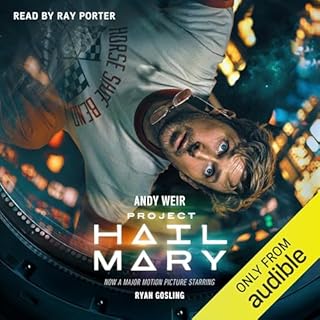
Project Hail Mary by Andy Weir follows a lone astronaut who wakes up millions of miles from home with no memory of how he got there. As he pieces together his mission to save Earth from extinction, he discovers an unexpected ally. The story celebrates problem solving and cooperation across impossible distances. Weir grounds every twist in real physics and chemistry, making the triumph feel earned. It's a story about how curiosity and friendship can overcome isolation.
The Expanse: Leviathan Wakes by James S.A. Corey launches a series set in a colonized solar system where Earth, Mars, and the Belt teeter on the edge of war. A missing woman connects a detective and a ship captain to a conspiracy that threatens every human settlement. The book examines how political tension and resource scarcity shape survival in space. Corey balances realistic orbital mechanics with the messy reality of human conflict. The resolution hints that humanity's greatest threat might not be each other.
Red Mars by Kim Stanley Robinson chronicles the first hundred colonists who terraform Mars over decades. The novel tracks their scientific progress alongside the fracturing of their community as they debate what kind of society to build. Robinson explores whether humans can escape Earth's mistakes or simply export them. The emotional weight comes from watching idealism collide with practical compromise. It's a meditation on whether transformation of a planet requires transformation of ourselves.
The Long Way to a Small, Angry Planet by Becky Chambers follows the crew of a tunneling ship that builds wormholes through space. When they accept a lucrative job that requires a year long journey, the diverse crew must navigate cultural differences and personal histories. Chambers uses alien biology and physics to explore what family means across species. The book finds hope in small acts of understanding rather than grand gestures. It suggests that humanity's future depends on learning to live alongside others, not apart from them.
Golden age classics that defined hard science fiction

-
The Mote in God's Eye
- De: Larry Niven, Jerry Pournelle
- Narrado por: L J Ganser
- Duración: 20 h y 28 m
- Versión completa
-
General8,040
-
Narración:6,046
-
Historia6,083
The Mote In God's Eye is their acknowledged masterpiece, an epic novel of mankind's first encounter with alien life that transcends the genre. No lesser an authority than Robert A. Heinlein called it "possibly the finest science fiction novel I have ever read".
-
-
A great read!
- De J. Rhoderick en 12-02-10
De: Larry Niven, y otros

-
A Fall of Moondust
- De: Arthur C. Clarke
- Narrado por: Oliver Wyman
- Duración: 8 h y 7 m
- Versión completa
-
General465
-
Narración:381
-
Historia380
Time is running out for the passengers and crew of the tourist cruiser Selene, incarcerated in a sea of choking lunar dust. On the surface, her rescuers find their resources stretched to the limit by the mercilessly unpredictable conditions of a totally alien environment. A brilliantly imagined story of human ingenuity and survival, A Fall of Moondust is a tour-de-force of psychological suspense and sustained dramatic tension by the field's foremost author.
-
-
Old Fashioned Science Fiction
- De Jim "The Impatient" en 03-12-11
De: Arthur C. Clarke

-
Starship Troopers
- De: Robert A. Heinlein
- Narrado por: R.C. Bray
- Duración: 8 h y 15 m
- Versión completa
-
General3,268
-
Narración:3,005
-
Historia3,005
Johnnie Rico never really intended to join up—and definitely not the infantry. But now that he’s in the thick of it, trying to get through combat training harder than anything he could have imagined, he knows everyone in his unit is one bad move away from buying the farm in the interstellar war the Terran Federation is waging against the Arachnids. Because everyone in the Mobile Infantry fights. And if the training doesn’t kill you, the Bugs are more than ready to finish the job.
-
-
The definitive version!
- De Kristopher G. Hesson en 03-10-24

-
The Stars My Destination
- De: Alfred Bester
- Narrado por: Gerard Doyle
- Duración: 8 h y 27 m
- Versión completa
-
General1,851
-
Narración:1,633
-
Historia1,638
Marooned in outer space after an attack on his ship, Nomad, Gulliver Foyle lives to obsessively pursue the crew of a rescue vessel that had intended to leave him to die.
-
-
STILL AMAZINGLY GOOD AFTER 62 YEARS
- De charles watkins en 19-02-18
De: Alfred Bester
-
The Mote in God's Eye
- De: Larry Niven, Jerry Pournelle
- Narrado por: L J Ganser
- Duración: 20 h y 28 m
- Versión completa
-
General8,040
-
Narración:6,046
-
Historia6,083
The Mote In God's Eye is their acknowledged masterpiece, an epic novel of mankind's first encounter with alien life that transcends the genre. No lesser an authority than Robert A. Heinlein called it "possibly the finest science fiction novel I have ever read".
-
-
A great read!
- De J. Rhoderick en 12-02-10
De: Larry Niven, y otros
-
A Fall of Moondust
- De: Arthur C. Clarke
- Narrado por: Oliver Wyman
- Duración: 8 h y 7 m
- Versión completa
-
General465
-
Narración:381
-
Historia380
Time is running out for the passengers and crew of the tourist cruiser Selene, incarcerated in a sea of choking lunar dust. On the surface, her rescuers find their resources stretched to the limit by the mercilessly unpredictable conditions of a totally alien environment. A brilliantly imagined story of human ingenuity and survival, A Fall of Moondust is a tour-de-force of psychological suspense and sustained dramatic tension by the field's foremost author.
-
-
Old Fashioned Science Fiction
- De Jim "The Impatient" en 03-12-11
De: Arthur C. Clarke
-
Starship Troopers
- De: Robert A. Heinlein
- Narrado por: R.C. Bray
- Duración: 8 h y 15 m
- Versión completa
-
General3,268
-
Narración:3,005
-
Historia3,005
Johnnie Rico never really intended to join up—and definitely not the infantry. But now that he’s in the thick of it, trying to get through combat training harder than anything he could have imagined, he knows everyone in his unit is one bad move away from buying the farm in the interstellar war the Terran Federation is waging against the Arachnids. Because everyone in the Mobile Infantry fights. And if the training doesn’t kill you, the Bugs are more than ready to finish the job.
-
-
The definitive version!
- De Kristopher G. Hesson en 03-10-24
-
The Stars My Destination
- De: Alfred Bester
- Narrado por: Gerard Doyle
- Duración: 8 h y 27 m
- Versión completa
-
General1,851
-
Narración:1,633
-
Historia1,638
Marooned in outer space after an attack on his ship, Nomad, Gulliver Foyle lives to obsessively pursue the crew of a rescue vessel that had intended to leave him to die.
-
-
STILL AMAZINGLY GOOD AFTER 62 YEARS
- De charles watkins en 19-02-18
De: Alfred Bester
The Mote in God's Eye by Larry Niven, co-written with Jerry Pournelle, introduced readers to one of science fiction's most memorable alien species. When humanity makes first contact with the Moties, a civilization trapped in their own solar system, the novel explores the biological and cultural forces that shape intelligent life. Published in 1974, it set a new standard for depicting truly alien minds while wrestling with questions of evolution, population dynamics, and the limits of communication across species.
A Fall of Moondust by Arthur C. Clarke turns the Moon into a treacherous sea. When a tourist cruiser sinks beneath a ocean of fine lunar dust, Clarke transforms a rescue mission into a meditation on engineering, physics, and human ingenuity under pressure. Written in 1961, the novel showcases Clarke's gift for making scientific problem solving as tense as any action sequence, while his detailed lunar environment predicted challenges that real space programs would later face.
Starship Troopers by Robert A. Heinlein sparked debate from its 1959 publication and hasn't stopped since. Following Juan Rico through boot camp and into combat against alien Arachnids, Heinlein built his story around then-novel ideas about powered armor and orbital drops while exploring citizenship, duty, and the relationship between military service and political participation. The novel's influence on military science fiction remains profound, even as readers continue to argue over its themes.
The Stars My Destination by Alfred Bester reimagines The Count of Monte Cristo in a future where humans can teleport by thought alone. Gully Foyle's quest for revenge drives him across the solar system in this 1956 novel that blends hard science concepts with psychological intensity. Bester's exploration of "jaunting" and its social consequences helped establish how speculative technology could reshape every aspect of human civilization, from architecture to warfare to class structure.
Mind bending concepts that challenge reality

-
Permutation City
- De: Greg Egan
- Narrado por: Adam Epstein
- Duración: 12 h y 58 m
- Versión completa
-
General518
-
Narración:446
-
Historia439
The good news is that you have just awakened into Eternal Life. You are going to live forever. Immortality is a reality. A medical miracle? Not exactly. The bad news is that you are a scrap of electronic code. The world you see around you, the you that is seeing it, has been digitized, scanned, and downloaded into a virtual reality program. You are a Copy that knows it is a copy. The good news is that there is a way out.
-
-
Amazing book. Amazingly bad narrator.
- De Treasure en 28-01-15
De: Greg Egan

-
Accelerando
- De: Charles Stross
- Narrado por: George Guidall
- Duración: 16 h y 30 m
- Versión completa
-
General752
-
Narración:665
-
Historia666
The Singularity. It is the era of the posthuman. Artificial intelligences have surpassed the limits of human intellect. Biotechnological beings have rendered people all but extinct. Molecular nanotechnology runs rampant, replicating and reprogramming at will. Contact with extraterrestrial life grows more imminent with each new day.
-
-
Hardest of hard SF...
- De DLee en 24-11-14
De: Charles Stross

-
The Quantum Thief
- De: Hannu Rajaniemi
- Narrado por: Scott Brick
- Duración: 10 h y 53 m
- Versión completa
-
General840
-
Narración:734
-
Historia741
The Quantum Thief is a Kirkus Reviews Best of 2011 Science Fiction & Fantasy title. One of Library Journal's Best SF/Fantasy Books of 2011 Jean le Flambeur is a post-human criminal, mind burglar, confidence artist, and trickster. His origins are shrouded in mystery, but his exploits are known...
-
-
Starts Confusing, Gets Exciting, Ends Awesome
- De Matthew en 21-10-11
De: Hannu Rajaniemi

-
Eon
- De: Greg Bear
- Narrado por: Stefan Rudnicki
- Duración: 17 h y 4 m
- Versión completa
-
General1,267
-
Narración:1,119
-
Historia1,122
Perhaps it wasn't from our time, perhaps it wasn't even from our universe, but the arrival of the 300-kilometer long stone was the answer to humanity's desperate plea to end the threat of nuclear war. Inside the deep recesses of the stone lies Thistledown: the remnants of a human society, versed in English, Russian and Chinese. The artifacts of this familiar people foretell a great Death caused by the ravages of war, but the government and scientists are unable to decide how to use this knowledge.
-
-
Am Epic Original SciFi Read Worth Your Time...
- De Michael en 01-07-12
De: Greg Bear
-
Permutation City
- De: Greg Egan
- Narrado por: Adam Epstein
- Duración: 12 h y 58 m
- Versión completa
-
General518
-
Narración:446
-
Historia439
The good news is that you have just awakened into Eternal Life. You are going to live forever. Immortality is a reality. A medical miracle? Not exactly. The bad news is that you are a scrap of electronic code. The world you see around you, the you that is seeing it, has been digitized, scanned, and downloaded into a virtual reality program. You are a Copy that knows it is a copy. The good news is that there is a way out.
-
-
Amazing book. Amazingly bad narrator.
- De Treasure en 28-01-15
De: Greg Egan
-
Accelerando
- De: Charles Stross
- Narrado por: George Guidall
- Duración: 16 h y 30 m
- Versión completa
-
General752
-
Narración:665
-
Historia666
The Singularity. It is the era of the posthuman. Artificial intelligences have surpassed the limits of human intellect. Biotechnological beings have rendered people all but extinct. Molecular nanotechnology runs rampant, replicating and reprogramming at will. Contact with extraterrestrial life grows more imminent with each new day.
-
-
Hardest of hard SF...
- De DLee en 24-11-14
De: Charles Stross
-
The Quantum Thief
- De: Hannu Rajaniemi
- Narrado por: Scott Brick
- Duración: 10 h y 53 m
- Versión completa
-
General840
-
Narración:734
-
Historia741
The Quantum Thief is a Kirkus Reviews Best of 2011 Science Fiction & Fantasy title. One of Library Journal's Best SF/Fantasy Books of 2011 Jean le Flambeur is a post-human criminal, mind burglar, confidence artist, and trickster. His origins are shrouded in mystery, but his exploits are known...
-
-
Starts Confusing, Gets Exciting, Ends Awesome
- De Matthew en 21-10-11
De: Hannu Rajaniemi
-
Eon
- De: Greg Bear
- Narrado por: Stefan Rudnicki
- Duración: 17 h y 4 m
- Versión completa
-
General1,267
-
Narración:1,119
-
Historia1,122
Perhaps it wasn't from our time, perhaps it wasn't even from our universe, but the arrival of the 300-kilometer long stone was the answer to humanity's desperate plea to end the threat of nuclear war. Inside the deep recesses of the stone lies Thistledown: the remnants of a human society, versed in English, Russian and Chinese. The artifacts of this familiar people foretell a great Death caused by the ravages of war, but the government and scientists are unable to decide how to use this knowledge.
-
-
Am Epic Original SciFi Read Worth Your Time...
- De Michael en 01-07-12
De: Greg Bear
Permutation City by Greg Egan explores what happens when human consciousness can be copied and run as software in virtual worlds. Paul Durham creates digital copies of himself to test whether simulated beings can truly be considered alive, and whether their subjective experience has meaning. The novel examines the nature of identity and existence through the lens of computational theory, asking whether a perfect simulation of you is actually you. Egan builds a world where the rules of physics become optional, and immortality comes with unexpected philosophical costs.
Accelerando by Charles Stross follows three generations of the Macx family as humanity approaches and surpasses the technological singularity, the point where artificial intelligence exceeds human capability. The story begins with Manfred Macx giving away ideas that transform civilization, then accelerates through uploaded minds, corporate AI entities, and post-human economics. Stross examines how exponential technological change reshapes everything from family relationships to the concept of property. The novel treats the singularity not as a single event but as a cascade of transformations that leave recognizable humanity behind.
The Quantum Thief by Hannu Rajaniemi opens with master thief Jean le Flambeur broken out of prison to pull off an impossible heist. Set in a far future solar system where privacy is currency and memories can be stolen, the story weaves quantum mechanics and game theory into its core mysteries. Rajaniemi constructs a world where the Oubliette, a walking city on Mars, operates on principles of cryptography and time as a tradable resource. The novel challenges you to piece together its intricate world alongside its amnesiac protagonist.
Eon by Greg Bear begins when a massive asteroid appears in orbit, hollow and filled with technology from Earth's future. Inside, explorers discover the Way, a corridor that extends infinitely through space and time, connecting to alternate realities. Bear uses the artifact to examine how access to future knowledge and infinite resources would transform human civilization and politics. The novel grapples with predestination, nuclear war, and whether humanity can escape the futures it has already seen.