Note: Text has been lightly edited for clarity and does not match audio exactly.
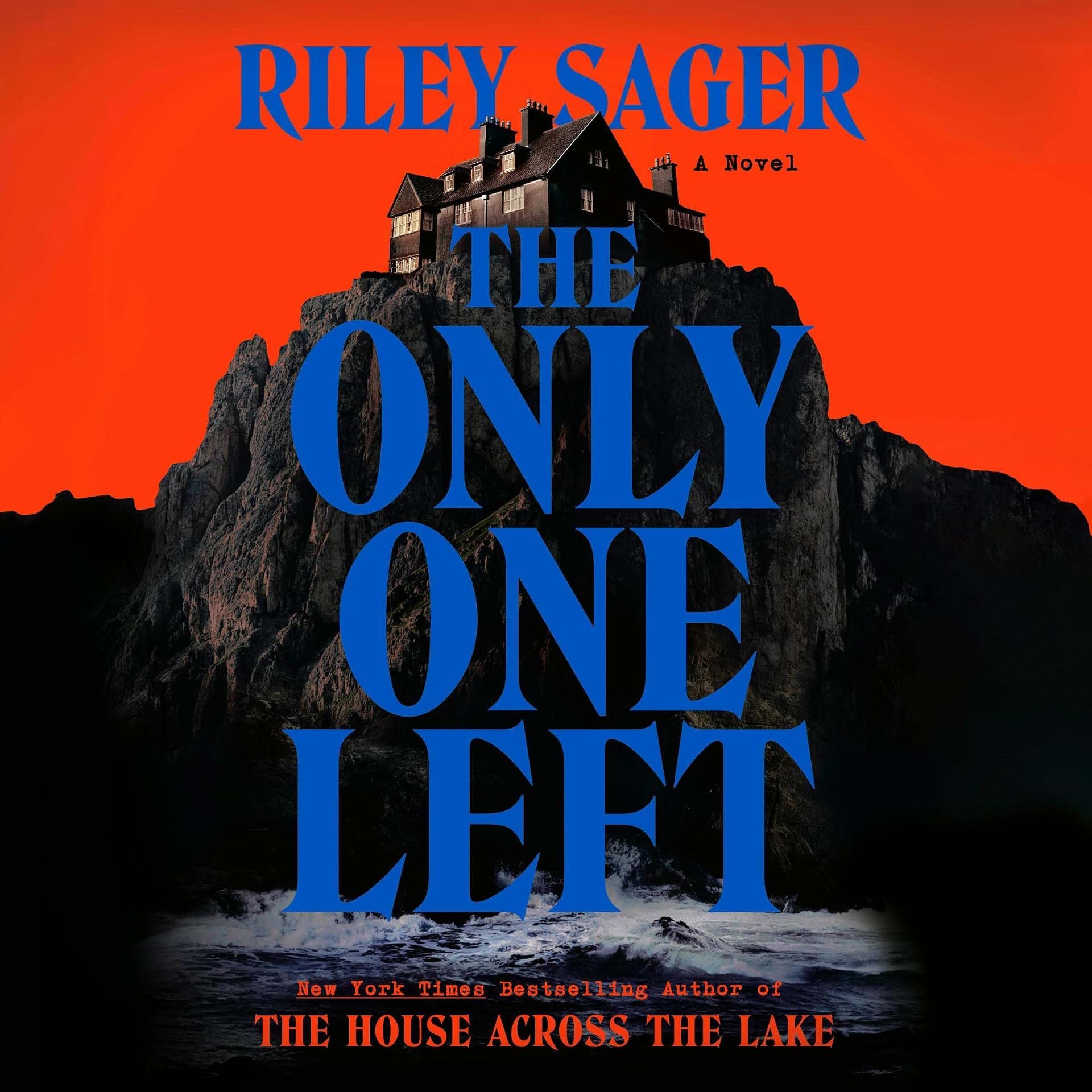
Dawn Gentle: Hello, listeners. This is Audible Editor Dawn Gentle, and today I am beyond thrilled to be in conversation with someone who really needs no introduction. But for those who may not be familiar with this trademark blend of atmospheric horror and psychological suspense, Riley Sager is a former journalist, editor, and a New York Times bestselling author of 10 novels, including my personal favorite, The Only One Left. His latest novel, The Unknown, traps a group of actors on a cursed Vermont island with a haunting history of disappearances that seems destined to repeat itself. Welcome, Riley, and thank you so much for being here.
Riley Sager: Thank you for having me, but I have to say, I still think I need an introduction.
Honestly, for those who love mystery thriller like I do, you need no introduction.
It's so weird for me, though, because I'm inside of it all. I'm in this little bubble, and so I really don't know how I'm perceived elsewhere in a lot of places. So, it's strange when people are like, "He needs no introduction." I'm like, "Really? Is that true?"
Yes, it's true. Yes, definitely. Especially once they listen to this latest novel, trust and believe, you won't need one. I'm going to jump right into it, Riley, because this book, The Unknown, this one had me on a roller-coaster ride of emotions. I started with being intrigued and then spooked. Just the image of five dresses hanging from an oak tree left behind by a group of women who vanished is unforgettable. Where did that visual come from? And how early in the writing process did you know it would be central to the mystery?
That is a very good question. The visual came from something I stole off the internet 20-plus years ago. In the early 2000s, I wasn't really a writer yet. I was thinking about maybe, possibly, writing something and seeing what happens, and so I was just looking at spooky websites for spooky things that would maybe inspire me, and I found this one website. For the life of me, I can't remember what it is now, where it was. I've looked very hard, and I cannot find this anymore, and it's bugging me. But it was real-life creepy things. It was this willow tree in a swamp, and there were these white dresses hanging from the branches and no one knew why, because it wasn't a populated area. It was literally the middle of a swamp, dresses hanging from a tree. There was one picture of it, and it was so creepy. I naturally was thinking, “Who put those there? What is the meaning behind it? Are these women dead? Did someone kill them and put their dresses in a tree?” It just begs all these questions. I popped it in this filing cabinet in my brain, like, "Oh, use that someday, maybe." I really never forgot about it, but I never had the right opportunity to use it until now.
Wow. Okay, so that's definitely interesting. But you took it beyond a swamp, and especially as a listener, you instantly are transported to New Avalon. You feel every bit of its isolated, haunted, and layered history. What inspired you to set the story on a remote island in Vermont, especially now hearing that you originally got the idea from a swamp and an oak tree?
Well, first of all, Vermont is a very special place to me. I love visiting there. I assume at some point I will end up living there full time. There is a theme running through all of my books that the spooky ones are set in Vermont. That was intentional with this one because going into it, I knew it was going to be my 10th book. I knew I wanted it to be a celebration of all the books that have come before it. So, my initial pitch to my editor was, "I want this to feel like my Eras Tour. I want this to have bits and pieces of every book that's come before it, and they come together to form something completely new and original." I purposely tried to go to places I've been before. I knew, “Okay, creepy lake in Vermont, we've been there before; let's go there again. And let's go onto an island and have this history that may or may not be real and these rumors of witches and covens and ghosts and demons.” And I let my imagination run wild.
Yeah, I could definitely get that. Honestly, the dread of it all, you can feel that through every book you've ever written, but this one really takes you there. I noticed that isolation, which is a classic thriller trope, you use it in a unique way here. The characters are isolated together and performing vulnerability while in the throes of method acting. How did you think about constructing the island as both a physical and psychological trap?
Well, just naturally, it's an island in the middle of nowhere. I had to think about how far away from shore do I want this island to be? Because if you get it too close, then there is that hope of getting off of it. I thought I'd put it just the right distance away. I think it's two miles from the mainland, and so they can just see the lights of the mainland but it's really just out of their reach. That's something that I think adds to their predicament, where you can see it, it's right there, and they still can't access it.
"I knew it was going to be my 10th book. I knew I wanted it to be a celebration of all the books that have come before it. So, my initial pitch to my editor was, 'I want this to feel like my Eras Tour.'"
And then just the idea of stranding these actresses on an island and seeing what happens and how they react and interact with each other. It was fun coming up with their different responses to certain things. I'm like, "Oh, this character, I love her. She is gonna be so practical and she's gonna be like, 'We can swim there, damn it.'" And others are gonna be like, "No, we can't. We absolutely can't."
When she mentioned swimming there, I'm like, "Now, girl, how are you going to swim there when you know doggone well you would have to be one of the greatest swimmers of all time in order to get across that." Like you mentioned, it's two miles and you have to take a boat. But she wasn't giving up, and I love that. I loved her as a character. We'll get into her as well, and everybody will know who that “her” is. I wanted to know also, because it's a spiritualist commune, it does feel so richly drawn. How did you develop that backstory with adding that key detail? I know you went into witches and things like that, but were there any other real institutions from that era that drew that inspiration?
I'm sure there were, because spiritualism is a fascinating, fascinating thing. I love it. I research it just for kicks because I'm interested in it. But it's such a strange, fascinating, almost not quite religion, but belief in that there were people who legitimately thought that they could commune with the dead. It always had this revival after terrible times. Like, there was one right after the Civil War, there was one at the turn of the century after World War I and the Spanish flu outbreak, and to a little bit of an extent, after World War II. I just thought that that was a great spine to kind of build the legacy of this island on, where it's not just vaguely haunted or there might have been witches, like, this was a commune for spiritualists and there were séances. I really wanted to write a good séance scene, and so instead, I wrote several good séance scenes.
You did.
When I was coming up with it, I'm like, "Oh, yeah, this is going to be so fun. I'm gonna have a séance scene in the past. I'm gonna have a séance scene in the present." There's something wonderfully tense about these people sitting at a table in the dark lit by candlelight. Is there something in the room floating above them? Is there something in the air? Is there a spirit present? Which is what they actually say when they begin to séance: "Is there a spirit present?" I thought all of that was going to be a lot of fun to mess around with.
Let me tell you, I had dreams of séances listening to this book. I'm like, “Oh, my gosh, Riley, where are we going here with this story?” You definitely brought the horror, that's for sure. You feel it. I was baffled, like, why is this producer so obsessed with this haunting case? And they decide to just set out to create a film based on the actual events of the century-old tragedy of these five women that disappeared on this island. There's a compelling, meta quality here. The actors researching a mystery gradually become part of the mystery themselves. Was that layering of fiction within fiction intentional from the start or did it evolve as the story took shape?
It was really there from the start. I definitely wanted to write about actresses and Hollywood and expectations of them, and to put this character who has no experience and really no credits and just throw her in the mix with these megastars and legends, because I wanted to talk a little bit about the allure of stardom and fame. How far would you go? And what would you do for it? So, right off the bat, Marin, the main character, the main question for her is, “Do I? This is a bad idea, but I might reap the benefits from it career-wise so I'm going to reluctantly go ahead with it.” And it all kind of spirals downhill from there, for her and others.
Yes, and definitely others. Let's talk about those characters. So, Marin is trying to get stardom. She's trying to get somewhere. Within that, we get to meet Daisy Rue, one of the women on the island during the time of the original disappearances. It's her diary that is found after she vanished, and it serves as that bridge between what took place in 1926 and the present. How did you balance the two timelines? And were there any challenges that came with giving voice to a woman who vanished a century ago?
There were challenges, and a lot It was logistical. I didn't want to give away too much, but there were also things that had to be said. I'm being so cryptic right now, but there are megatwists in this book, and so I wanted to relay enough information but also withhold something while making it seem like Daisy isn't withholding anything. I did really like the meta structure, as you pointed out, where we're reading the diary by this woman who was on the island 100 years ago and vanished along with all the others, and now we're watching actresses on that island getting ready to be in a movie based on a script based on that diary, and so there were all these levels.
"I really wanted to write a good séance scene, and so instead, I wrote several good séance scenes."
To have the characters in Daisy's diary, these real-life women, reflected in the actresses who are playing them in present day, there was just a lot of juggling and trial and error. Fortunately, this was not my first time where I've gone back and forth between this flashback-in-the-past structure and present day. I did it most notably in Home Before Dark, one of my other spooky Vermont books. And so practice, I'm not saying it's perfect, but I was more used to it now. It was easier to write than way back in the day when I wrote Home Before Dark.
I am a huge fan of Home Before Dark, so I saw the similarities there. In this one, what you did with these characters, especially with Marin, our main character here, she's considered “the unknown” actress, right? And she's thrown into an extraordinary situation of playing that lead role of Daisy Rue. I must say she also had quite a lot of similarities to Daisy. How did you approach writing a protagonist where their profession is literally about becoming someone else? And how does that blur the lines between performance and reality on the island?
Well, with the other actresses, I wanted them to feel instantly identifiable. I'm not going to name names, but there are some real-life inspirations character-trait-wise, because I wanted the listener to be like, "Oh, I know exactly what type of actress this is. I know her level of stardom.” And with Marin, I wanted her to be kind of a blank slate. You don't know her. She is an unknown, so we don't know her deal. We don't know how she's going to act. Based on things that have happened to her in the past, she could go several different directions with what's happening on the island. I liked having her always be this kind of wild card, even though she is the one narrating it. It's the same with Daisy Rue and her diary—because it's Daisy's diary, she is narrating it. I liked having this story playing out through the eyes of these two women who we can't quite get a read on.
I get that, 100 percent. And you're right, you instantly think, "Okay, I know an actress that's like that. I know this one.” Marin, she's new in the mix. You don't know who she is, really. You get to understand who she is. Eventually it comes out throughout the story. You get to unfold and understand Marin and who she is and what she's going through and the trauma that she's experienced. I love that aspect of it because, although she's unknown, she becomes known in a sense of knowing who she is as a person. As you mentioned before with The Unknown, it explores things that we hear of and know of in Hollywood. It also explores what it means to be unseen, unrecognized, and unknowable. Was the title or Marin's desire to be known the seed that started the story? And what drew you to exploring fame and recognition as a driving force, especially in a genre where characters are usually running from something rather than toward it?
Titles are not easy to come by for me. My publisher and I always have very long battles over what the title of a particular book should be. In this case, I just latched onto it immediately, like, “Oh, I wanna call this The Unknown.” And my publisher, thank goodness, was like, "Yeah, do it." Because it has this double meaning. It's what's going on on the island is unknown. Marin is the unknown. And then there's the idea that I don't think she truly knows herself when she sets foot on that island, but she certainly does by the end of the book. It is this journey not only of survival but self-discovery.
With the whole Hollywood aspect—I love movies. I love Hollywood—part of the appeal, and this is going to sound very strange, is that it's so corrupt in many ways. We've heard the horror stories coming out of Hollywood for decades and decades and decades, and so there's this mystique about it, but also there's this rot underneath the mystique. That's always interesting to explore. I didn't want to do a Hollywood-set novel, so I liked bringing Hollywood to this remote, haunted island in Vermont, instead, and seeing what happens there and how the rot follows them from LA to Vermont, basically.
I love that we didn't get to see certain things. I don't want to spoil things for our listeners, so don't worry, no spoilers, because the twist in this will take you through a loop, a really big mental loop. Riley, you're known for those twisty endings. Throughout the story you get these twists that in one moment you think you know what's going on, but then the next minute the twist will take you somewhere on a psychological journey. So, without spoiling anything, did the twist surprise even you during the writing process?
Oh, yeah. Normally when I start a book, the order is plot: What is it about, really? Then character: Who is going to be the person guiding the reader or listener through this plot? And then because I had to figure it out early, because I have to build toward it, what's the twist and/or twists, plural? In this case, I didn't quite know. I started it and just wrote. I think I was about 100 pages in until I finally had to stop and be like, "Okay, you need to figure out what is going on before you write anything more because you're gonna get into the weeds very soon."
"I didn't want to do a Hollywood-set novel, so I liked bringing Hollywood to this remote, haunted island in Vermont, instead, and seeing what happens there and how the rot follows them from LA to Vermont."
So, I did have to just pause and spend a week or two not writing and just plotting and thinking and being like, "Okay, what makes the most sense for what's happening here, but what is also the most surprising?” Because with some twists, you defy logic and reason. I like to play fair, at least a little bit. There is one book of mine that is notorious for shocking the heck out of people about two-thirds of the way through. I hear it all the time from readers. They're like, "You didn't prepare me for that." I did. But anyway, it had to make a certain amount of sense. So, I really had to just figure out what the heck is going on here and why, and how to resolve all of that. Once I did that, it was very freeing to just go forth and write the rest of the book.
I love that. It definitely will take you on a journey. In the end, I was like, “This is gonna be a conversation starter for sure." Because like I said, this is all so relatable, especially within our current times and how Hollywood is portrayed. On top of that, on the audio side of things, you have a multi-cast here that brings The Unknown to life. You have Maggie Grace. You have Patricia [Santomasso], you have Erin Lynn. You have these narrators that really step into every feeling you have toward these actresses, the director, even the director's assistant. Then we also get to hear your voice as well. I said, "Wait a minute. Is he in here?"
That's me.
Yes. It was so nice to hear. I said, "This is his first." So, you have to tell us, Riley, what was it like stepping in the narrator's booth for your own work? And did the full cast bring dimensions to the story you hadn't anticipated?
Well, what I loved about the casting is they send me samples of people and they maybe give me some names, and when they brought up Maggie Grace, I thought, “Oh, my God, she's perfect for this because it just adds another meta layer on top of things, because being on Lost, she knows all about being stuck on an island.” I'm like, "That's perfect. Yeah. Utterly perfect."
For me, they suggested it. They said, you know, "It's your 10th book. It's a bit of a celebration. Wouldn't it be nice if you came into the studio and recorded your own acknowledgements?" And it was very strange. It was very weird to get into that booth and sit behind the microphone and try not to mess up. I messed up so much. The poor producer and engineers were like, "Stop, do it again, please. Okay. Maybe..." because I was projecting. When I talk in front of people, it's at a book event and there's several hundred people there, and I'm just, "Hello!" So, I had to really bring it in. They're like, "You're really talking too loud. The microphone is right there. Just pretend you're speaking to someone who's sitting right in front of you." That was really good advice. It was interesting. It was more fun than I thought. I can't imagine ever narrating an entire audiobook. Just all the props to people who do this for a living and do it so well. I just can't imagine doing that.
I agree. Shout-out to the narrators, because their work is extremely hard. They actually have to take these characters, bring them to life. They feel those emotions and they take it there. Maggie brings it 100 percent to this. She was perfect for this narration, especially when it comes to Marin and that vulnerability side of her. It just was truly, truly phenomenal. I feel like you got the perfect cast for this book. I'm sure listeners are going to feel the same.
We're familiar with a lot of your work. You have Final Girls, you got The House Across the Lake, you got The Only One left. These are all going through various stages of adaptation. So, listeners, be prepared because we're about to start seeing these novels come to life on the screen. I am super excited because I can already picture them in my mind when I listen to them. Nowadays, I notice a lot of books are being adapted, so yours belong right in there. With The Unknown, it also feels cinematic. The isolated island, the séances, the film-within-a-book structure. Are you already envisioning how this story might translate to the screen? As someone who clearly loves horror and thriller filmmaking, what's it like with your own work moving into that world?
Well, I do have to give some bad news. Some of the books you mentioned are no longer in development.
Oh, don't break my heart.
Some still are. It's been a very strange experience with the adaptation process, because I'm not really involved in any aspect of that because I didn't want to be. I know I love movies; I don't know the first thing about making them. There's always been this, "Do you wanna be involved more in the process?" And I say, "No. Just have someone else try to do it, and Godspeed." So, they've tried. Some things haven't taken off. Some are still very much in active development. Scripts are being written, scripts are finished. I think one, they’re just doing their due diligence and trying to get everything lined up before they hit that green light. So, it's a very strange process that I'm way on the outside of.
"When I'm writing a book, one of the things that helps me visualize it is I imagine a movie trailer based on the book. It's so dorky, but it helps me think of the mood that I'm trying to portray."
This is going to sound very bizarre, but when I'm writing a book, one of the things that helps me visualize it is I imagine a movie trailer based on the book. It's so dorky, but it helps me think of the mood that I'm trying to portray with the book. I'll just sit there and imagine the typical movie trailer, even including the music and maybe certain shots and certain lines of dialogue and just be like, "This is what I'm aiming for as I write whatever many pages I have to write today." So, that's my weird little trick.
No, you can feel that, though. That's a good way to go about it. There's not one book I've listened to or read that I haven't felt like this can definitely play out in your mind as a full movie. And you can feel a trailer just reading the summaries sometimes alone. I can picture it in my mind as a trailer. Maybe that makes me dorky as well, but if I can picture that in my mind like a movie, you're doing something amazing here. I hope whichever ones fall into place for adaptations, whichever got dropped on the wayside, I hope they get picked back up, because definitely your novels are very cinematic to the point where you can see them on the screen.
Thank you. I do try to make them feel like a movie in book form, if that makes any sense.
Yeah, you can definitely feel that. And with The Unknown being your 10th novel, which is an incredible milestone, congratulations on that 10th novel.
Thank you.
I feel like you've built this body of work that has redefined modern horror suspense for a new generation of listeners. Looking back at that journey, what would you like listeners to take away after experiencing The Unknown?
Oh boy, that's a very good question. I just always want them to have enjoyed the story. That is my main goal even after 10 years and 10 books, is just to try to write a good tale and that people, when they put the book down or they finish listening, they just pause for a moment and go, "Yeah, that was good." I love that feeling. I love reading a great book or going to a great movie, and when it's over, there's just this moment of pure satisfaction of, "Yeah, I liked that." And so that's my goal for every book is to have readers and listeners do the same thing. I know not every book of mine is going to be loved by everyone, but I try to just provide that satisfaction of a tale well told.
It is. It's beautifully written. The narration pulls it all together. The listening experience for me is definitely unmatched, with building that dread of horror and suspense. For me, this was definitely one of the best horror suspense that I've read so far this year. I'm not just saying that because I'm a fan. This was definitely one of my favorites, and I know others feel the same. Looking ahead, Riley, now that you've hit this remarkable benchmark and the success of previous novels, what's next for Riley Sager?
Oh, I can't say too much. It's a little bit secret. All I can say is that The Unknown was sort of the culmination of 10 years. I wanted with The Unknown to write the quintessential Riley Sager book. If someone wanted to be like, “What's the ultimate Riley Sager book?" I wanted people to hold up The Unknown and be like, "This one. It's all of it together combined." So, for book 11, anything goes. I'm just throwing out the old stuff, coming in new. I'm doing things I've never done before, themes I've never tackled before. It's a risk, but so far, it's been a very enjoyable one. I'll leave that to everyone's imaginations. What I mean by that, you'll find out soon enough. It'll be out next year.
Listeners, you heard that, we have an 11th book coming, so this is not the end. But it's definitely going to be something different. I cannot wait to see where this novel takes you. I'm looking forward to that, because I love seeing authors step out of their genre or touch on something else, on something that you don't really typically hear from the author. I am totally looking forward to that. Riley, thank you so much for chatting with me today. I really enjoyed our conversation.
Thank you so much. This was so much fun.
And listeners, you can get The Unknown by Riley Sager on Audible now.