

-
The Exegesis of Philip K. Dick
- Narrated by: Fred Stella
- Length: 52 hrs and 6 mins
Failed to add items
Add to Cart failed.
Add to Wish List failed.
Remove from wishlist failed.
Adding to library failed
Follow podcast failed
Unfollow podcast failed
 Prime members: New to Audible?
Get 2 free audiobooks during trial.

The Exegesis of Philip K. Dick
Buy for $35.69
No default payment method selected.
We are sorry. We are not allowed to sell this product with the selected payment method

Listeners also enjoyed...
-
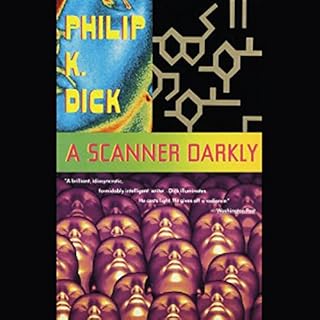
A Scanner Darkly
- By: Philip K. Dick
- Narrated by: Paul Giamatti
- Length: 9 hrs and 12 mins
- Unabridged
-
Overall4.5 out of 5 stars 3,313
-
Performance4.5 out of 5 stars 2,791
-
Story4.5 out of 5 stars 2,783
Bob Arctor is a dealer of the lethally addictive drug Substance D. Fred is the police agent assigned to tail and eventually bust him. To do so, Fred takes on the identity of a drug dealer named Bob Arctor. And since Substance D, which Arctor takes in massive doses, gradually splits the user's brain into two distinct, combative entities, Fred doesn't realize he is narcing on himself.
-
5 out of 5 stars
-
Drugs are bad
- By Randall on 04-25-09
By: Philip K. Dick

-
Now Wait for Last Year
- By: Philip K. Dick
- Narrated by: Luke Daniels
- Length: 8 hrs and 13 mins
- Unabridged
-
Overall4.5 out of 5 stars 220
-
Performance4.5 out of 5 stars 193
-
Story4.5 out of 5 stars 194
Earth is trapped in the crossfire of an unwinnable war between two alien civilizations. Its leader is perpetually on the verge of death. And on top of that, a new drug has just entered circulation - a drug that haphazardly sends its users traveling through time. In an attempt to escape his doomed marriage, Dr. Eric Sweetscent becomes caught up in all of it. But he has questions: Is Earth on the right side of the war? Is he supposed to heal Earth’s leader or keep him sick? And can he change the harrowing future that the drug has shown him?
-
5 out of 5 stars
-
Last/Best Self-help Book for Couples and Suicides
- By Darwin8u on 02-07-15
By: Philip K. Dick

-
Ubik
- By: Philip K. Dick
- Narrated by: Luke Daniels
- Length: 7 hrs and 56 mins
- Unabridged
-
Overall4 out of 5 stars 5,659
-
Performance4.5 out of 5 stars 5,148
-
Story4 out of 5 stars 5,146
Glen Runciter runs a lucrative business - deploying his teams of anti-psychics to corporate clients who want privacy and security from psychic spies. But when he and his top team are ambushed by a rival, he is gravely injured and placed in "half-life," a dreamlike state of suspended animation. Soon, though, the surviving members of the team begin experiencing some strange phenomena, such as Runciter's face appearing on coins and the world seeming to move backward in time.
-
5 out of 5 stars
-
Holy sh*t
- By Amazon Customer on 03-17-17
By: Philip K. Dick

-
Blade Runner
- Originally published as Do Androids Dream of Electric Sheep?
- By: Philip K. Dick
- Narrated by: Scott Brick
- Length: 9 hrs and 12 mins
- Unabridged
-
Overall4.5 out of 5 stars 10,329
-
Performance4.5 out of 5 stars 8,889
-
Story4.5 out of 5 stars 8,886
It was January 2021, and Rick Deckard had a license to kill. Somewhere among the hordes of humans out there lurked several rogue androids. Deckard's assignment: find them and then..."retire" them. Trouble was, the androids all looked exactly like humans, and they didn't want to be found!
-
4 out of 5 stars
-
This is the original Do Androids Dream of Electric
- By D. ABIGT on 08-29-10
By: Philip K. Dick

-
Valis
- Valis, Book 1
- By: Philip K. Dick
- Narrated by: Phil Gigante
- Length: 8 hrs and 59 mins
- Unabridged
-
Overall4 out of 5 stars 777
-
Performance4.5 out of 5 stars 668
-
Story4 out of 5 stars 665
What is VALIS? This question is at the heart of Philip K. Dick's groundbreaking novel, the first book in his defining trilogy. When a beam of pink light begins giving a schizophrenic man named Horselover Fat (who just might also be known as Philip K. Dick) visions of an alternate Earth where the Roman Empire still reigns, he must decide whether he is crazy or whether a godlike entity is showing him the true nature of the world.
-
5 out of 5 stars
-
Life changing
- By Michael on 03-16-16
By: Philip K. Dick

-
Flow My Tears, the Policeman Said
- By: Philip K. Dick
- Narrated by: Phil Gigante
- Length: 7 hrs and 44 mins
- Unabridged
-
Overall4 out of 5 stars 1,008
-
Performance4.5 out of 5 stars 911
-
Story4 out of 5 stars 904
Jason Taverner - world-famous talk show host and man-about-town - wakes up one day to find that no one knows who he is - including the vast databases of the totalitarian government. And in a society where lack of identification is a crime, Taverner has no choice but to go on the run with a host of shady characters, including crooked cops and dealers of alien drugs. But do they know more than they are letting on? And just how can a person's identity be erased overnight?
-
5 out of 5 stars
-
An excellent reading of an amazing book
- By dnblack on 05-24-16
By: Philip K. Dick
-
A Scanner Darkly
- By: Philip K. Dick
- Narrated by: Paul Giamatti
- Length: 9 hrs and 12 mins
- Unabridged
-
Overall4.5 out of 5 stars 3,313
-
Performance4.5 out of 5 stars 2,791
-
Story4.5 out of 5 stars 2,783
Bob Arctor is a dealer of the lethally addictive drug Substance D. Fred is the police agent assigned to tail and eventually bust him. To do so, Fred takes on the identity of a drug dealer named Bob Arctor. And since Substance D, which Arctor takes in massive doses, gradually splits the user's brain into two distinct, combative entities, Fred doesn't realize he is narcing on himself.
-
5 out of 5 stars
-
Drugs are bad
- By Randall on 04-25-09
By: Philip K. Dick
-
Now Wait for Last Year
- By: Philip K. Dick
- Narrated by: Luke Daniels
- Length: 8 hrs and 13 mins
- Unabridged
-
Overall4.5 out of 5 stars 220
-
Performance4.5 out of 5 stars 193
-
Story4.5 out of 5 stars 194
Earth is trapped in the crossfire of an unwinnable war between two alien civilizations. Its leader is perpetually on the verge of death. And on top of that, a new drug has just entered circulation - a drug that haphazardly sends its users traveling through time. In an attempt to escape his doomed marriage, Dr. Eric Sweetscent becomes caught up in all of it. But he has questions: Is Earth on the right side of the war? Is he supposed to heal Earth’s leader or keep him sick? And can he change the harrowing future that the drug has shown him?
-
5 out of 5 stars
-
Last/Best Self-help Book for Couples and Suicides
- By Darwin8u on 02-07-15
By: Philip K. Dick
-
Ubik
- By: Philip K. Dick
- Narrated by: Luke Daniels
- Length: 7 hrs and 56 mins
- Unabridged
-
Overall4 out of 5 stars 5,659
-
Performance4.5 out of 5 stars 5,148
-
Story4 out of 5 stars 5,146
Glen Runciter runs a lucrative business - deploying his teams of anti-psychics to corporate clients who want privacy and security from psychic spies. But when he and his top team are ambushed by a rival, he is gravely injured and placed in "half-life," a dreamlike state of suspended animation. Soon, though, the surviving members of the team begin experiencing some strange phenomena, such as Runciter's face appearing on coins and the world seeming to move backward in time.
-
5 out of 5 stars
-
Holy sh*t
- By Amazon Customer on 03-17-17
By: Philip K. Dick
-
Blade Runner
- Originally published as Do Androids Dream of Electric Sheep?
- By: Philip K. Dick
- Narrated by: Scott Brick
- Length: 9 hrs and 12 mins
- Unabridged
-
Overall4.5 out of 5 stars 10,329
-
Performance4.5 out of 5 stars 8,889
-
Story4.5 out of 5 stars 8,886
It was January 2021, and Rick Deckard had a license to kill. Somewhere among the hordes of humans out there lurked several rogue androids. Deckard's assignment: find them and then..."retire" them. Trouble was, the androids all looked exactly like humans, and they didn't want to be found!
-
4 out of 5 stars
-
This is the original Do Androids Dream of Electric
- By D. ABIGT on 08-29-10
By: Philip K. Dick
-
Valis
- Valis, Book 1
- By: Philip K. Dick
- Narrated by: Phil Gigante
- Length: 8 hrs and 59 mins
- Unabridged
-
Overall4 out of 5 stars 777
-
Performance4.5 out of 5 stars 668
-
Story4 out of 5 stars 665
What is VALIS? This question is at the heart of Philip K. Dick's groundbreaking novel, the first book in his defining trilogy. When a beam of pink light begins giving a schizophrenic man named Horselover Fat (who just might also be known as Philip K. Dick) visions of an alternate Earth where the Roman Empire still reigns, he must decide whether he is crazy or whether a godlike entity is showing him the true nature of the world.
-
5 out of 5 stars
-
Life changing
- By Michael on 03-16-16
By: Philip K. Dick
-
Flow My Tears, the Policeman Said
- By: Philip K. Dick
- Narrated by: Phil Gigante
- Length: 7 hrs and 44 mins
- Unabridged
-
Overall4 out of 5 stars 1,008
-
Performance4.5 out of 5 stars 911
-
Story4 out of 5 stars 904
Jason Taverner - world-famous talk show host and man-about-town - wakes up one day to find that no one knows who he is - including the vast databases of the totalitarian government. And in a society where lack of identification is a crime, Taverner has no choice but to go on the run with a host of shady characters, including crooked cops and dealers of alien drugs. But do they know more than they are letting on? And just how can a person's identity be erased overnight?
-
5 out of 5 stars
-
An excellent reading of an amazing book
- By dnblack on 05-24-16
By: Philip K. Dick

-
The Three Stigmata of Palmer Eldritch
- By: Philip K. Dick
- Narrated by: Luke Daniels
- Length: 7 hrs and 43 mins
- Unabridged
-
Overall4.5 out of 5 stars 779
-
Performance4.5 out of 5 stars 699
-
Story4.5 out of 5 stars 704
On Mars, the harsh climate could make any colonist turn to drugs to escape a dead-end existence. Especially when the drug is Can-D, which transports its users into the idyllic world of a Barbie-esque character named Perky Pat. When the mysterious Palmer Eldritch arrives with a new drug called Chew-Z, he offers a more addictive experience, one that might bring the user closer to God. But in a world where everyone is tripping, no promises can be taken at face value.
-
5 out of 5 stars
-
Fantastic and current
- By Jerry Witt on 12-20-15
By: Philip K. Dick

-
Volume I: The King of the Elves
- By: Philip K. Dick
- Narrated by: Kate Rudd
- Length: 20 hrs and 9 mins
- Unabridged
-
Overall4.5 out of 5 stars 334
-
Performance4 out of 5 stars 297
-
Story4.5 out of 5 stars 294
The King of the Elves is the opening installment of a uniform, five-volume edition of The Collected Stories of Philip K. Dick, expanded from the previous Collected Stories set to incorporate new story notes, and two added tales, one previously unpublished, and one uncollected.
-
5 out of 5 stars
-
Fantastic stories!
- By Renee Tang on 04-18-17
By: Philip K. Dick

-
Time Out of Joint
- By: Philip K. Dick
- Narrated by: Jeff Cummings
- Length: 7 hrs and 27 mins
- Unabridged
-
Overall4 out of 5 stars 470
-
Performance4.5 out of 5 stars 406
-
Story4 out of 5 stars 404
Ragle Gumm has a unique job: Every day he wins a newspaper contest. And when he isn’t consulting his charts and tables, he enjoys his life in a small town, in 1959. At least, that’s what he thinks. But then strange things start happening. He finds a phone book where all the numbers have been disconnected, and a magazine article about a famous starlet named Marilyn Monroe, whom he’s never heard of. Plus, everyday objects are beginning to disappear and are replaced by strips of paper with words written on them, like "bowl of flowers" and "soft-drink stand".
-
3 out of 5 stars
-
Mediocre Mother to Gravity's Rainbow and the Truman Show?
- By Darwin8u on 06-13-15
By: Philip K. Dick

-
The Collected Works of Philip K. Dick: 11 Science Fiction Stories
- By: Philip K. Dick
- Narrated by: Kevin Killavey
- Length: 10 hrs and 39 mins
- Unabridged
-
Overall4.5 out of 5 stars 283
-
Performance4.5 out of 5 stars 250
-
Story4.5 out of 5 stars 248
The Collected Works of Philip K. Dick is a collection of 11 science fiction stories by Philip K. Dick.
-
5 out of 5 stars
-
Good Stories...well read.
- By cindilla on 12-18-12
By: Philip K. Dick

-
Martian Time-Slip
- By: Philip K. Dick
- Narrated by: Jeff Cummings
- Length: 9 hrs and 45 mins
- Unabridged
-
Overall4 out of 5 stars 205
-
Performance4.5 out of 5 stars 180
-
Story4 out of 5 stars 180
On an arid Mars, local bigwigs compete with Earth-bound interlopers to buy up land before the Un develops it and its value skyrockets. Martian Union leader Arnie Kott has an ace up his sleeve, though: an autistic boy named Manfred who seems to have the ability to see the future. In the hopes of gaining an advantage on a Martian real estate deal, powerful people force Manfred to send them into the future, where they can learn about development plans.
-
4 out of 5 stars
-
Autism, schizophrenia, and Martians
- By Darwin8u on 01-22-17
By: Philip K. Dick

-
Minority Report and Other Stories (Unabridged Stories)
- By: Philip K. Dick
- Narrated by: Keir Dullea
- Length: 7 hrs and 27 mins
- Unabridged
-
Overall4.5 out of 5 stars 1,864
-
Performance4.5 out of 5 stars 1,333
-
Story4.5 out of 5 stars 1,333
Viewed by many as the greatest science fiction writer on any planet, Philip K. Dick has written some of the most intriguing, original, and thought-provoking fiction of our time. This collection includes "The Minority Report," "We Can Remember It For You Wholesale," "Paycheck," "Second Variety," and "The Eyes Have It."
-
5 out of 5 stars
-
Nice Collection of Four P.D.K. Short Stories
- By DailyDog on 05-12-11
By: Philip K. Dick

-
A Maze of Death
- By: Philip K. Dick
- Narrated by: Benjamin L. Darcie
- Length: 6 hrs and 25 mins
- Unabridged
-
Overall4 out of 5 stars 241
-
Performance4.5 out of 5 stars 215
-
Story4 out of 5 stars 215
Delmak-O is a dangerous planet. Though there are only 14 citizens, no one can trust anyone else and death can strike at any moment. The planet is vast and largely unexplored, populated mostly by gelatinous cube-shaped beings that give cryptic advice in the form of anagrams. Deities can be spoken to directly via a series of prayer amplifiers and transmitters, but they may not be happy about it. And the mysterious building in the distance draws all the colonists to it, but when they get there each sees a different motto on the front.
-
4 out of 5 stars
-
JJ Abrams YOU are a book thief.
- By Darwin8u on 08-24-13
By: Philip K. Dick

-
Radio Free Albemuth
- By: Philip K. Dick
- Narrated by: Jeff Cummings, Patrick Lawlor
- Length: 9 hrs and 9 mins
- Unabridged
-
Overall4.5 out of 5 stars 113
-
Performance4.5 out of 5 stars 101
-
Story4.5 out of 5 stars 101
In Radio Free Albemuth, his last novel, Philip K. Dick morphed and recombined themes that had informed his fiction from A Scanner Darkly to VALIS and produced a wild, impassioned work that sounds like a visionary alternate history of the United States. Agonizingly suspenseful, darkly hilarious, and filled with enough conspiracy theories to thrill the most hardened paranoid, Radio Free Albemuth is proof of Dick's stature as our century's greatest science fiction writer.
-
4 out of 5 stars
-
The Pistol to the Head
- By Darwin8u on 01-02-17
By: Philip K. Dick

-
Modern Occultism
- History, Theory, and Practice
- By: Mitch Horowitz
- Narrated by: Mitch Horowitz
- Length: 21 hrs and 2 mins
- Unabridged
-
Overall5 out of 5 stars 34
-
Performance5 out of 5 stars 32
-
Story5 out of 5 stars 32
In his most sweeping historical work, occult scholar and widely known voice of esoteric ideas Mitch Horowitz presents a lively, intellectually serious historical exploration of modern occultism, from astrology and alchemy to the dawn of Theosophy and modern witchcraft—and the spiritual revolutions that followed.
-
5 out of 5 stars
-
An education in marginalized spiritual movements
- By Amazon Customer on 02-16-24
By: Mitch Horowitz

-
Mere Christianity
- By: C. S. Lewis
- Narrated by: Geoffrey Howard
- Length: 5 hrs and 52 mins
- Unabridged
-
Overall5 out of 5 stars 12,365
-
Performance5 out of 5 stars 9,615
-
Story5 out of 5 stars 9,578
Mere Christianity is C.S. Lewis' forceful and accessible doctrine of Christian belief. First heard as informal radio broadcasts and then published as three separate books, The Case for Christianity, Christian Behavior, and Beyond Personality, Mere Christianity brings together what Lewis sees as the fundamental truths of the religion.
-
5 out of 5 stars
-
A Classic That Gets Better & Better With Time!
- By Tim on 05-14-05
By: C. S. Lewis

-
Vulcan's Hammer
- By: Philip K. Dick
- Narrated by: Mel Foster
- Length: 5 hrs and 45 mins
- Unabridged
-
Overall4 out of 5 stars 96
-
Performance4 out of 5 stars 90
-
Story4 out of 5 stars 90
After the 20th century’s devastating series of wars, the world’s governments banded together into one globe-spanning entity, committed to peace at all costs. Ensuring that peace is the Vulcan supercomputer, responsible for all major decisions. But some people don’t like being taken out of the equation. And others resent the idea that the Vulcan is taking the place of God. As the world grows ever closer to all-out war, one functionary frantically tries to prevent it. But the Vulcan computer has its own plans....
-
4 out of 5 stars
-
All Your Base Are Belong to Us!
- By Darwin8u on 02-08-16
By: Philip K. Dick

-
Asian Journals
- India and Japan (The Collected Works of Joseph Campbell)
- By: Joseph Campbell
- Narrated by: Fred Stella
- Length: 26 hrs and 56 mins
- Unabridged
-
Overall4.5 out of 5 stars 40
-
Performance4.5 out of 5 stars 34
-
Story4.5 out of 5 stars 34
At the beginning of his career, Joseph Campbell developed a lasting fascination with the cultures of the Far East, and explorations of Buddhist and Hindu philosophy later became recurring motifs in his vast body of work. However, Campbell had to wait until middle age to visit the lands that inspired him so deeply. In 1954, he took a sabbatical from his teaching position and embarked on a year-long voyage through India, Thailand, Cambodia, Burma, Hong Kong, Taiwan, and finally Japan.
-
5 out of 5 stars
-
What a journey!
- By Anonymous User on 08-11-18
By: Joseph Campbell
Publisher's summary
Based on thousands of pages of typed and handwritten notes, journal entries, letters, and story sketches, The Exegesis of Philip K. Dick is the magnificent and imaginative final work of an author who dedicated his life to questioning the nature of reality and perception, the malleability of space and time, and the relationship between the human and the divine. Edited and introduced by Pamela Jackson and Jonathan Lethem, this is the definitive presentation of Dick’s brilliant, and epic, work.
In the Exegesis, Dick documents his eight-year attempt to fathom what he called “2-3-74”, a postmodern visionary experience of the entire universe “transformed into information”. In entries that sometimes ran to hundreds of pages, in a freewheeling voice that ranges through personal confession, esoteric scholarship, dream accounts, and fictional fugues, Dick tried to write his way into the heart of a cosmic mystery that tested his powers of imagination and invention to the limit.
This volume, the culmination of many years of transcription and archival research, has been annotated by the editors and by a unique group of writers and scholars chosen to offer a range of views into one of the most improbable and mind-altering manuscripts ever brought to light.
Critic reviews
More from the same
Related to this topic

-
The Heretic's Handbook
- By: Jonathan Black
- Narrated by: Simon Mattacks
- Length: 2 hrs and 38 mins
- Unabridged
-
Overall4.5 out of 5 stars 65
-
Performance4.5 out of 5 stars 57
-
Story4.5 out of 5 stars 56
In The Heretic’s Handbook, the internationally bestselling author of The Secret History of the World has collected and codified ancient, secret wisdom from around the world, formulating a complete philosophy on how to live a happy and successful life. An acclaimed author and public speaker, Black shows how this body of knowledge has been declared ‘heretical’ both by the established church and by today’s atheistic intellectual elite.
-
5 out of 5 stars
-
great
- By Amazon Customer on 08-01-23
By: Jonathan Black

-
Miracles
- By: C. S. Lewis
- Narrated by: Julian Rhind-Tutt
- Length: 7 hrs and 23 mins
- Unabridged
-
Overall5 out of 5 stars 460
-
Performance5 out of 5 stars 413
-
Story5 out of 5 stars 407
"The central miracle asserted by Christians is the Incarnation. They say that God became Man. Every other miracle prepares the way for this, or results from this." This is the key statement of Miracles, in which C. S. Lewis shows that a Christian must not only accept but rejoice in miracles as a testimony of the unique personal involvement of God in his creation.
-
5 out of 5 stars
-
sound, shrewd, well articulated, and well read.
- By Andrew on 09-17-15
By: C. S. Lewis

-
Eternal Life
- A New Vision
- By: John Shelby Spong
- Narrated by: John Morgan
- Length: 7 hrs and 47 mins
- Unabridged
-
Overall4.5 out of 5 stars 90
-
Performance4.5 out of 5 stars 66
-
Story4.5 out of 5 stars 65
Bishop John Shelby Spong, author of Jesus for the Non-Religious, Why Christianity Must Change or Die, Sins of Scripture, and many other books, is known for his controversial ideas and fighting for minority rights. In Eternal Life: A New Vision, a remarkable spiritual journey about his lifelong struggle with the questions of God and death, he reveals how he came to a new conviction about eternal life.
-
3 out of 5 stars
-
Excellent questions... wishy-washy answers
- By cynthia on 10-17-09

-
William Blake vs the World
- By: John Higgs
- Narrated by: John Higgs
- Length: 11 hrs and 12 mins
- Unabridged
-
Overall5 out of 5 stars 87
-
Performance5 out of 5 stars 74
-
Story4.5 out of 5 stars 74
A wild and unexpected journey through culture, science, philosophy, and religion to better understand the mercurial genius of William Blake.
-
5 out of 5 stars
-
Best book ever
- By idamae on 11-04-22
By: John Higgs

-
The Meaning of Happiness
- The Quest for Freedom of the Spirit in Modern Psychology and the Wisdom of the East
- By: Alan Watts
- Narrated by: Kern Schmidt
- Length: 7 hrs and 1 min
- Unabridged
-
Overall4.5 out of 5 stars 161
-
Performance4.5 out of 5 stars 143
-
Story4.5 out of 5 stars 138
Deep down, most people think that happiness comes from having or doing something. Here, in Alan Watts’s groundbreaking third book (originally published in 1940), he offers a more challenging thesis: authentic happiness comes from embracing life as a whole in all its contradictions and paradoxes, an attitude that Watts calls the “way of acceptance.” Drawing on Eastern philosophy, Western mysticism, and analytic psychology, Watts demonstrates that happiness comes from accepting both the outer world around us and the inner world inside us,
-
3 out of 5 stars
-
Good Concepts Hard to Follow Along
- By Ryan on 04-13-20
By: Alan Watts

-
The Life of the Mind
- By: Hannah Arendt
- Narrated by: Laural Merlington
- Length: 20 hrs and 45 mins
- Unabridged
-
Overall4.5 out of 5 stars 53
-
Performance4.5 out of 5 stars 44
-
Story4.5 out of 5 stars 45
Considered by many to be Hannah Arendt's greatest work, published as she neared the end of her life, The Life of the Mind investigates thought itself, as it exists in contemplative life. In a shift from her previous writings, most of which focus on the world outside the mind, this work was planned as three volumes that would explore the activities of the mind considered by Arendt to be fundamental. What emerged is a rich, challenging analysis of human mental activity, considered in terms of thinking, willing, and judging.
-
2 out of 5 stars
-
English only please
- By angela cozea on 11-20-19
By: Hannah Arendt
-
The Heretic's Handbook
- By: Jonathan Black
- Narrated by: Simon Mattacks
- Length: 2 hrs and 38 mins
- Unabridged
-
Overall4.5 out of 5 stars 65
-
Performance4.5 out of 5 stars 57
-
Story4.5 out of 5 stars 56
In The Heretic’s Handbook, the internationally bestselling author of The Secret History of the World has collected and codified ancient, secret wisdom from around the world, formulating a complete philosophy on how to live a happy and successful life. An acclaimed author and public speaker, Black shows how this body of knowledge has been declared ‘heretical’ both by the established church and by today’s atheistic intellectual elite.
-
5 out of 5 stars
-
great
- By Amazon Customer on 08-01-23
By: Jonathan Black
-
Miracles
- By: C. S. Lewis
- Narrated by: Julian Rhind-Tutt
- Length: 7 hrs and 23 mins
- Unabridged
-
Overall5 out of 5 stars 460
-
Performance5 out of 5 stars 413
-
Story5 out of 5 stars 407
"The central miracle asserted by Christians is the Incarnation. They say that God became Man. Every other miracle prepares the way for this, or results from this." This is the key statement of Miracles, in which C. S. Lewis shows that a Christian must not only accept but rejoice in miracles as a testimony of the unique personal involvement of God in his creation.
-
5 out of 5 stars
-
sound, shrewd, well articulated, and well read.
- By Andrew on 09-17-15
By: C. S. Lewis
-
Eternal Life
- A New Vision
- By: John Shelby Spong
- Narrated by: John Morgan
- Length: 7 hrs and 47 mins
- Unabridged
-
Overall4.5 out of 5 stars 90
-
Performance4.5 out of 5 stars 66
-
Story4.5 out of 5 stars 65
Bishop John Shelby Spong, author of Jesus for the Non-Religious, Why Christianity Must Change or Die, Sins of Scripture, and many other books, is known for his controversial ideas and fighting for minority rights. In Eternal Life: A New Vision, a remarkable spiritual journey about his lifelong struggle with the questions of God and death, he reveals how he came to a new conviction about eternal life.
-
3 out of 5 stars
-
Excellent questions... wishy-washy answers
- By cynthia on 10-17-09
-
William Blake vs the World
- By: John Higgs
- Narrated by: John Higgs
- Length: 11 hrs and 12 mins
- Unabridged
-
Overall5 out of 5 stars 87
-
Performance5 out of 5 stars 74
-
Story4.5 out of 5 stars 74
A wild and unexpected journey through culture, science, philosophy, and religion to better understand the mercurial genius of William Blake.
-
5 out of 5 stars
-
Best book ever
- By idamae on 11-04-22
By: John Higgs
-
The Meaning of Happiness
- The Quest for Freedom of the Spirit in Modern Psychology and the Wisdom of the East
- By: Alan Watts
- Narrated by: Kern Schmidt
- Length: 7 hrs and 1 min
- Unabridged
-
Overall4.5 out of 5 stars 161
-
Performance4.5 out of 5 stars 143
-
Story4.5 out of 5 stars 138
Deep down, most people think that happiness comes from having or doing something. Here, in Alan Watts’s groundbreaking third book (originally published in 1940), he offers a more challenging thesis: authentic happiness comes from embracing life as a whole in all its contradictions and paradoxes, an attitude that Watts calls the “way of acceptance.” Drawing on Eastern philosophy, Western mysticism, and analytic psychology, Watts demonstrates that happiness comes from accepting both the outer world around us and the inner world inside us,
-
3 out of 5 stars
-
Good Concepts Hard to Follow Along
- By Ryan on 04-13-20
By: Alan Watts
-
The Life of the Mind
- By: Hannah Arendt
- Narrated by: Laural Merlington
- Length: 20 hrs and 45 mins
- Unabridged
-
Overall4.5 out of 5 stars 53
-
Performance4.5 out of 5 stars 44
-
Story4.5 out of 5 stars 45
Considered by many to be Hannah Arendt's greatest work, published as she neared the end of her life, The Life of the Mind investigates thought itself, as it exists in contemplative life. In a shift from her previous writings, most of which focus on the world outside the mind, this work was planned as three volumes that would explore the activities of the mind considered by Arendt to be fundamental. What emerged is a rich, challenging analysis of human mental activity, considered in terms of thinking, willing, and judging.
-
2 out of 5 stars
-
English only please
- By angela cozea on 11-20-19
By: Hannah Arendt

-
What the Bleep Do We Know
- Discovering the Endless Possibilities for Altering Your Everyday Reality
- By: William Arntz, Betsy Chase, Mark Vicente
- Narrated by: Suzanne Toren
- Length: 11 hrs and 25 mins
- Unabridged
-
Overall4 out of 5 stars 434
-
Performance4 out of 5 stars 318
-
Story4 out of 5 stars 321
With the help of 14 leading physicists, scientists, and spiritual thinkers, this book guides listeners on a course from the scientific to the spiritual, and from the universal to the personal. Along the way, it asks such questions as: Are we seeing the world as it really is What is the relationship between our thoughts and our world? How can I create my day every day? What the Bleep answers this question and others through an innovative new approach to self-help and spirituality.
-
1 out of 5 stars
-
Attacking straw men
- By Henrik on 08-06-11
By: William Arntz, and others

-
The Religion of Tomorrow
- A Vision for the Future of the Great Traditions - More Inclusive, More Comprehensive, More Complete
- By: Ken Wilber
- Narrated by: Graeme Malcolm
- Length: 30 hrs and 17 mins
- Unabridged
-
Overall5 out of 5 stars 196
-
Performance5 out of 5 stars 169
-
Story4.5 out of 5 stars 166
A single purpose lies at the heart of all the great religious traditions: awakening to the astonishing reality of the true nature of ourselves and the universe. At the same time, through centuries of cultural accretion and focus on myth and ritual as ends in themselves, this core insight has become obscured. Here Ken Wilber provides a path for reenvisioning a religion of the future that acknowledges the evolution of humanity in every realm while remaining faithful to that original spiritual vision.
-
5 out of 5 stars
-
A mind-blowing spiritual experience
- By IW Ferreira on 09-01-17
By: Ken Wilber

-
A New Earth
- Awakening Your Life's Purpose
- By: Eckhart Tolle
- Narrated by: Eckhart Tolle
- Length: 9 hrs and 12 mins
- Unabridged
-
Overall5 out of 5 stars 19,816
-
Performance5 out of 5 stars 15,379
-
Story5 out of 5 stars 15,187
Humanity now, perhaps more than in any previous time, has an opportunity to create a new, saner, more loving world. This will involve a radical inner leap from the current egoic consciousness to an entirely new one. In illuminating the nature of this shift in consciousness, Tolle describes in detail how our current ego-based state of consciousness operates. Then gently, and in very practical terms, he leads us into this new consciousness. We will come to experience who we truly are and learn to live and breathe freely.
-
5 out of 5 stars
-
A Realized Being Shares In Person...a rare find.
- By Mr. Word Sponge on 12-05-09
By: Eckhart Tolle

-
Psychotherapy East and West
- By: Alan Watts
- Narrated by: Jeremy Arthur
- Length: 5 hrs and 36 mins
- Unabridged
-
Overall4.5 out of 5 stars 87
-
Performance4.5 out of 5 stars 76
-
Story4.5 out of 5 stars 75
Alan Watts examines the problem of humans in a seemingly hostile universe in ways that question the social norms and illusions that bind and constrict modern humans. Marking a groundbreaking synthesis, Watts asserts that the powerful insights of Freud and Jung, which had, indeed, brought psychiatry close to the edge of liberation, could, if melded with the hitherto secret wisdom of the Eastern traditions, free people from their battles with the self.
-
2 out of 5 stars
-
Not what I have come to expect from Alan Watts works
- By Shiva Latchmipersad on 03-22-19
By: Alan Watts

-
The Courage to Create
- By: Rollo May
- Narrated by: Sean Pratt
- Length: 4 hrs and 22 mins
- Unabridged
-
Overall4.5 out of 5 stars 198
-
Performance4.5 out of 5 stars 163
-
Story4.5 out of 5 stars 164
What if imagination and art are not, as many of us might think, the frosting on life but the fountainhead of human experience? What if our logic and science derive from art forms rather than the other way around? In this trenchant volume, Rollo May helps all of us find those creative impulses that, once liberated, offer new possibilities for achievement. A renowned therapist and inspiring guide, Dr. May draws on his experience to show how we can break out of old patterns in our lives.
-
5 out of 5 stars
-
May takes on the Creative Act
- By Lowball on 01-16-19
By: Rollo May

-
Time Travel
- A History
- By: James Gleick
- Narrated by: Rob Shapiro
- Length: 10 hrs
- Unabridged
-
Overall4 out of 5 stars 498
-
Performance4.5 out of 5 stars 440
-
Story4 out of 5 stars 433
James Gleick's story begins at the turn of the 20th century, with the young H. G. Wells writing and rewriting the fantastic tale that became his first book, an international sensation: The Time Machine. A host of forces were converging to transmute the human understanding of time, some philosophical and some technological - the electric telegraph, the steam railroad, the discovery of buried civilizations, and the perfection of clocks.
-
5 out of 5 stars
-
Fiction gives us Truth by connecting the dots
- By Gary on 04-21-17
By: James Gleick

-
50 Spiritual Classics
- By: Tom Butler-Bowdon
- Narrated by: Richard Poe
- Length: 10 hrs and 22 mins
- Unabridged
-
Overall4 out of 5 stars 216
-
Performance4.5 out of 5 stars 90
-
Story4.5 out of 5 stars 89
Discover the books that have already changed the lives of millions. This unabridged guide to the literature of the spirit surveys 50 of the all-time classics, giving you their key ideas, insights, and applications - everything you need to know to start benefiting from these legendary works.
-
3 out of 5 stars
-
useful as review or starting point
- By connie on 01-03-09

-
Why Does the World Exist?
- An Existential Detective Story
- By: Jim Holt
- Narrated by: Steven Menasche
- Length: 11 hrs and 47 mins
- Unabridged
-
Overall4 out of 5 stars 296
-
Performance4 out of 5 stars 255
-
Story4 out of 5 stars 251
Author Jim Holt explores the greatest metaphysical mystery of all: why is there something rather than nothing? This runaway best seller, which has captured the imagination of critics and the public alike, traces our latest efforts to grasp the origins of the universe. Holt adopts the role of cosmological detective, traveling the globe to interview a host of celebrated scientists, philosophers, and writers.
-
4 out of 5 stars
-
Fatal Reader Flaw
- By Let's Be Reasonable on 05-09-14
By: Jim Holt

-
The Mind of God
- Neuroscience, Faith, and a Search for the Soul
- By: Dr. Jay Lombard
- Narrated by: David Acord
- Length: 5 hrs and 14 mins
- Unabridged
-
Overall4.5 out of 5 stars 63
-
Performance5 out of 5 stars 56
-
Story5 out of 5 stars 54
Is there a God? It's a question billions of people have asked since the dawn of time. You would think by now we'd have a satisfactory, universal answer. No such luck...or maybe we do and we just need to look in the right place. For Dr. Jay Lombard that place is the brain, and more importantly the mind, that center of awareness and consciousness that creates reality. In The Mind of God, Dr. Lombard employs case studies from his own behavioral neurology practice to explore the spiritual conundrums that we all ask ourselves.
-
4 out of 5 stars
-
Keenly insightful
- By Rick Smith on 09-30-19
By: Dr. Jay Lombard

-
The Complete Conversations with God
- An Uncommon Dialogue: Books I, II & III
- By: Neale Donald Walsch
- Narrated by: Neale Donald Walsh, Edward Asner, Ellen Burstyn
- Length: 26 hrs and 33 mins
- Unabridged
-
Overall5 out of 5 stars 2,334
-
Performance5 out of 5 stars 2,042
-
Story5 out of 5 stars 2,032
The seminal trilogy of Neale Donald Walsch's ongoing dialogue with God are brought together here in one audio edition. Includes unabridged performances of Conversations with God: An Uncommon Dialogue Book I, Book II and Book III, the best-selling of the author's works. Few modern writers have had more influence on popular thinking about God than Neale Donald Walsch. Neale Donald Walsch, together with award-winning actors Ed Asner and Ellen Burstyn, reveals a God who is loving, believable, understanding of our weaknesses, and, most important, easy to talk with.
-
5 out of 5 stars
-
4th Time Reading this Series in 20 years
- By Pangaia on 05-23-19

-
Buddhism Is Not What You Think
- Finding Freedom Beyond Beliefs
- By: Steve Hagen
- Narrated by: Paul Heitsch
- Length: 6 hrs and 28 mins
- Unabridged
-
Overall4.5 out of 5 stars 54
-
Performance4.5 out of 5 stars 48
-
Story4.5 out of 5 stars 48
Best-selling author and renowned Zen teacher Steve Hagen penetrates the most essential and enduring questions at the heart of the Buddha's teachings: How can we see the world in each moment, rather than merely as what we think, hope, or fear it is? How can we base our actions on reality, rather than on the longing and loathing of our hearts and minds? How can we live lives that are wise, compassionate, and in tune with reality? And how can we separate the wisdom of Buddhism from the cultural trappings and misconceptions that have come to be associated with it?
-
5 out of 5 stars
-
great message, annoying narrator
- By Pamela Radtke on 11-28-19
By: Steve Hagen

-
On Quality
- An Inquiry into Excellence: Unpublished and Selected Writings
- By: Robert M. Pirsig, Wendy K. Pirsig
- Narrated by: Mark Bramhall, Abby Craden
- Length: 2 hrs and 58 mins
- Unabridged
-
Overall4.5 out of 5 stars 45
-
Performance4.5 out of 5 stars 39
-
Story4.5 out of 5 stars 38
More than a decade before the release of the book that would make him famous, Robert M. Pirsig had already caught hold of the central theme that would animate Zen and the Art of Motorcycle Maintenance: “Quality,” a concept loosely likened to “excellence,” “rightness,” or “fitness” that Pirsig saw as kindred to the Buddhist ideas of “dharma” or the “Tao.” As he later wrote in Zen, “Quality is the Buddha.”
-
5 out of 5 stars
-
Interesting trip inside an obsessed mind.
- By Tom on 05-03-22
By: Robert M. Pirsig, and others
People who viewed this also viewed...

-
A Philip K. Dick Collection
- By: Philip K. Dick
- Narrated by: Andy Harrington
- Length: 11 hrs and 52 mins
- Unabridged
-
Overall4.5 out of 5 stars 32
-
Performance4.5 out of 5 stars 29
-
Story4.5 out of 5 stars 29
From the author of science-fiction classics such as The Man in the High Castle and Do Androids Dream of Electric Sheep? comes a collection of 13 short stories of dystopic visions of technological terror, post-nuclear holocaust warfare, time travel, space travel, man vs. alien, man vs. machine, man becomes machine, man becomes plant, and other fantastic tales performed in a vividly dramatic narration by Andy Harrington.
-
5 out of 5 stars
-
A great collection with a few low points.
- By Ricky Spanish on 11-24-22
By: Philip K. Dick
-
Volume I: The King of the Elves
- By: Philip K. Dick
- Narrated by: Kate Rudd
- Length: 20 hrs and 9 mins
- Unabridged
-
Overall4.5 out of 5 stars 334
-
Performance4 out of 5 stars 297
-
Story4.5 out of 5 stars 294
The King of the Elves is the opening installment of a uniform, five-volume edition of The Collected Stories of Philip K. Dick, expanded from the previous Collected Stories set to incorporate new story notes, and two added tales, one previously unpublished, and one uncollected.
-
5 out of 5 stars
-
Fantastic stories!
- By Renee Tang on 04-18-17
By: Philip K. Dick
-
The Collected Works of Philip K. Dick: 11 Science Fiction Stories
- By: Philip K. Dick
- Narrated by: Kevin Killavey
- Length: 10 hrs and 39 mins
- Unabridged
-
Overall4.5 out of 5 stars 283
-
Performance4.5 out of 5 stars 250
-
Story4.5 out of 5 stars 248
The Collected Works of Philip K. Dick is a collection of 11 science fiction stories by Philip K. Dick.
-
5 out of 5 stars
-
Good Stories...well read.
- By cindilla on 12-18-12
By: Philip K. Dick

-
A Life of Philip K. Dick
- The Man Who Remembered the Future
- By: Anthony Peake
- Narrated by: Eric Meyers
- Length: 12 hrs and 45 mins
- Unabridged
-
Overall4.5 out of 5 stars 15
-
Performance4 out of 5 stars 14
-
Story4.5 out of 5 stars 14
Philip K. Dick was a visionary writer. From post-apocalyptic San Francisco to Nazi-occupied America, his strange alternative futures have transfixed the world. But his life was every bit as unusual as his fiction. A Life of Philip K Dick opens a window into PKD's unique mind. Written with close cooperation with two of his ex-wives and a number of his friends, we are taken through his five marriages, his periods living in squalor, and his souring literary success. We are also given unparalleled insight into his transcendental experiences.
-
5 out of 5 stars
-
Hooray! Finally!
- By Phil F. on 12-21-22
By: Anthony Peake
-
Flow My Tears, the Policeman Said
- By: Philip K. Dick
- Narrated by: Phil Gigante
- Length: 7 hrs and 44 mins
- Unabridged
-
Overall4 out of 5 stars 1,008
-
Performance4.5 out of 5 stars 911
-
Story4 out of 5 stars 904
Jason Taverner - world-famous talk show host and man-about-town - wakes up one day to find that no one knows who he is - including the vast databases of the totalitarian government. And in a society where lack of identification is a crime, Taverner has no choice but to go on the run with a host of shady characters, including crooked cops and dealers of alien drugs. But do they know more than they are letting on? And just how can a person's identity be erased overnight?
-
5 out of 5 stars
-
An excellent reading of an amazing book
- By dnblack on 05-24-16
By: Philip K. Dick
-
Valis
- Valis, Book 1
- By: Philip K. Dick
- Narrated by: Phil Gigante
- Length: 8 hrs and 59 mins
- Unabridged
-
Overall4 out of 5 stars 777
-
Performance4.5 out of 5 stars 668
-
Story4 out of 5 stars 665
What is VALIS? This question is at the heart of Philip K. Dick's groundbreaking novel, the first book in his defining trilogy. When a beam of pink light begins giving a schizophrenic man named Horselover Fat (who just might also be known as Philip K. Dick) visions of an alternate Earth where the Roman Empire still reigns, he must decide whether he is crazy or whether a godlike entity is showing him the true nature of the world.
-
5 out of 5 stars
-
Life changing
- By Michael on 03-16-16
By: Philip K. Dick
-
A Philip K. Dick Collection
- By: Philip K. Dick
- Narrated by: Andy Harrington
- Length: 11 hrs and 52 mins
- Unabridged
-
Overall4.5 out of 5 stars 32
-
Performance4.5 out of 5 stars 29
-
Story4.5 out of 5 stars 29
From the author of science-fiction classics such as The Man in the High Castle and Do Androids Dream of Electric Sheep? comes a collection of 13 short stories of dystopic visions of technological terror, post-nuclear holocaust warfare, time travel, space travel, man vs. alien, man vs. machine, man becomes machine, man becomes plant, and other fantastic tales performed in a vividly dramatic narration by Andy Harrington.
-
5 out of 5 stars
-
A great collection with a few low points.
- By Ricky Spanish on 11-24-22
By: Philip K. Dick
-
Volume I: The King of the Elves
- By: Philip K. Dick
- Narrated by: Kate Rudd
- Length: 20 hrs and 9 mins
- Unabridged
-
Overall4.5 out of 5 stars 334
-
Performance4 out of 5 stars 297
-
Story4.5 out of 5 stars 294
The King of the Elves is the opening installment of a uniform, five-volume edition of The Collected Stories of Philip K. Dick, expanded from the previous Collected Stories set to incorporate new story notes, and two added tales, one previously unpublished, and one uncollected.
-
5 out of 5 stars
-
Fantastic stories!
- By Renee Tang on 04-18-17
By: Philip K. Dick
-
The Collected Works of Philip K. Dick: 11 Science Fiction Stories
- By: Philip K. Dick
- Narrated by: Kevin Killavey
- Length: 10 hrs and 39 mins
- Unabridged
-
Overall4.5 out of 5 stars 283
-
Performance4.5 out of 5 stars 250
-
Story4.5 out of 5 stars 248
The Collected Works of Philip K. Dick is a collection of 11 science fiction stories by Philip K. Dick.
-
5 out of 5 stars
-
Good Stories...well read.
- By cindilla on 12-18-12
By: Philip K. Dick
-
A Life of Philip K. Dick
- The Man Who Remembered the Future
- By: Anthony Peake
- Narrated by: Eric Meyers
- Length: 12 hrs and 45 mins
- Unabridged
-
Overall4.5 out of 5 stars 15
-
Performance4 out of 5 stars 14
-
Story4.5 out of 5 stars 14
Philip K. Dick was a visionary writer. From post-apocalyptic San Francisco to Nazi-occupied America, his strange alternative futures have transfixed the world. But his life was every bit as unusual as his fiction. A Life of Philip K Dick opens a window into PKD's unique mind. Written with close cooperation with two of his ex-wives and a number of his friends, we are taken through his five marriages, his periods living in squalor, and his souring literary success. We are also given unparalleled insight into his transcendental experiences.
-
5 out of 5 stars
-
Hooray! Finally!
- By Phil F. on 12-21-22
By: Anthony Peake
-
Flow My Tears, the Policeman Said
- By: Philip K. Dick
- Narrated by: Phil Gigante
- Length: 7 hrs and 44 mins
- Unabridged
-
Overall4 out of 5 stars 1,008
-
Performance4.5 out of 5 stars 911
-
Story4 out of 5 stars 904
Jason Taverner - world-famous talk show host and man-about-town - wakes up one day to find that no one knows who he is - including the vast databases of the totalitarian government. And in a society where lack of identification is a crime, Taverner has no choice but to go on the run with a host of shady characters, including crooked cops and dealers of alien drugs. But do they know more than they are letting on? And just how can a person's identity be erased overnight?
-
5 out of 5 stars
-
An excellent reading of an amazing book
- By dnblack on 05-24-16
By: Philip K. Dick
-
Valis
- Valis, Book 1
- By: Philip K. Dick
- Narrated by: Phil Gigante
- Length: 8 hrs and 59 mins
- Unabridged
-
Overall4 out of 5 stars 777
-
Performance4.5 out of 5 stars 668
-
Story4 out of 5 stars 665
What is VALIS? This question is at the heart of Philip K. Dick's groundbreaking novel, the first book in his defining trilogy. When a beam of pink light begins giving a schizophrenic man named Horselover Fat (who just might also be known as Philip K. Dick) visions of an alternate Earth where the Roman Empire still reigns, he must decide whether he is crazy or whether a godlike entity is showing him the true nature of the world.
-
5 out of 5 stars
-
Life changing
- By Michael on 03-16-16
By: Philip K. Dick
-
Time Out of Joint
- By: Philip K. Dick
- Narrated by: Jeff Cummings
- Length: 7 hrs and 27 mins
- Unabridged
-
Overall4 out of 5 stars 470
-
Performance4.5 out of 5 stars 406
-
Story4 out of 5 stars 404
Ragle Gumm has a unique job: Every day he wins a newspaper contest. And when he isn’t consulting his charts and tables, he enjoys his life in a small town, in 1959. At least, that’s what he thinks. But then strange things start happening. He finds a phone book where all the numbers have been disconnected, and a magazine article about a famous starlet named Marilyn Monroe, whom he’s never heard of. Plus, everyday objects are beginning to disappear and are replaced by strips of paper with words written on them, like "bowl of flowers" and "soft-drink stand".
-
3 out of 5 stars
-
Mediocre Mother to Gravity's Rainbow and the Truman Show?
- By Darwin8u on 06-13-15
By: Philip K. Dick
-
The Three Stigmata of Palmer Eldritch
- By: Philip K. Dick
- Narrated by: Luke Daniels
- Length: 7 hrs and 43 mins
- Unabridged
-
Overall4.5 out of 5 stars 779
-
Performance4.5 out of 5 stars 699
-
Story4.5 out of 5 stars 704
On Mars, the harsh climate could make any colonist turn to drugs to escape a dead-end existence. Especially when the drug is Can-D, which transports its users into the idyllic world of a Barbie-esque character named Perky Pat. When the mysterious Palmer Eldritch arrives with a new drug called Chew-Z, he offers a more addictive experience, one that might bring the user closer to God. But in a world where everyone is tripping, no promises can be taken at face value.
-
5 out of 5 stars
-
Fantastic and current
- By Jerry Witt on 12-20-15
By: Philip K. Dick
-
Ubik
- By: Philip K. Dick
- Narrated by: Luke Daniels
- Length: 7 hrs and 56 mins
- Unabridged
-
Overall4 out of 5 stars 5,659
-
Performance4.5 out of 5 stars 5,148
-
Story4 out of 5 stars 5,146
Glen Runciter runs a lucrative business - deploying his teams of anti-psychics to corporate clients who want privacy and security from psychic spies. But when he and his top team are ambushed by a rival, he is gravely injured and placed in "half-life," a dreamlike state of suspended animation. Soon, though, the surviving members of the team begin experiencing some strange phenomena, such as Runciter's face appearing on coins and the world seeming to move backward in time.
-
5 out of 5 stars
-
Holy sh*t
- By Amazon Customer on 03-17-17
By: Philip K. Dick

-
Philip K. Dick's Electric Dreams
- By: Philip K. Dick
- Narrated by: Tanya Eby, Luke Daniels, Peter Berkrot, and others
- Length: 6 hrs and 56 mins
- Unabridged
-
Overall4.5 out of 5 stars 385
-
Performance4.5 out of 5 stars 326
-
Story4.5 out of 5 stars 327
Though perhaps most famous as a novelist, Philip K. Dick wrote more than 100 short stories over the course of his career, each as mind-bending and genre-defining as his longer works. Philip K. Dick's Electric Dreams collects 10 of the best. In "Autofac," Dick shows us one of the earliest examples (and warnings) in science fiction of self-replicating machines. "Exhibit Piece" and "The Commuter" feature Dick exploring one of his favorite themes: the shifting nature of reality and whether it is even possible to perceive the world as it truly exists.
-
4 out of 5 stars
-
Liked most of the stories
- By F. Delaney on 08-24-18
By: Philip K. Dick

-
The Penultimate Truth
- By: Philip K. Dick
- Narrated by: Nick Podehl
- Length: 7 hrs and 53 mins
- Unabridged
-
Overall4 out of 5 stars 104
-
Performance4.5 out of 5 stars 97
-
Story4 out of 5 stars 97
In the future, most of humanity lives in massive underground bunkers, producing weapons for the nuclear war they’ve fled. Constantly bombarded by patriotic propaganda, the citizens of these industrial anthills believe they are waiting for the day when the war will be over and they can return above ground. But when Nick St. James, president of one anthill, makes an unauthorized trip to the surface, what he finds is more shocking than anything he could imagine.
-
5 out of 5 stars
-
Captivating
- By E on 05-17-16
By: Philip K. Dick
-
Minority Report and Other Stories (Unabridged Stories)
- By: Philip K. Dick
- Narrated by: Keir Dullea
- Length: 7 hrs and 27 mins
- Unabridged
-
Overall4.5 out of 5 stars 1,864
-
Performance4.5 out of 5 stars 1,333
-
Story4.5 out of 5 stars 1,333
Viewed by many as the greatest science fiction writer on any planet, Philip K. Dick has written some of the most intriguing, original, and thought-provoking fiction of our time. This collection includes "The Minority Report," "We Can Remember It For You Wholesale," "Paycheck," "Second Variety," and "The Eyes Have It."
-
5 out of 5 stars
-
Nice Collection of Four P.D.K. Short Stories
- By DailyDog on 05-12-11
By: Philip K. Dick
-
Martian Time-Slip
- By: Philip K. Dick
- Narrated by: Jeff Cummings
- Length: 9 hrs and 45 mins
- Unabridged
-
Overall4 out of 5 stars 205
-
Performance4.5 out of 5 stars 180
-
Story4 out of 5 stars 180
On an arid Mars, local bigwigs compete with Earth-bound interlopers to buy up land before the Un develops it and its value skyrockets. Martian Union leader Arnie Kott has an ace up his sleeve, though: an autistic boy named Manfred who seems to have the ability to see the future. In the hopes of gaining an advantage on a Martian real estate deal, powerful people force Manfred to send them into the future, where they can learn about development plans.
-
4 out of 5 stars
-
Autism, schizophrenia, and Martians
- By Darwin8u on 01-22-17
By: Philip K. Dick

-
High Weirdness
- Drugs, Esoterica, and Visionary Experience in the Seventies
- By: Erik Davis
- Narrated by: Erik Davis
- Length: 20 hrs and 57 mins
- Unabridged
-
Overall4.5 out of 5 stars 206
-
Performance4.5 out of 5 stars 166
-
Story4.5 out of 5 stars 163
A study of the spiritual provocations to be found in the work of Philip K. Dick, Terence McKenna, and Robert Anton Wilson, High Weirdness charts the emergence of a new psychedelic spirituality that arose from the American counterculture of the 1970s. These three authors changed the way millions of readers thought, dreamed, and experienced reality - but how did their writings reflect, as well as shape, the seismic cultural shifts taking place in America?
-
5 out of 5 stars
-
High Weirdness
- By Amazon Customer on 09-17-20
By: Erik Davis
-
Now Wait for Last Year
- By: Philip K. Dick
- Narrated by: Luke Daniels
- Length: 8 hrs and 13 mins
- Unabridged
-
Overall4.5 out of 5 stars 220
-
Performance4.5 out of 5 stars 193
-
Story4.5 out of 5 stars 194
Earth is trapped in the crossfire of an unwinnable war between two alien civilizations. Its leader is perpetually on the verge of death. And on top of that, a new drug has just entered circulation - a drug that haphazardly sends its users traveling through time. In an attempt to escape his doomed marriage, Dr. Eric Sweetscent becomes caught up in all of it. But he has questions: Is Earth on the right side of the war? Is he supposed to heal Earth’s leader or keep him sick? And can he change the harrowing future that the drug has shown him?
-
5 out of 5 stars
-
Last/Best Self-help Book for Couples and Suicides
- By Darwin8u on 02-07-15
By: Philip K. Dick
-
Vulcan's Hammer
- By: Philip K. Dick
- Narrated by: Mel Foster
- Length: 5 hrs and 45 mins
- Unabridged
-
Overall4 out of 5 stars 96
-
Performance4 out of 5 stars 90
-
Story4 out of 5 stars 90
After the 20th century’s devastating series of wars, the world’s governments banded together into one globe-spanning entity, committed to peace at all costs. Ensuring that peace is the Vulcan supercomputer, responsible for all major decisions. But some people don’t like being taken out of the equation. And others resent the idea that the Vulcan is taking the place of God. As the world grows ever closer to all-out war, one functionary frantically tries to prevent it. But the Vulcan computer has its own plans....
-
4 out of 5 stars
-
All Your Base Are Belong to Us!
- By Darwin8u on 02-08-16
By: Philip K. Dick

-
Voices from the Street
- By: Philip K. Dick
- Narrated by: Luke Daniels
- Length: 13 hrs and 55 mins
- Unabridged
-
Overall4 out of 5 stars 18
-
Performance4.5 out of 5 stars 18
-
Story4 out of 5 stars 18
Stuart Hadley is a young radio electronics salesman in early 1950s Oakland, California. He has what many would consider the ideal life: a nice house, a pretty wife, a decent job with prospects for advancement, but he still feels unfulfilled; something is missing from his life. Hadley is an angry young man - an artist, a dreamer, a screw-up. He tries to fill his void first with drinking and sex, and then with religious fanaticism, but nothing seems to be working, and it is driving him crazy.
-
5 out of 5 stars
-
A very good book
- By H. Metz on 07-31-23
By: Philip K. Dick

-
Eye in the Sky
- By: Philip K. Dick
- Narrated by: Dan John Miller
- Length: 7 hrs and 58 mins
- Unabridged
-
Overall4 out of 5 stars 123
-
Performance4.5 out of 5 stars 106
-
Story4 out of 5 stars 107
When a routine tour of a particle accelerator goes awry, Jack Hamilton and the rest of his tour group find themselves in a world ruled by Old Testament morality, where the smallest infraction can bring about a plague of locusts. Escape from that world is not the end, though, as they plunge into a Communist dystopia and a world where everything is an enemy. Philip K. Dick was aggressively individualistic, and no worldview is safe from his acerbic and hilarious takedowns.
-
3 out of 5 stars
-
Báb's Treatise Between the Two Fern-like Sanctuaries
- By Darwin8u on 01-31-15
By: Philip K. Dick
What listeners say about The Exegesis of Philip K. Dick
Average customer ratingsReviews - Please select the tabs below to change the source of reviews.
-
Overall3 out of 5 stars
-
Performance1 out of 5 stars
-
Story5 out of 5 stars

- Jonathan Jordan
- 05-26-18
STOP IT WITH THE NOTES!
I wanted to hear pkd, but the editors feel the need to interject every few sentences. provide the context at the end of the chapter. the decision to interrupt the flow with such frequency resulted in a ruined audiobook.
Something went wrong. Please try again in a few minutes.
You voted on this review!
You reported this review!
9 people found this helpful
-
Overall5 out of 5 stars
-
Performance5 out of 5 stars
-
Story5 out of 5 stars
- Kindle Customer
- 10-10-17
Absolute genius!
If you're a true PKD fan, eventually you need to confront the enigma of the Exegesis. You won't regret it.
Something went wrong. Please try again in a few minutes.
You voted on this review!
You reported this review!
-
Overall4 out of 5 stars
-
Performance3 out of 5 stars
-
Story3 out of 5 stars
- anacranberry
- 08-22-12
A long and often disjointed philosophical exercise
What did you love best about The Exegesis of Philip K. Dick?
Digging through the mind of a, paranoid, drug addled mind can be rewarding at times. This, his personal notebooks, was an attempt to understand something extraordinary that happened to him and parts will be very disconcerting but, I can now say I understand PKD more than I ever thought possible.
If you’ve listened to books by the authors before, how does this one compare?
This is rote, long winded, but if you are a superfan like myself I suggest you take the plunge. Just don't listen to it all in one sitting. I'm not sure that is possible, actually.
What do you think the narrator could have done better?
The narrator is a trooper. He did the best he could with the subject matter. You can sense he tires out by hour thirty five but, I'm will to ignore semantic details.
Did you have an extreme reaction to this book? Did it make you laugh or cry?
This made me look at reality as a very tenuous subject. I highly suggest it to fans of outsider art.
Any additional comments?
I don't mind Christian doctrine in the hands of madmen. A good soundtrack to this might be Danielson, or Linda Ronstadt (of course).
Something went wrong. Please try again in a few minutes.
You voted on this review!
You reported this review!
15 people found this helpful
-
Overall3 out of 5 stars
-
Performance5 out of 5 stars
-
Story1 out of 5 stars
- Mrtwstrs
- 05-02-18
To many "notes" breaks in the story
Not going to be able to finish this. The constant story stopping to explain the story to me is annoying. You get focused in and then "ding note explanation explanation etc." then back to story. Notes should've been saved or up to the listener to take notes and look up on his or her own.
Something went wrong. Please try again in a few minutes.
You voted on this review!
You reported this review!
9 people found this helpful
-
Overall5 out of 5 stars
-
Performance5 out of 5 stars
-
Story5 out of 5 stars
- Amazon Customer
- 07-05-21
This exegesis is a living thing.
Reading this makes me think that maybe PKD created our reality or we exist in his. It's a story of a soul searching for salvation. This journey will relate to each person differently; Thus seemingly changing by which PKD would say means it is a living thing. Enjoy your trip you will be changed on the other side.
Something went wrong. Please try again in a few minutes.
You voted on this review!
You reported this review!
-
Overall5 out of 5 stars
-
Performance5 out of 5 stars
-
Story5 out of 5 stars
- Daniel Arthur Zagaya
- 11-07-19
This book transformed my experience with reality.
Please treat yourself to this information rich work of genius. this is a true opus that interconnects all of Philip K. Dick's literary works.
Something went wrong. Please try again in a few minutes.
You voted on this review!
You reported this review!
-
Overall3 out of 5 stars
-
Performance4 out of 5 stars
-
Story3 out of 5 stars
- Phil F.
- 05-27-21
Interesting but a hard place to wanna be
First, the reading performance is great. I am drawn to The Exegesis because, I don't know why, but I am. I have read it three times. It is the work of a man grappling with something that he never really masters.
I recommend this book for people who are interested in watching the process of PKD's mind at work throughout the 1970s. The engagement with ideas and the world around him and his own life are interesting to watch. But, a lot of it looks like mental illness or egoism.
If you like the PKD of the 1970s then you will like this book. If you actually like him from the 1950s and 1960s you might not be so interested in this book. But, it is interesting to watch what he has to say about his early work.
Something went wrong. Please try again in a few minutes.
You voted on this review!
You reported this review!
-
Overall5 out of 5 stars
-
Performance4 out of 5 stars
-
Story5 out of 5 stars
- Anonymous
- 11-14-20
Great Audiobook with one nitpick
Love PKD and this is a great audiobook but it really bothered me that the narrator’s pronunciation of Ubik is different than PKD’s pronunciation. The narrator pronounced Ubik as oo-bik whereas PKD, himself, pronounced it yoo-bik. Given that the narrator is reading PKD’s literal entries discussing Ubik quite a bit, you’d think they’d do him the service of pronouncing it right (the way he/PKD would).
Something went wrong. Please try again in a few minutes.
You voted on this review!
You reported this review!
6 people found this helpful
-
Overall5 out of 5 stars
-
Performance5 out of 5 stars
-
Story5 out of 5 stars
- Yishai ben Yakov Leib
- 05-14-20
Holy What?!
Amazing. Hilarious. Profound. Confounding. Inspiring. Horrifying. Psychedelic. Heretical. Synchronistic. Inward-outward. Audacious. Ecstatic. Mysterious. Rational romp.
Something went wrong. Please try again in a few minutes.
You voted on this review!
You reported this review!
1 person found this helpful
-
Overall5 out of 5 stars
-
Performance5 out of 5 stars
-
Story5 out of 5 stars
- andrew ross
- 11-06-16
Nothing like it.
If you can get through this beast, I congratulate you. But you won't need any congratulations, your mind will be blown. It's unlike any other book, fiction it non-fiction ever published.
Something went wrong. Please try again in a few minutes.
You voted on this review!
You reported this review!
3 people found this helpful