
- Astronomy & Space Science (2,090)
- Earth Sciences (2,023)
- History & Philosophy (1,396)
- Physics (1,964)
- Biological Sciences (11,852)

Bestsellers

-
Astrophysics for People in a Hurry
- By: Neil deGrasse Tyson
- Narrated by: Neil deGrasse Tyson
- Length: 3 hrs and 41 mins
- Unabridged
-
Overall4.5 out of 5 stars 37,784
-
Performance5 out of 5 stars 33,161
-
Story4.5 out of 5 stars 32,878
How do we fit within the universe? How does the universe fit within us? There's no better guide through these questions than astrophysicist and best-selling author Neil deGrasse Tyson....
-
2 out of 5 stars
-
Disappointing - not much physics
- By Rob Hahn on 07-15-17

-
Cosmos
- A Personal Voyage
- By: Carl Sagan
- Narrated by: LeVar Burton, Seth MacFarlane, Neil deGrasse Tyson, and others
- Length: 14 hrs and 31 mins
- Unabridged
-
Overall4.5 out of 5 stars 9,332
-
Performance4.5 out of 5 stars 8,352
-
Story4.5 out of 5 stars 8,313
Cosmos is one of the bestselling science books of all time. In clear-eyed prose, Sagan reveals a jewel-like blue world inhabited by a life form that is just beginning to discover its own identity and to venture into the vast ocean of space....
-
3 out of 5 stars
-
Over-acting voice actors
- By Seph on 11-09-17
By: Carl Sagan

-
American Prometheus
- The Triumph and Tragedy of J. Robert Oppenheimer
- By: Kai Bird, Martin J. Sherwin
- Narrated by: Jeff Cummings
- Length: 26 hrs and 30 mins
- Unabridged
-
Overall4.5 out of 5 stars 4,414
-
Performance4.5 out of 5 stars 3,535
-
Story4.5 out of 5 stars 3,547
J. Robert Oppenheimer, an iconic figure of the 20th century, was a brilliant physicist who led efforts to build an atomic bomb but later confronted the moral consequences of scientific progress....
-
5 out of 5 stars
-
An American Tragedy
- By Edith on 12-13-07
By: Kai Bird, and others

-
Pale Blue Dot
- A Vision of the Human Future in Space
- By: Carl Sagan
- Narrated by: Carl Sagan, Ann Druyan
- Length: 13 hrs and 18 mins
- Unabridged
-
Overall4.5 out of 5 stars 1,936
-
Performance4.5 out of 5 stars 1,708
-
Story4.5 out of 5 stars 1,700
In Cosmos, the late astronomer Carl Sagan cast his gaze over the magnificent mystery of the Universe and made it accessible to millions of people....
-
1 out of 5 stars
-
Audio Quality Choices
- By JR on 05-30-17
By: Carl Sagan

-
A Brief History of Time
- By: Stephen Hawking
- Narrated by: Michael Jackson
- Length: 5 hrs and 46 mins
- Unabridged
-
Overall4.5 out of 5 stars 7,743
-
Performance4.5 out of 5 stars 6,038
-
Story4.5 out of 5 stars 6,001
This landmark book is for those of us who prefer words to equations; this is the story of the ultimate quest for knowledge, the ongoing search for the secrets at the heart of time and space....
-
5 out of 5 stars
-
Easily Digestible Presentation of Complex Topics
- By James on 05-19-04
By: Stephen Hawking

-
Midnight in Chernobyl
- By: Adam Higginbotham
- Narrated by: Jacques Roy
- Length: 13 hrs and 55 mins
- Unabridged
-
Overall4.5 out of 5 stars 7,581
-
Performance4.5 out of 5 stars 6,634
-
Story5 out of 5 stars 6,595
This is the definitive story of the Chernobyl nuclear power plant disaster, based on original reporting and new archival research. Through two decades of reporting, new archival information, and firsthand interviews with witnesses, Adam Higginbotham tells the full dramatic story....
-
5 out of 5 stars
-
Midnight in Chernobyl is the book to listen to.
- By NH on 03-21-19
-
Astrophysics for People in a Hurry
- By: Neil deGrasse Tyson
- Narrated by: Neil deGrasse Tyson
- Length: 3 hrs and 41 mins
- Unabridged
-
Overall4.5 out of 5 stars 37,784
-
Performance5 out of 5 stars 33,161
-
Story4.5 out of 5 stars 32,878
How do we fit within the universe? How does the universe fit within us? There's no better guide through these questions than astrophysicist and best-selling author Neil deGrasse Tyson....
-
2 out of 5 stars
-
Disappointing - not much physics
- By Rob Hahn on 07-15-17
-
Cosmos
- A Personal Voyage
- By: Carl Sagan
- Narrated by: LeVar Burton, Seth MacFarlane, Neil deGrasse Tyson, and others
- Length: 14 hrs and 31 mins
- Unabridged
-
Overall4.5 out of 5 stars 9,332
-
Performance4.5 out of 5 stars 8,352
-
Story4.5 out of 5 stars 8,313
Cosmos is one of the bestselling science books of all time. In clear-eyed prose, Sagan reveals a jewel-like blue world inhabited by a life form that is just beginning to discover its own identity and to venture into the vast ocean of space....
-
3 out of 5 stars
-
Over-acting voice actors
- By Seph on 11-09-17
By: Carl Sagan
-
American Prometheus
- The Triumph and Tragedy of J. Robert Oppenheimer
- By: Kai Bird, Martin J. Sherwin
- Narrated by: Jeff Cummings
- Length: 26 hrs and 30 mins
- Unabridged
-
Overall4.5 out of 5 stars 4,414
-
Performance4.5 out of 5 stars 3,535
-
Story4.5 out of 5 stars 3,547
J. Robert Oppenheimer, an iconic figure of the 20th century, was a brilliant physicist who led efforts to build an atomic bomb but later confronted the moral consequences of scientific progress....
-
5 out of 5 stars
-
An American Tragedy
- By Edith on 12-13-07
By: Kai Bird, and others
-
Pale Blue Dot
- A Vision of the Human Future in Space
- By: Carl Sagan
- Narrated by: Carl Sagan, Ann Druyan
- Length: 13 hrs and 18 mins
- Unabridged
-
Overall4.5 out of 5 stars 1,936
-
Performance4.5 out of 5 stars 1,708
-
Story4.5 out of 5 stars 1,700
In Cosmos, the late astronomer Carl Sagan cast his gaze over the magnificent mystery of the Universe and made it accessible to millions of people....
-
1 out of 5 stars
-
Audio Quality Choices
- By JR on 05-30-17
By: Carl Sagan
-
A Brief History of Time
- By: Stephen Hawking
- Narrated by: Michael Jackson
- Length: 5 hrs and 46 mins
- Unabridged
-
Overall4.5 out of 5 stars 7,743
-
Performance4.5 out of 5 stars 6,038
-
Story4.5 out of 5 stars 6,001
This landmark book is for those of us who prefer words to equations; this is the story of the ultimate quest for knowledge, the ongoing search for the secrets at the heart of time and space....
-
5 out of 5 stars
-
Easily Digestible Presentation of Complex Topics
- By James on 05-19-04
By: Stephen Hawking
-
Midnight in Chernobyl
- By: Adam Higginbotham
- Narrated by: Jacques Roy
- Length: 13 hrs and 55 mins
- Unabridged
-
Overall4.5 out of 5 stars 7,581
-
Performance4.5 out of 5 stars 6,634
-
Story5 out of 5 stars 6,595
This is the definitive story of the Chernobyl nuclear power plant disaster, based on original reporting and new archival research. Through two decades of reporting, new archival information, and firsthand interviews with witnesses, Adam Higginbotham tells the full dramatic story....
-
5 out of 5 stars
-
Midnight in Chernobyl is the book to listen to.
- By NH on 03-21-19

-
The Many Hidden Worlds of Quantum Mechanics
- By: Sean Carroll, The Great Courses
- Narrated by: Sean Carroll
- Length: 11 hrs and 51 mins
- Original Recording
-
Overall5 out of 5 stars 45
-
Performance5 out of 5 stars 40
-
Story4.5 out of 5 stars 40
In a field known for startling ideas, the Many-Worlds Interpretation (MWI) of quantum mechanics may take the prize. It holds that parallel to our own world are a large number of other universes, almost identical to ours but with small variations....
-
5 out of 5 stars
-
Sean Carroll always has such amazing content
- By Amazon Customer on 12-26-23
By: Sean Carroll, and others

-
Einstein
- His Life and Universe
- By: Walter Isaacson
- Narrated by: Edward Herrmann
- Length: 21 hrs and 30 mins
- Unabridged
-
Overall4.5 out of 5 stars 15,252
-
Performance4.5 out of 5 stars 11,805
-
Story4.5 out of 5 stars 11,829
Based on the newly released personal letters of Albert Einstein, Walter Isaacson explores how an imaginative, impertinent patent clerk became the mind reader of the creator of the cosmos....
-
5 out of 5 stars
-
Surprise: Two books in one!
- By Henrik on 04-20-07
By: Walter Isaacson

-
The Pleasure of Finding Things Out
- The Best Short Works of Richard P. Feynman
- By: Richard P. Feynman
- Narrated by: Sean Runnette
- Length: 8 hrs and 23 mins
- Unabridged
-
Overall4.5 out of 5 stars 1,799
-
Performance4.5 out of 5 stars 1,550
-
Story4.5 out of 5 stars 1,542
The Pleasure of Finding Things Out is a magnificent treasury of the best short works of Richard P. Feynman....
-
4 out of 5 stars
-
Interesting, but material is covered in better book.
- By Erlend on 04-06-16

-
The Universal One
- By: Walter Russell
- Narrated by: Luke Erlenbuch
- Length: 12 hrs and 27 mins
- Unabridged
-
Overall5 out of 5 stars 3
-
Performance5 out of 5 stars 3
-
Story5 out of 5 stars 3
"The Universal One" by Walter Russell is an ambitious and comprehensive work that endeavors to blend the realms of science, philosophy, and spirituality into a singular, cohesive theory of the universe.
-
5 out of 5 stars
-
Great Listen, super Profound 👌
- By Matthew on 06-04-24
By: Walter Russell

-
Quanta and Fields
- The Biggest Ideas in the Universe
- By: Sean Carroll
- Narrated by: Sean Carroll
- Length: 9 hrs and 49 mins
- Unabridged
-
Overall5 out of 5 stars 11
-
Performance5 out of 5 stars 9
-
Story5 out of 5 stars 9
Quanta and Fields, the second book of Sean Carroll’s already internationally acclaimed series The Biggest Ideas in the Universe, is an adventure into the bare stuff of reality....
-
5 out of 5 stars
-
exactly the level I need
- By Keith on 05-24-24
By: Sean Carroll

-
The Theory of Everything
- The Origin and Fate of the Universe
- By: Stephen Hawking
- Narrated by: Michael York
- Length: 3 hrs and 30 mins
- Unabridged
-
Overall4.5 out of 5 stars 1,104
-
Performance4.5 out of 5 stars 905
-
Story4.5 out of 5 stars 897
Hawking takes us on a fascinating journey through the telescopic lens of modern physics to gain a new glimpse of the universe....
-
5 out of 5 stars
-
Shares a lot of text with a Brief History of Time.
- By Roc Myers on 01-07-15
By: Stephen Hawking

-
Hyperspace
- A Scientific Odyssey Through Parallel Universes, Time Warps, and the 10th Dimension
- By: Michio Kaku
- Narrated by: Tim Lounibos
- Length: 14 hrs and 12 mins
- Unabridged
-
Overall4.5 out of 5 stars 39
-
Performance4.5 out of 5 stars 34
-
Story4.5 out of 5 stars 34
Michio Kaku offers the first book-length tour of the most exciting (and perhaps most bizarre) work in modern physics....
-
1 out of 5 stars
-
is there nothing really interesting to talk about in higher-dimensional physics?
- By Ari on 12-17-23
By: Michio Kaku

-
Starry Messenger
- Cosmic Perspectives on Civilization
- By: Neil deGrasse Tyson
- Narrated by: Neil deGrasse Tyson
- Length: 7 hrs and 17 mins
- Unabridged
-
Overall5 out of 5 stars 3,666
-
Performance5 out of 5 stars 3,236
-
Story4.5 out of 5 stars 3,209
Bringing his cosmic perspective to civilization on Earth, Neil deGrasse Tyson shines new light on the crucial fault lines of our time—war, politics, religion, truth, beauty, gender, and race—in a way that stimulates a deeper sense of unity for us all....
-
5 out of 5 stars
-
Optimistic
- By Anonymous on 09-23-22

-
Thinking in Systems
- A Primer
- By: Donella H. Meadows
- Narrated by: Tia Rider Sorensen
- Length: 6 hrs and 26 mins
- Unabridged
-
Overall4.5 out of 5 stars 2,094
-
Performance4.5 out of 5 stars 1,702
-
Story4.5 out of 5 stars 1,681
Thinking in Systems is a concise and crucial book offering insight for problem-solving on scales ranging from the personal to the global. This essential primer brings systems thinking out of the realm of computers and equations and into the tangible world....
-
4 out of 5 stars
-
Skip to the Middle
- By John Chambers on 06-20-20

-
Apollo
- By: Charles Murray, Catherine Bly Cox
- Narrated by: Bob Souer
- Length: 18 hrs and 15 mins
- Unabridged
-
Overall5 out of 5 stars 1,590
-
Performance4.5 out of 5 stars 1,417
-
Story5 out of 5 stars 1,417
Apollo is the behind-the-scenes story of an epic achievement. Based on exhaustive research that included many exclusive interviews, Apollo tells how America went from a standing start to a landing on the moon at a speed that now seems impossible....
-
5 out of 5 stars
-
Best book ever for space, ops, and engineering fans
- By JDM on 10-29-19
By: Charles Murray, and others

-
The Holographic Universe
- The Revolutionary Theory of Reality
- By: Michael Talbot
- Narrated by: Nick Mondelli
- Length: 13 hrs
- Unabridged
-
Overall4.5 out of 5 stars 391
-
Performance5 out of 5 stars 348
-
Story4.5 out of 5 stars 344
University of London physicist David Bohm, one of the world's most respected quantum physicists, and Stanford neurophysiologist Karl Pribram, an architect of our modern understanding of the brain, have developed a remarkable new way of looking at the universe....
-
2 out of 5 stars
-
Fail
- By Vadim Tarnovsky on 05-16-21
By: Michael Talbot

-
The Quantum Universe
- (And Why Anything That Can Happen, Does)
- By: Brian Cox, Jeff Forshaw
- Narrated by: Samuel West
- Length: 8 hrs and 28 mins
- Unabridged
-
Overall4.5 out of 5 stars 88
-
Performance4.5 out of 5 stars 77
-
Story4.5 out of 5 stars 76
In The Quantum Universe, Brian Cox and Jeff Forshaw approach the world of quantum mechanics in the same way they did in Why Does E=mc2? and make fundamental scientific principles accessible - and fascinating - to everyone....
-
1 out of 5 stars
-
Not suitable as an audio book
- By SPN on 03-29-22
By: Brian Cox, and others

-
Quantum Supremacy
- How the Quantum Computer Revolution Will Change Everything
- By: Michio Kaku
- Narrated by: Feodor Chin
- Length: 10 hrs and 41 mins
- Unabridged
-
Overall4 out of 5 stars 264
-
Performance4.5 out of 5 stars 225
-
Story4 out of 5 stars 225
The runaway success of the microchip processor may be reaching its end....
-
1 out of 5 stars
-
Title should have been “Quantum Global Warming”
- By Amazon Customer on 06-08-23
By: Michio Kaku

-
The Order of Time
- By: Carlo Rovelli
- Narrated by: Benedict Cumberbatch
- Length: 4 hrs and 19 mins
- Unabridged
-
Overall4.5 out of 5 stars 4,912
-
Performance5 out of 5 stars 4,290
-
Story4.5 out of 5 stars 4,249
A concise, elegant exploration of time from the author of the international best seller, Seven Brief Lessons on Physics....
-
5 out of 5 stars
-
Rovelli is a Genius
- By Mike on 05-11-18
By: Carlo Rovelli

-
Letters from an Astrophysicist
- By: Neil deGrasse Tyson
- Narrated by: Neil deGrasse Tyson, Vikas Adam, Piper Goodeve, and others
- Length: 5 hrs and 35 mins
- Unabridged
-
Overall4.5 out of 5 stars 2,068
-
Performance5 out of 5 stars 1,792
-
Story4.5 out of 5 stars 1,774
Astrophysicist Neil deGrasse Tyson has attracted one of the world’s largest online followings with his fascinating, widely accessible insights into science and our universe. Now, Tyson invites us to go behind the scenes of his public fame by unveiling his candid correspondence....
-
4 out of 5 stars
-
Dear Neil...
- By Tina G. on 10-14-19

-
The Biggest Ideas in the Universe
- Space, Time, and Motion
- By: Sean Carroll
- Narrated by: Sean Carroll
- Length: 9 hrs and 55 mins
- Unabridged
-
Overall4.5 out of 5 stars 104
-
Performance4.5 out of 5 stars 87
-
Story4 out of 5 stars 87
The most trusted explainer of the most mind-boggling concepts pulls back the veil of mystery that has too long cloaked the most valuable building blocks of modern science....
-
5 out of 5 stars
-
Accompanying PDF is Included
- By Barton on 11-21-22
By: Sean Carroll

-
StarTalk
- Everything You Ever Need to Know About Space Travel, Sci-Fi, the Human Race, the Universe, and Beyond
- By: Neil deGrasse Tyson
- Narrated by: Luzma Ortiz, Kevin R. Free, Lauren Fortgang, and others
- Length: 9 hrs and 2 mins
- Unabridged
-
Overall4 out of 5 stars 75
-
Performance4.5 out of 5 stars 69
-
Story4 out of 5 stars 66
For decades, beloved astrophysicist Neil deGrasse Tyson has interpreted science with a combination of brainpower and charm that resonates with fans everywhere. This pioneering, provocative audiobook brings together the best of StarTalk....
-
3 out of 5 stars
-
Nothing new
- By DIY Farmer on 09-21-22
-
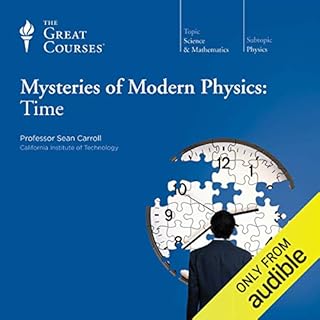
Mysteries of Modern Physics: Time
- By: Sean Carroll, The Great Courses
- Narrated by: Sean Carroll
- Length: 12 hrs and 17 mins
- Original Recording
-
Overall4.5 out of 5 stars 2,018
-
Performance4.5 out of 5 stars 1,792
-
Story4.5 out of 5 stars 1,771
Time rules our lives, woven into the very fabric of the universe. Nothing so pervades our existence and yet is so difficult to explain....
-
3 out of 5 stars
-
Get From Eternity to Here instead
- By Michael on 07-24-13
By: Sean Carroll, and others

-
Your Brain Is a Time Machine
- The Neuroscience and Physics of Time
- By: Dean Buonomano
- Narrated by: Aaron Abano
- Length: 8 hrs and 51 mins
- Unabridged
-
Overall4.5 out of 5 stars 556
-
Performance4.5 out of 5 stars 452
-
Story4.5 out of 5 stars 452
Brain researcher and best-selling author Dean Buonomano draws on evolutionary biology, physics, and philosophy to present his theory of how we tell and perceive time....
-
5 out of 5 stars
-
Great book on an underrated subject
- By Neuron on 05-09-17
By: Dean Buonomano

-
Welcome to the Universe
- An Astrophysical Tour
- By: Michael A. Strauss, J. Richard Gott, Neil deGrasse Tyson
- Narrated by: Michael Butler Murray
- Length: 17 hrs and 53 mins
- Unabridged
-
Overall4.5 out of 5 stars 1,356
-
Performance4.5 out of 5 stars 1,200
-
Story4.5 out of 5 stars 1,195
Welcome to the Universe is a personal guided tour of the cosmos by three of today's leading astrophysicists....
-
3 out of 5 stars
-
All About What We Know About the Universe - ALL
- By J.B. on 02-17-17
By: Michael A. Strauss, and others

-
The Structure of Scientific Revolutions
- By: Thomas S. Kuhn
- Narrated by: Dennis Holland
- Length: 10 hrs and 14 mins
- Unabridged
-
Overall4 out of 5 stars 1,139
-
Performance4 out of 5 stars 820
-
Story4 out of 5 stars 802
The Structure of Scientific Revolutions is essential listening for understanding the history, philosophy, and evolution of science....
-
3 out of 5 stars
-
The problem is not with the book
- By Marcus on 08-09-09
By: Thomas S. Kuhn

-
Chemistry and Our Universe
- How It All Works
- By: Ron B. Davis, The Great Courses
- Narrated by: Ron B. Davis
- Length: 30 hrs and 6 mins
- Original Recording
-
Overall4.5 out of 5 stars 504
-
Performance4.5 out of 5 stars 398
-
Story4.5 out of 5 stars 394
Chemistry and Our Universe: How It All Works is your in-depth introduction to this vital field, taught through 60 engaging half-hour lectures that are suitable for any background or none at all....
-
4 out of 5 stars
-
Great Professor, Hard to Follow.
- By Jen on 05-14-19
By: Ron B. Davis, and others

-
Quantum Physics for Beginners, Into the Light
- The 4 Bizarre Discoveries You Must Know to Master Quantum Mechanics Fast, Revealed Step-By-Step (In Plain English)
- By: John Stoddard
- Narrated by: Joel Richards
- Length: 3 hrs and 43 mins
- Unabridged
-
Overall5 out of 5 stars 125
-
Performance5 out of 5 stars 119
-
Story5 out of 5 stars 119
In this book, we will break through the confusion and reveal to you the most important ideas of quantum physics, told through the amazing true story of just four bizarre discoveries–many of which were made completely by accident....
-
1 out of 5 stars
-
The audio book even has a commercial in it...
- By AjM on 11-26-23
By: John Stoddard

-
The Making of the Atomic Bomb
- 25th Anniversary Edition
- By: Richard Rhodes
- Narrated by: Holter Graham
- Length: 37 hrs and 16 mins
- Unabridged
-
Overall4.5 out of 5 stars 3,987
-
Performance4.5 out of 5 stars 3,570
-
Story4.5 out of 5 stars 3,548
Here for the first time, in rich human, political, and scientific detail, is the complete story of how the bomb was developed....
-
3 out of 5 stars
-
Beware limitations of the reader
- By JFanson on 01-01-19
By: Richard Rhodes
New releases

-
The Superluminal Universe
- Redefining Consciousness, Time and Space
- By: Régis Dutheil, Brigitte Dutheil, Matt Raymond - translator
- Narrated by: Ray Greenley
- Length: 5 hrs and 16 mins
- Unabridged
-
Overall0 out of 5 stars 0
-
Performance0 out of 5 stars 0
-
Story0 out of 5 stars 0
The Superluminal Universe reveals, for the first time in English, the incredible insights of French quantum physicist Professor Regis Dutheil. Thanks to the development of particle accelerators, physicists are now able to propel particles (tachyons) at a speed close to that of light (300,000 km per second). At these extreme speeds, the laws that govern our universe no longer apply. Professor Dutheil's work has shown that the theory of relativity is not incompatible with that of tachyons, provided that we allow for the possibility of a double reality.
By: Régis Dutheil, and others

-
Does the Atom Have A Designer?
- By: Lakhi Goenka
- Narrated by: Virtual Voice
- Length: 2 hrs and 9 mins
- Unabridged
-
Overall0 out of 5 stars 0
-
Performance0 out of 5 stars 0
-
Story0 out of 5 stars 0
(Book Updated July 2019) “Does the Atom have Designer?” is a groundbreaking, first-of-its-kind analysis that critically examines if the complexity and functionalities of the Atomic System arose simply from random events. This book, written by a secular researcher searching for answers, examines subatomic behaviors such as wave-particle duality & quantum superposition, quark-gluon interactions within the atomic nucleus, and electron-photon interactions within atomic orbitals, as well as their role in realizing the many functionalities of the Atom. Aristotle’s four causes are used to ...
By: Lakhi Goenka

-
Einstein's Universe
- Unraveling the Mysteries of Cosmos and Quantum Worlds (Discover Together!, Vol. 4)
- By: Ben Chun
- Narrated by: Neil Wexler
- Length: 4 hrs and 45 mins
- Unabridged
-
Overall0 out of 5 stars 0
-
Performance0 out of 5 stars 0
-
Story0 out of 5 stars 0
We look into the depths of Albert Einstein's groundbreaking theories and lasting legacy in this enlightening look at his huge contributions to science. Einstein's work laid the groundwork for modern physics. His groundbreaking ideas in Relativity changed the way we think about space, time, and gravity. His Photon Theory of Light was also a key part of the early development of Quantum Mechanics.
By: Ben Chun

-
You Can Overcome Anything
- With Courage
- By: Cesar Espino, David Selvin, Mike Kroupa, and others
- Narrated by: Virtual Voice
- Length: 5 hrs and 2 mins
- Unabridged
-
Overall0 out of 5 stars 0
-
Performance0 out of 5 stars 0
-
Story0 out of 5 stars 0
You Can Overcome Anything! Volume 13 - With Courage is a collaboration project featuring 17 authors from all walks of life sharing some of their personal stories and life lessons. With a special chapter by David Selvin. In this book, the authors talk about overcoming some of their own life obstacles and how "courage" played an important role in moving forward, overcoming, and succeeding. You will get empowerment, inspiration, and motivation to continue to move forward in your own journey and reach your full potential. These amazing stories will resonate with you regardless of where you are ...
By: Cesar Espino, and others

-
EINSTEIN'S RATIONAL UNIVERSE
- The Cosmic Constant EINSTEIN'S BEST IDEA
- By: RALPH BOURNE
- Narrated by: Virtual Voice
- Length: 1 hr and 28 mins
- Unabridged
-
Overall0 out of 5 stars 0
-
Performance0 out of 5 stars 0
-
Story0 out of 5 stars 0
Einstein's idea of a "Cosmic Constant" was scorned for many decades. But lately, scientific attitudes have changed. Physicists now universally recognize the need for black energy and black matter. Physicists realize a vast amount of invisible material and energy is necessary to keep the universe together and to explain other phenomena--such as why the edges of galaxies speed far too fast to stay attached, but do so anyway. And the current theories of elemental particles now suggest a vast range of phantom-particles—these phantom particles blink in and out of existence in space, from other...
By: RALPH BOURNE

-
Space Warriors
- The Formation and Future of the Space Force
- By: Kam Ng, ChatGPT
- Narrated by: Virtual Voice
- Length: 1 hr and 46 mins
- Unabridged
-
Overall0 out of 5 stars 0
-
Performance0 out of 5 stars 0
-
Story0 out of 5 stars 0
In this eBook, we discuss the origins, structure, missions, and achievements of the United States Space Force (USSF), the newest branch of the U.S. Armed Forces established in 2019. The USSF is dedicated to protecting U.S. and allied interests in space, ensuring the security and operational superiority of the nation in this critical domain. We explore the foundational aspects of the USSF, including its organizational development, the establishment of key commands and the intricate process of integrating personnel from various military backgrounds. This eBook addresses the strategic ...
By: Kam Ng, and others
-
The Superluminal Universe
- Redefining Consciousness, Time and Space
- By: Régis Dutheil, Brigitte Dutheil, Matt Raymond - translator
- Narrated by: Ray Greenley
- Length: 5 hrs and 16 mins
- Unabridged
-
Overall0 out of 5 stars 0
-
Performance0 out of 5 stars 0
-
Story0 out of 5 stars 0
The Superluminal Universe reveals, for the first time in English, the incredible insights of French quantum physicist Professor Regis Dutheil. Thanks to the development of particle accelerators, physicists are now able to propel particles (tachyons) at a speed close to that of light (300,000 km per second). At these extreme speeds, the laws that govern our universe no longer apply. Professor Dutheil's work has shown that the theory of relativity is not incompatible with that of tachyons, provided that we allow for the possibility of a double reality.
By: Régis Dutheil, and others
-
Does the Atom Have A Designer?
- By: Lakhi Goenka
- Narrated by: Virtual Voice
- Length: 2 hrs and 9 mins
- Unabridged
-
Overall0 out of 5 stars 0
-
Performance0 out of 5 stars 0
-
Story0 out of 5 stars 0
(Book Updated July 2019) “Does the Atom have Designer?” is a groundbreaking, first-of-its-kind analysis that critically examines if the complexity and functionalities of the Atomic System arose simply from random events. This book, written by a secular researcher searching for answers, examines subatomic behaviors such as wave-particle duality & quantum superposition, quark-gluon interactions within the atomic nucleus, and electron-photon interactions within atomic orbitals, as well as their role in realizing the many functionalities of the Atom. Aristotle’s four causes are used to ...
By: Lakhi Goenka
-
Einstein's Universe
- Unraveling the Mysteries of Cosmos and Quantum Worlds (Discover Together!, Vol. 4)
- By: Ben Chun
- Narrated by: Neil Wexler
- Length: 4 hrs and 45 mins
- Unabridged
-
Overall0 out of 5 stars 0
-
Performance0 out of 5 stars 0
-
Story0 out of 5 stars 0
We look into the depths of Albert Einstein's groundbreaking theories and lasting legacy in this enlightening look at his huge contributions to science. Einstein's work laid the groundwork for modern physics. His groundbreaking ideas in Relativity changed the way we think about space, time, and gravity. His Photon Theory of Light was also a key part of the early development of Quantum Mechanics.
By: Ben Chun
-
You Can Overcome Anything
- With Courage
- By: Cesar Espino, David Selvin, Mike Kroupa, and others
- Narrated by: Virtual Voice
- Length: 5 hrs and 2 mins
- Unabridged
-
Overall0 out of 5 stars 0
-
Performance0 out of 5 stars 0
-
Story0 out of 5 stars 0
You Can Overcome Anything! Volume 13 - With Courage is a collaboration project featuring 17 authors from all walks of life sharing some of their personal stories and life lessons. With a special chapter by David Selvin. In this book, the authors talk about overcoming some of their own life obstacles and how "courage" played an important role in moving forward, overcoming, and succeeding. You will get empowerment, inspiration, and motivation to continue to move forward in your own journey and reach your full potential. These amazing stories will resonate with you regardless of where you are ...
By: Cesar Espino, and others
-
EINSTEIN'S RATIONAL UNIVERSE
- The Cosmic Constant EINSTEIN'S BEST IDEA
- By: RALPH BOURNE
- Narrated by: Virtual Voice
- Length: 1 hr and 28 mins
- Unabridged
-
Overall0 out of 5 stars 0
-
Performance0 out of 5 stars 0
-
Story0 out of 5 stars 0
Einstein's idea of a "Cosmic Constant" was scorned for many decades. But lately, scientific attitudes have changed. Physicists now universally recognize the need for black energy and black matter. Physicists realize a vast amount of invisible material and energy is necessary to keep the universe together and to explain other phenomena--such as why the edges of galaxies speed far too fast to stay attached, but do so anyway. And the current theories of elemental particles now suggest a vast range of phantom-particles—these phantom particles blink in and out of existence in space, from other...
By: RALPH BOURNE
-
Space Warriors
- The Formation and Future of the Space Force
- By: Kam Ng, ChatGPT
- Narrated by: Virtual Voice
- Length: 1 hr and 46 mins
- Unabridged
-
Overall0 out of 5 stars 0
-
Performance0 out of 5 stars 0
-
Story0 out of 5 stars 0
In this eBook, we discuss the origins, structure, missions, and achievements of the United States Space Force (USSF), the newest branch of the U.S. Armed Forces established in 2019. The USSF is dedicated to protecting U.S. and allied interests in space, ensuring the security and operational superiority of the nation in this critical domain. We explore the foundational aspects of the USSF, including its organizational development, the establishment of key commands and the intricate process of integrating personnel from various military backgrounds. This eBook addresses the strategic ...
By: Kam Ng, and others

-
The Eye of God
- By: Aeternus Costin
- Narrated by: Daniel Greenberg
- Length: 3 hrs and 27 mins
- Unabridged
-
Overall0 out of 5 stars 0
-
Performance0 out of 5 stars 0
-
Story0 out of 5 stars 0
Aeternus Costin, a self-taught philosopher, finds enlightenment at the crossroads of science, technology, and deep metaphysical inquiries. Beginning with an epiphany during a casual summer day in 2019, Aeternus’ intellectual voyage spans across centuries of philosophical thought, from Plato to Einstein. This book stands as both a challenge to conventional religious dogma and a fervent call to reconcile logic with spiritual beliefs.
By: Aeternus Costin

-
Mapping the Skies
- Exploring AI-Powered Surveys for Identifying Exoplanetary Systems
- By: Barrett Williams, ChatGPT ChatGPT
- Narrated by: Virtual Voice
- Length: 1 hr and 49 mins
- Unabridged
-
Overall0 out of 5 stars 0
-
Performance0 out of 5 stars 0
-
Story0 out of 5 stars 0
Discover the immersive and transformative world of astronomy like never before in the new eBook, "Mapping the Skies". An insightful exploration of the cosmos that effortlessly combines the fascinating field of Space Science with the cutting-edge technology of Artificial Intelligence (AI). "Mapping the Skies" begins by introducing you to the stupefying wonders of our cosmic sky, unfurling the mysteries of astronomical phenomena. Delve into the intriguing concept of extraterrestrial existence as the book unlocks secrets of the exoplanetary systems. You will be taken through the basics of ...
By: Barrett Williams, and others
-
Quanta and Fields
- The Biggest Ideas in the Universe
- By: Sean Carroll
- Narrated by: Sean Carroll
- Length: 9 hrs and 49 mins
- Unabridged
-
Overall5 out of 5 stars 11
-
Performance5 out of 5 stars 9
-
Story5 out of 5 stars 9
Sean Carroll is creating a profoundly new approach to sharing physics with a broad audience, one that goes beyond analogies to show how physicists really think. He cuts to the bare mathematical essence of our most profound theories, explaining every step in a uniquely accessible way. Quantum field theory is how modern physics describes nature at its most profound level. Starting with the basics of quantum mechanics itself, Sean Carroll explains measurement and entanglement before explaining how the world is really made of fields.
-
5 out of 5 stars
-
exactly the level I need
- By Keith on 05-24-24
By: Sean Carroll

-
Statistics Behind the Headlines
- ASA-CRC Series on Statistical Reasoning in Science and Society
- By: A. John Bailer, Rosemary Pennington
- Narrated by: John Bailer, Rosemary Pennington
- Length: 5 hrs and 34 mins
- Unabridged
-
Overall0 out of 5 stars 0
-
Performance0 out of 5 stars 0
-
Story0 out of 5 stars 0
If you are looking to start developing your data self-defense and critical news consumption skills, this book is for you! It reflects a long-term collaboration between a statistician and a journalist to shed light on the statistics behind the stories and the stories behind the statistics. The only prerequisite for enjoying this book is an interest in developing the skills and insights for better understanding news stories that incorporate quantitative information.
By: A. John Bailer, and others

-
Funny Strategies
- By: Robart Baratheon
- Narrated by: Tanvir Karim
- Length: 3 hrs and 5 mins
- Unabridged
-
Overall0 out of 5 stars 0
-
Performance0 out of 5 stars 0
-
Story0 out of 5 stars 0
After being an atheist for a long time, the author was persuaded to change his mind by science. He is now an atheist author, journalist, and professor at Harvard. Despite his atheism in the past, he today holds the belief that religion is the ultimate power due to its centrality to science and its invulnerability to natural disasters.
By: Robart Baratheon

-
Quantum Physics, Into the Light 2-in-1 Value
- Quantum Physics + Relativity for Beginners: The 7 Bizarre Discoveries You Must Know to Master Them Fast, Revealed Step-by-Step (In Plain English)
- By: John Stoddard
- Narrated by: Joel Richards
- Length: 7 hrs and 1 min
- Unabridged
-
Overall5 out of 5 stars 49
-
Performance5 out of 5 stars 48
-
Story5 out of 5 stars 48
In 1965, the great American physicist Richard Feynman famously proclaimed, "I think I can safely say that nobody understands Quantum Mechanics." Is there any wonder why? Particles that pop in and out of existence... Spooky action at a distance that travels faster than light... Infinite universes and branching realities? In this book, we will break through the confusion and reveal to you the most important ideas of Quantum Physics, told through the amazing true story of just 4 bizarre discoveries.
-
5 out of 5 stars
-
Outstanding introduction to complex topics
- By Deborah Levin on 05-31-24
By: John Stoddard

-
The Boy Who Invented Television
- A Story of Inspiration, Persistence and Quiet Passion
- By: Paul Schatzkin
- Narrated by: Paul Schatzkin
- Length: 9 hrs and 28 mins
- Unabridged
-
Overall5 out of 5 stars 1
-
Performance4 out of 5 stars 1
-
Story5 out of 5 stars 1
In the summer of 1921, Philo T. Farnsworth was not all that different from any other farmer's son in rural Idaho, until he came up with an idea that would change the world–and thrust him into a titanic struggle with one of the most monolithic monopolies in the world. Farnsworth's story of divine inspiration facing off against corporate avarice is a compelling–though seldom told–saga from the 20th century that is still relevant in the 21st.
By: Paul Schatzkin

-
Why Matter Doesn't Matter
- Physics Within Consciousness
- By: Samuel Avery
- Narrated by: Samuel Avery
- Length: 1 hr and 24 mins
- Unabridged
-
Overall5 out of 5 stars 2
-
Performance5 out of 5 stars 1
-
Story5 out of 5 stars 1
Expand your mind and shift your vantage point on reality with Why Matter Doesn't Matter—a paradigm-shifting exploration of physics and consciousness. Drawing on insights from modern physics like relativity and quantum mechanics, Samuel Avery builds a compelling case that consciousness itself is fundamental and that space, time, and the familiar dimensions we experience are phenomena arising within consciousness rather than existing as an external physical reality.
By: Samuel Avery

-
Exploring the Final Frontier
- A Journey into Space Colonization
- By: Kam Ng, ChatGPT
- Narrated by: Virtual Voice
- Length: 1 hr and 51 mins
- Unabridged
-
Overall0 out of 5 stars 0
-
Performance0 out of 5 stars 0
-
Story0 out of 5 stars 0
In this eBook, we dive into the fascinating world of space colonization, exploring the challenges, opportunities, and prospects of humanity's quest to expand beyond Earth's boundaries. We begin by defining space colonization as the establishment of sustainable human settlements on celestial bodies such as the Moon and Mars. We then discuss the scientific, technical, social, ethical, and philosophical perspectives of space colonization, highlighting its potential to advance scientific knowledge, technological innovation, and international cooperation. We examine the main purposes of space ...
By: Kam Ng, and others

-
Medusa of Time: how technology redefines Copenhagen
- By: T. Lee Baumann
- Narrated by: Virtual Voice
- Length: 2 hrs and 50 mins
- Unabridged
-
Overall0 out of 5 stars 0
-
Performance0 out of 5 stars 0
-
Story0 out of 5 stars 0
Which reality are we to believe? Our minds and logic tell us that the world in which we live is real. It’s concrete. It’s particulate. We can see it, touch it, taste it, smell it, and hear it. Science, on the other hand, suggests something else. Our minds may be deceiving us. The world, when we are not observing it, is totally different. We have always believed, when we closed our eyes or slept, that the world maintained its basic shape and substance…that is, things would be essentially the same when we woke up as when we went to sleep. The Copenhagen Interpretation tells us, however,...
By: T. Lee Baumann

-
Launching to Space On Your Own
- The Comprehensive Guide to Weather Balloon Projects
- By: Barrett Williams, ChatGPT ChatGPT
- Narrated by: Virtual Voice
- Length: 1 hr and 23 mins
- Unabridged
-
Overall0 out of 5 stars 0
-
Performance0 out of 5 stars 0
-
Story0 out of 5 stars 0
Have you ever dreamt of launching something into space? Or just curious about how it feels to send your own project high up into the sky? If so, Launching to Space On Your Own is the guidebook you need to turn your ambitious project into reality. Launching to Space On Your Own is the ultimate guide for anyone passionate about weather balloon technology. This eBook will walk you through everything you need to know about assembling your own weather balloon payload, weather patterns and regulations, recovery system designing, and many more essential topics. You'll discover practical tips that ...
By: Barrett Williams, and others

-
PHYSICS NERD: 1000+ Amazing And Mind-Blowing Facts About Physics In Our Universe
- Your Guide to Matter, Forces, Spacetime, Thermodynamics, Light, Waves, and Electricity, and Quantum Mechanics
- By: Leo Lexicon
- Narrated by: Virtual Voice
- Length: 1 hr and 49 mins
- Unabridged
-
Overall0 out of 5 stars 0
-
Performance0 out of 5 stars 0
-
Story0 out of 5 stars 0
Welcome to Physics Nerd! In this exciting book, you will: Discover the building blocks of matter and the quantum weirdness that defies common sense. Understand the invisible forces that hold the universe together, from the gravity that grounds us to the electromagnetism that lights up our world. Step into the realm of spacetime, where black holes devour stars and time itself can slow down. Explore the laws that govern energy and matter, and marvel at exotic states like superfluids and Bose-Einstein condensates. Illuminate your understanding of light, from its wave-like nature to its quantum...
By: Leo Lexicon