
Showing results for "the great gatsby" in All Categories
-

-
The Great Gatsby
- By: F. Scott Fitzgerald
- Narrated by: Jake Gyllenhaal
- Length: 4 hrs and 49 mins
- Unabridged
-
Overall4.5 out of 5 stars 23,210
-
Performance4.5 out of 5 stars 20,432
-
Story4.5 out of 5 stars 20,396
F. Scott Fitzgerald’s classic American novel of the Roaring Twenties is beloved by generations of readers and stands as his crowning work. This new audio edition, authorized by the Fitzgerald estate, is narrated by Oscar-nominated actor Jake Gyllenhaal (Brokeback Mountain). Gyllenhaal's performance is a faithful delivery in the voice of Nick Carraway, the Midwesterner turned New York bond salesman, who rents a small house next door to the mysterious millionaire Jay Gatsby....
-
5 out of 5 stars
-
Simple, Beautiful, and Exquisitely Textured
- By Darwin8u on 04-09-13
-
The Great Gatsby
- Narrated by: Jake Gyllenhaal
- Length: 4 hrs and 49 mins
- Release date: 04-09-13
- Language: English
Failed to add items
Sorry, we are unable to add the item because your shopping cart is already at capacity.Add to Cart failed.
Please try again laterAdd to Wish List failed.
Please try again laterRemove from wishlist failed.
Please try again laterAdding to library failed
Please try againFollow podcast failed
Please try againUnfollow podcast failed
Please try againRegular price: $14.95 or 1 credit
Sale price: $14.95 or 1 credit
-
-

-
The Great Gatsby
- By: F. Scott Fitzgerald
- Narrated by: Adrian Wilson
- Length: 4 hrs and 59 mins
- Unabridged
-
Overall4.5 out of 5 stars 66
-
Performance4.5 out of 5 stars 56
-
Story4.5 out of 5 stars 56
The Great Gatsby is a 1925 novel by F. Scott Fitzgerald. Set in the Jazz Age on Long Island, near New York City, the novel depicts first-person narrator Nick Carraway's interactions with mysterious millionaire Jay Gatsby and Gatsby's obsession with reuniting with his former lover, Daisy Buchanan. The novel was inspired by a romance Fitzgerald had with socialite Ginevra King, and the riotous parties he attended on Long Island's North Shore in 1922.
-
4 out of 5 stars
-
Tremendous choice of wording
- By araya harrison on 08-13-24
-
The Great Gatsby
- Narrated by: Adrian Wilson
- Length: 4 hrs and 59 mins
- Release date: 08-08-22
- Language: English
Failed to add items
Sorry, we are unable to add the item because your shopping cart is already at capacity.Add to Cart failed.
Please try again laterAdd to Wish List failed.
Please try again laterRemove from wishlist failed.
Please try again laterAdding to library failed
Please try againFollow podcast failed
Please try againUnfollow podcast failed
Please try againRegular price: $11.89 or 1 credit
Sale price: $11.89 or 1 credit
-
-

-
The Great Gatsby
- By: F. Scott Fitzgerald
- Narrated by: Anthony Heald
- Length: 4 hrs and 53 mins
- Unabridged
-
Overall4.5 out of 5 stars 2,541
-
Performance4.5 out of 5 stars 2,237
-
Story4.5 out of 5 stars 2,226
Jay Gatsby is still in love with Daisy, whom he met during the war when he was penniless. Having made himself wealthy through illegal means, he now lives in a mansion across the bay from the home of Daisy Buchanan, who has since married for money. Holding on to his illusion of Daisy as perfect, he seeks to impress her with his wealth, and uses his new neighbor, Nick Carraway (our narrator), to reach her.
-
5 out of 5 stars
-
Always a great read!
- By victor on 02-19-21
-
The Great Gatsby
- Narrated by: Anthony Heald
- Length: 4 hrs and 53 mins
- Release date: 02-05-21
- Language: English
Failed to add items
Sorry, we are unable to add the item because your shopping cart is already at capacity.Add to Cart failed.
Please try again laterAdd to Wish List failed.
Please try again laterRemove from wishlist failed.
Please try again laterAdding to library failed
Please try againFollow podcast failed
Please try againUnfollow podcast failed
Please try againRegular price: $12.07 or 1 credit
Sale price: $12.07 or 1 credit
Included in Plus membership -
-

-
The Great Gatsby
- By: F. Scott Fitzgerald
- Narrated by: Billy Dickson
- Length: 5 hrs and 20 mins
- Unabridged
-
Overall3 out of 5 stars 1
-
Performance3 out of 5 stars 1
-
Story4 out of 5 stars 1
"The Great Gatsby" takes us to New York in the 1920s, where jazz can be heard everywhere, underground alcohol trade flourishes, and the mafia rules the city. It is a time of great crisis and equally great profits. A time when it was easiest to become somebody in a short period after previously being nobody. Such a person was Jay Gatsby, dreaming of great wealth and power. To fulfill these dreams, he gets involved in the gears of the criminal underworld and high finance...
-
The Great Gatsby
- Narrated by: Billy Dickson
- Length: 5 hrs and 20 mins
- Release date: 08-27-24
- Language: English
Failed to add items
Sorry, we are unable to add the item because your shopping cart is already at capacity.Add to Cart failed.
Please try again laterAdd to Wish List failed.
Please try again laterRemove from wishlist failed.
Please try again laterAdding to library failed
Please try againFollow podcast failed
Please try againUnfollow podcast failed
Please try againRegular price: $3.49 or 1 credit
Sale price: $3.49 or 1 credit
-
-

-
The Great Gatsby
- By: F. Scott Fitzgerald
- Narrated by: Frank Muller
- Length: 4 hrs and 37 mins
- Unabridged
-
Overall4.5 out of 5 stars 98
-
Performance5 out of 5 stars 80
-
Story4.5 out of 5 stars 80
No one - fictional or factual - embodies the Jazz Age as completely as F. Scott Fitzgerald's Jay Gatsby. First published in 1925, this legendary novel continues to enthrall generations as it serves as a lens to view our not-so-distant past. Many of our notions about that period are taken from this book. Bathtub gin, flappers, and house parties that last all week enliven Fitzgerald's classic tale. Stylish and engaging, The Great Gatsby is also a startling literate portrait of Gatsby's search for meaning in his opulent world.
-
5 out of 5 stars
-
ABSOLUTELY FANTASTIC!!
- By Aspen on 10-06-21
-
The Great Gatsby
- Narrated by: Frank Muller
- Length: 4 hrs and 37 mins
- Release date: 06-02-21
- Language: English
Failed to add items
Sorry, we are unable to add the item because your shopping cart is already at capacity.Add to Cart failed.
Please try again laterAdd to Wish List failed.
Please try again laterRemove from wishlist failed.
Please try again laterAdding to library failed
Please try againFollow podcast failed
Please try againUnfollow podcast failed
Please try againRegular price: $11.17 or 1 credit
Sale price: $11.17 or 1 credit
Included in Plus membership -
-

-
The Great Gatsby
- By: F. Scott Fitzgerald
- Narrated by: Jake Gyllenhaal
- Length: 4 hrs and 49 mins
- Unabridged
-
Overall4.5 out of 5 stars 798
-
Performance4.5 out of 5 stars 711
-
Story4.5 out of 5 stars 712
F. Scott Fitzgerald’s classic American novel of the Roaring Twenties is beloved by generations of readers and stands as his crowning work. This new audio edition, authorized by the Fitzgerald estate, is narrated by Oscar-nominated actor Jake Gyllenhaal ( Brokeback Mountain). Gyllenhaal's performance is a faithful delivery in the voice of Nick Carraway, the Midwesterner turned New York bond salesman, who rents a small house next door to the mysterious millionaire Jay Gatsby. There, he has a firsthand view of Gatsby’s lavish West Egg parties - and of his undying love....
-
4 out of 5 stars
-
Just the right reading style
- By Matthew Stavros on 05-09-13
-
The Great Gatsby
- Narrated by: Jake Gyllenhaal
- Length: 4 hrs and 49 mins
- Release date: 04-09-13
- Language: English
Failed to add items
Sorry, we are unable to add the item because your shopping cart is already at capacity.Add to Cart failed.
Please try again laterAdd to Wish List failed.
Please try again laterRemove from wishlist failed.
Please try again laterAdding to library failed
Please try againFollow podcast failed
Please try againUnfollow podcast failed
Please try againRegular price: $14.95 or 1 credit
Sale price: $14.95 or 1 credit
-
-

-
The Great Gatsby
- By: Francis Scott Fitzgerald
- Narrated by: Erica Escalona
- Length: 5 hrs and 15 mins
- Unabridged
-
Overall4.5 out of 5 stars 74
-
Performance4 out of 5 stars 71
-
Story4.5 out of 5 stars 70
When F. Scott Fitzgerald wrote The Great Gatsby in the early 1920s, the American Dream was already on the skids. Originally based on the idea that the pursuit of happiness involves not only material success but moral and spiritual growth, the dream had by Fitzgerald's time become increasingly focused on money and pleasure—a phenomenon the high-living writer was only too familiar with.
-
3 out of 5 stars
-
Not my Cup of Tea
- By Ceramic_Duck on 08-19-24
-
The Great Gatsby
- Narrated by: Erica Escalona
- Length: 5 hrs and 15 mins
- Release date: 05-27-22
- Language: English
Failed to add items
Sorry, we are unable to add the item because your shopping cart is already at capacity.Add to Cart failed.
Please try again laterAdd to Wish List failed.
Please try again laterRemove from wishlist failed.
Please try again laterAdding to library failed
Please try againFollow podcast failed
Please try againUnfollow podcast failed
Please try againRegular price: $10.49 or 1 credit
Sale price: $10.49 or 1 credit
-
-

-
The Great Gatsby
- By: F. Scott Fitzgerald
- Narrated by: Robert G. Slade
- Length: 5 hrs and 21 mins
- Unabridged
-
Overall0 out of 5 stars 0
-
Performance0 out of 5 stars 0
-
Story0 out of 5 stars 0
Narrator Nick Carraway tells the story of his neighbour Jay Gatsby, whose parties at his Long Island mansion are as lavish as his past is mysterious. Yet Gatsby cares only for one of his guests: his lost love Daisy Buchanan, now married and living across the bay. In Fitzgerald’s hands, this deceptively simple story becomes a perfect work of art, told in hauntingly beautiful prose.
-
The Great Gatsby
- Narrated by: Robert G. Slade
- Length: 5 hrs and 21 mins
- Release date: 09-05-24
- Language: English
Failed to add items
Sorry, we are unable to add the item because your shopping cart is already at capacity.Add to Cart failed.
Please try again laterAdd to Wish List failed.
Please try again laterRemove from wishlist failed.
Please try again laterAdding to library failed
Please try againFollow podcast failed
Please try againUnfollow podcast failed
Please try againRegular price: $3.81 or 1 credit
Sale price: $3.81 or 1 credit
-
-

-
The Great Gatsby
- By: F. Scott Fitzgerald
- Narrated by: Tanner Buchanan
- Length: 5 hrs and 47 mins
- Unabridged
-
Overall4.5 out of 5 stars 118
-
Performance4.5 out of 5 stars 104
-
Story4.5 out of 5 stars 103
Hailed as one of the Great American Novels, The Great Gatsby delves into the dark corners of the Jazz Age to tell a tragic tale of obsession, love, and the gritty underbelly of the American dream. Through the eyes of unassuming narrator Nick Carraway, the story follows the enigmatic Jay Gatsby as he chases the object of his hopeless desire, the beautiful Daisy Buchanan.
-
5 out of 5 stars
-
The great American novel!
- By Karen Creeden on 11-12-22
-
The Great Gatsby
- Narrated by: Tanner Buchanan
- Length: 5 hrs and 47 mins
- Release date: 11-30-21
- Language: English
Failed to add items
Sorry, we are unable to add the item because your shopping cart is already at capacity.Add to Cart failed.
Please try again laterAdd to Wish List failed.
Please try again laterRemove from wishlist failed.
Please try again laterAdding to library failed
Please try againFollow podcast failed
Please try againUnfollow podcast failed
Please try againRegular price: $13.07 or 1 credit
Sale price: $13.07 or 1 credit
-
-

-
The Great Gatsby
- By: F. Scott Fitzgerald
- Narrated by: Anthony Heald
- Length: 4 hrs and 53 mins
- Unabridged
-
Overall4 out of 5 stars 791
-
Performance4.5 out of 5 stars 592
-
Story4 out of 5 stars 605
Jay Gatsby is still in love with Daisy, whom he met during the war when he was penniless. Having made himself wealthy through illegal means, he now lives in a mansion across the bay from the home of Daisy Buchanan, who has since married for money. Holding on to his illusion of Daisy as perfect, he seeks to impress her with his wealth, and uses his new neighbor, Nick Carraway, (our narrator), to reach her.
-
5 out of 5 stars
-
Didn't realize how good this was
- By Tad Davis on 02-17-14
-
The Great Gatsby
- Narrated by: Anthony Heald
- Length: 4 hrs and 53 mins
- Release date: 10-12-07
- Language: English
Failed to add items
Sorry, we are unable to add the item because your shopping cart is already at capacity.Add to Cart failed.
Please try again laterAdd to Wish List failed.
Please try again laterRemove from wishlist failed.
Please try again laterAdding to library failed
Please try againFollow podcast failed
Please try againUnfollow podcast failed
Please try againRegular price: $10.97 or 1 credit
Sale price: $10.97 or 1 credit
Included in Plus membership -
-

-
The Great Gatsby
- By: F. Scott Fitzgerald
- Narrated by: Tim Robbins
- Length: 5 hrs and 3 mins
- Unabridged
-
Overall4.5 out of 5 stars 58
-
Performance4.5 out of 5 stars 47
-
Story4.5 out of 5 stars 47
Set against a backdrop of jazz music, bootlegging, and lavish parties, The Great Gatsby is the story of Midwesterner Nick Carraway’s curious introduction to the decadent world of his mysterious, wealthy neighbor Jay Gatsby, whose thirst for riches is matched only by his tragic obsession with the beautiful Daisy Buchanan. This dangerously propulsive tale of glitz and glamour continues to be relevant as listeners long for escapist novels—a chance to flee into Gatsby’s famed mansion and lose oneself in the rush of opulence.
-
5 out of 5 stars
-
Alive and Wild! I finished it same day.
- By Brea DeMarquee on 08-27-21
-
The Great Gatsby
- Narrated by: Tim Robbins
- Length: 5 hrs and 3 mins
- Release date: 01-05-21
- Language: English
Failed to add items
Sorry, we are unable to add the item because your shopping cart is already at capacity.Add to Cart failed.
Please try again laterAdd to Wish List failed.
Please try again laterRemove from wishlist failed.
Please try again laterAdding to library failed
Please try againFollow podcast failed
Please try againUnfollow podcast failed
Please try againRegular price: $19.79 or 1 credit
Sale price: $19.79 or 1 credit
-
-

-
The Great Gatsby
- By: F. Scott Fitzgerald
- Narrated by: Sean Astin
- Length: 5 hrs and 30 mins
- Unabridged
-
Overall4.5 out of 5 stars 30
-
Performance5 out of 5 stars 26
-
Story5 out of 5 stars 26
The year is 1922, and young Nick Carraway moves to the village of West Egg, where he discovers that his neighbor is the eclectic millionaire Jay Gatsby. As he and Gatsby become acquainted, Nick is thrown into a world full of dazzling parties, unrequited love, and unchecked idealism. Gatsby, surrounded by riches, yearns for the love of a woman who chose another man. He waits for her every night, using a green light at the end of his dock to call out to her from across the water.
-
5 out of 5 stars
-
Excellent reader!
- By Enriched on 05-22-21
-
The Great Gatsby
- Narrated by: Sean Astin
- Length: 5 hrs and 30 mins
- Release date: 01-01-21
- Language: English
Failed to add items
Sorry, we are unable to add the item because your shopping cart is already at capacity.Add to Cart failed.
Please try again laterAdd to Wish List failed.
Please try again laterRemove from wishlist failed.
Please try again laterAdding to library failed
Please try againFollow podcast failed
Please try againUnfollow podcast failed
Please try againRegular price: $20.00 or 1 credit
Sale price: $20.00 or 1 credit
-
-

-
The Great Gatsby
- By: F. Scott Fitzgerald
- Narrated by: Michael Ward
- Length: 5 hrs and 19 mins
- Unabridged
-
Overall0 out of 5 stars 0
-
Performance0 out of 5 stars 0
-
Story0 out of 5 stars 0
Step into the glitz and glamour of the Roaring Twenties with F. Scott Fitzgerald's masterful novel, The Great Gatsby. Immerse yourself in a world of opulence, passion, and shattered dreams as you follow the captivating journey of Jay Gatsby, a man driven by an unrelenting desire to reclaim a lost love. Set against the backdrop of vibrant New York City, this literary classic takes you on a seductive exploration of the American Dream and the illusions it weaves.
-
The Great Gatsby
- Narrated by: Michael Ward
- Length: 5 hrs and 19 mins
- Release date: 11-15-23
- Language: English
Failed to add items
Sorry, we are unable to add the item because your shopping cart is already at capacity.Add to Cart failed.
Please try again laterAdd to Wish List failed.
Please try again laterRemove from wishlist failed.
Please try again laterAdding to library failed
Please try againFollow podcast failed
Please try againUnfollow podcast failed
Please try againRegular price: $19.95 or 1 credit
Sale price: $19.95 or 1 credit
-
-
-
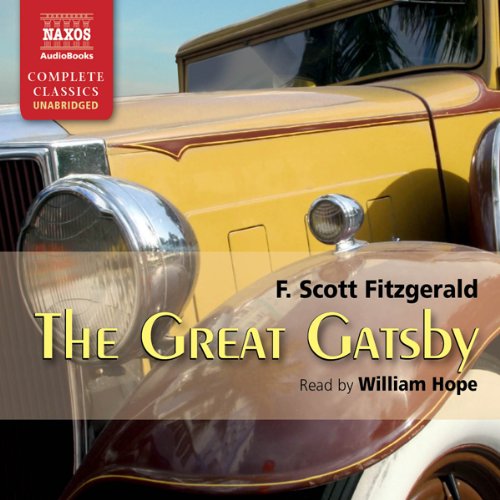
The Great Gatsby
- By: F. Scott Fitzgerald
- Narrated by: William Hope
- Length: 5 hrs and 38 mins
- Unabridged
-
Overall4.5 out of 5 stars 912
-
Performance4.5 out of 5 stars 799
-
Story4.5 out of 5 stars 801
Elegant, enigmatic Jay Gatsby yearns for his old love, the beautiful Daisy. But she is married to the insensitive if hugely successful Tom Buchanan, who won’t let her go despite having a mistress himself. In their wealthy haven, these beguiling lives are brought together by the innocent and entranced narrator, Nick – until their decadent deceits spill into violence and tragedy. Part morality tale, part fairy tale, The Great Gatsby is the consummate novel of the Jazz Age. Its tenderness and poetry make it one of the great works of the 20th century.
-
4 out of 5 stars
-
The Very Good Gatsby
- By Ian C Robertson on 04-16-13
-
The Great Gatsby
- Narrated by: William Hope
- Length: 5 hrs and 38 mins
- Release date: 09-13-10
- Language: English
Failed to add items
Sorry, we are unable to add the item because your shopping cart is already at capacity.Add to Cart failed.
Please try again laterAdd to Wish List failed.
Please try again laterRemove from wishlist failed.
Please try again laterAdding to library failed
Please try againFollow podcast failed
Please try againUnfollow podcast failed
Please try againRegular price: $14.31 or 1 credit
Sale price: $14.31 or 1 credit
-
-

-
The Great Gatsby
- By: F. Scott Fitzgerald
- Original Recording
-
Overall5 out of 5 stars 1
-
Performance5 out of 5 stars 1
-
Story5 out of 5 stars 1
The Great Gatsby is a 1925 novel by American writer F. Scott Fitzgerald. Set in the Jazz Age on Long Island, near New York City, the novel depicts first-person narrator Nick Carraway's interactions with mysterious millionaire Jay Gatsby and Gatsby's obsession to reunite with his former lover, Daisy Buchanan. The novel was inspired by a youthful romance Fitzgerald had with socialite Ginevra King, and the riotous parties he attended on Long Island's North Shore in 1922. Following a move to the French Riviera, Fitzgerald completed a rough draft of the novel in 1924. He submitted it to editor ...
-
5 out of 5 stars
-
The Great Gatsby skilfully recreates the America of the Roaring Twenties and the Jazz Age
- By younessfinaoui on 09-20-23
Failed to add items
Sorry, we are unable to add the item because your shopping cart is already at capacity.Add to Cart failed.
Please try again laterAdd to Wish List failed.
Please try again laterRemove from wishlist failed.
Please try again laterAdding to library failed
Please try againFollow podcast failed
Please try againUnfollow podcast failed
Please try again -
-

-
The Great Gatsby
- By: F. Scott Fitzgerald
- Narrated by: Daniel Natal
- Length: 3 hrs and 48 mins
- Unabridged
-
Overall0 out of 5 stars 0
-
Performance0 out of 5 stars 0
-
Story0 out of 5 stars 0
In the shadow of World War One and set against the backdrop of the Roaring Twenties, "The Great Gatsby" is F. Scott Fitzgerald's magnum opus. In it, he explores the themes of decadence, idealism, social class, and the mystery of human identity.
-
The Great Gatsby
- Narrated by: Daniel Natal
- Length: 3 hrs and 48 mins
- Release date: 08-12-24
- Language: English
Failed to add items
Sorry, we are unable to add the item because your shopping cart is already at capacity.Add to Cart failed.
Please try again laterAdd to Wish List failed.
Please try again laterRemove from wishlist failed.
Please try again laterAdding to library failed
Please try againFollow podcast failed
Please try againUnfollow podcast failed
Please try againRegular price: $10.14 or 1 credit
Sale price: $10.14 or 1 credit
-
-

-
The Great Gatsby
- By: F. Scott Fitzgerald
- Narrated by: Mark White
- Length: 5 hrs and 4 mins
- Unabridged
-
Overall4.5 out of 5 stars 316
-
Performance4.5 out of 5 stars 252
-
Story4.5 out of 5 stars 253
"The Great Gatsby", F. Scott Fitzgerald's third book, stands as the supreme achievement of his career. First published in 1925, this quintessential novel of the Jazz Age has been acclaimed by generations of readers. The story of the mysteriously wealthy Jay Gatsby and his love for the beautiful Daisy Buchanan, of lavish parties on Long Island at a time when The New York Times noted "gin was the national drink and sex the national obsession," it is an exquisitely crafted tale of America in the 1920s.
-
4 out of 5 stars
-
The Better Narration
- By Karen Easterling on 11-17-20
-
The Great Gatsby
- Narrated by: Mark White
- Length: 5 hrs and 4 mins
- Release date: 05-28-20
- Language: English
Failed to add items
Sorry, we are unable to add the item because your shopping cart is already at capacity.Add to Cart failed.
Please try again laterAdd to Wish List failed.
Please try again laterRemove from wishlist failed.
Please try again laterAdding to library failed
Please try againFollow podcast failed
Please try againUnfollow podcast failed
Please try againRegular price: $3.90 or 1 credit
Sale price: $3.90 or 1 credit
-
-

-
The Great Gatsby
- By: F. Scott Fitzgerald
- Original Recording
-
Overall0 out of 5 stars 0
-
Performance0 out of 5 stars 0
-
Story0 out of 5 stars 0
The Great Gatsby by F. Scott Fitzgerald is set in the Thundering Twenties and follows Scratch Carraway, a young fellow who moves to Long Island, New York. He becomes entranced by his secretive and affluent neighbor, Jay Gatsby, who tosses extravagant gatherings. Gatsby is infatuated with Daisy Buchanan, Scratch's cousin, and looks to revive a sentiment they had a long time previously. Notwithstanding, Daisy is hitched to Tom Buchanan, a rich and self-important man. As the story unfurls, Gatsby's glorified fantasy about winning Daisy back prompts grievous outcomes. The novel investigates ...
Failed to add items
Sorry, we are unable to add the item because your shopping cart is already at capacity.Add to Cart failed.
Please try again laterAdd to Wish List failed.
Please try again laterRemove from wishlist failed.
Please try again laterAdding to library failed
Please try againFollow podcast failed
Please try againUnfollow podcast failed
Please try again -
-

-
The Great Hippopotamus Hotel
- No. 1 Ladies' Detective Agency, Book 25
- By: Alexander McCall Smith
- Narrated by: Bianca Amato
- Length: 8 hrs and 30 mins
- Unabridged
-
Overall0 out of 5 stars 0
-
Performance0 out of 5 stars 0
-
Story0 out of 5 stars 0
Mma Ramotswe has a deft hand in delicate cases, and never allows an act of injustice to pass unanswered. So, when it comes to her attention that a matter involving dubious motives has arisen, and that it will require the utmost discretion to resolve, she has no choice but to lend her skills in the arts of detection and reconciliation. She is, after all, head of Botswana's premier detective agency, but that doesn't mean she can't use the help of Mma Makutsi and Mma Potokwane.
-
The Great Hippopotamus Hotel
- No. 1 Ladies' Detective Agency, Book 25
- Narrated by: Bianca Amato
- Series: The No. 1 Ladies Detective Agency, Book 25
- Length: 8 hrs and 30 mins
- Release date: 10-24-24
- Language: English
Failed to add items
Sorry, we are unable to add the item because your shopping cart is already at capacity.Add to Cart failed.
Please try again laterAdd to Wish List failed.
Please try again laterRemove from wishlist failed.
Please try again laterAdding to library failed
Please try againFollow podcast failed
Please try againUnfollow podcast failed
Please try againRegular price: $24.49 or 1 credit
Sale price: $24.49 or 1 credit
-
-

-
The Great Gatsby (Dramatized)
- By: F. Scott Fitzgerald
- Narrated by: Janine Barris, Nate Corddry, Sarah Drew, and others
- Length: 1 hr and 51 mins
- Unabridged
-
Overall5 out of 5 stars 3
-
Performance5 out of 5 stars 3
-
Story5 out of 5 stars 3
Set in New York during the Jazz Age, this new adaptation tells the tragic tale of self-made millionaire Jay Gatsby. Consumed with desire for his former lover, Daisy Buchanan, Gatsby draws new neighbor Nick Carraway into his desperate pursuit to win her back—and into their world of lavish wealth, wild parties, and free-flowing liquor.
-
The Great Gatsby (Dramatized)
- Narrated by: Janine Barris, Nate Corddry, Sarah Drew, Mike McShane, Moira Quirk, Darren Richardson, Rufus Sewell, André Sogliuzzo, Devon Sorvari, Matthew Wolf
- Length: 1 hr and 51 mins
- Release date: 10-12-23
- Language: English
Failed to add items
Sorry, we are unable to add the item because your shopping cart is already at capacity.Add to Cart failed.
Please try again laterAdd to Wish List failed.
Please try again laterRemove from wishlist failed.
Please try again laterAdding to library failed
Please try againFollow podcast failed
Please try againUnfollow podcast failed
Please try againRegular price: $5.42 or 1 credit
Sale price: $5.42 or 1 credit
-

-
Here One Moment
- By: Liane Moriarty
- Narrated by: Caroline Lee, Geraldine Hakewill
- Length: 15 hrs and 53 mins
- Unabridged
-
Overall4.5 out of 5 stars 394
-
Performance5 out of 5 stars 381
-
Story4.5 out of 5 stars 381
Aside from a delay, there will be no problems. The flight will be smooth, it will land safely. Everyone who gets on the plane will get off. But almost all of them will be forever changed. Because on this ordinary, short, domestic flight, something extraordinary happens. People learn how and when they are going to die. For some, their death is far in the future—age 103!—and they laugh. But for six passengers, their predicted deaths are not far away at all.
-
2 out of 5 stars
-
Boring narrator
- By Fitness Guru Shauna on 09-10-24
By: Liane Moriarty

-
A Court of Thorns and Roses
- By: Sarah J. Maas
- Narrated by: Jennifer Ikeda
- Length: 16 hrs and 7 mins
- Unabridged
-
Overall4.5 out of 5 stars 60,389
-
Performance4.5 out of 5 stars 54,765
-
Story4.5 out of 5 stars 54,706
When nineteen-year-old huntress Feyre kills a wolf in the woods, a terrifying creature arrives to demand retribution. Dragged to a treacherous magical land she knows about only from legends, Feyre discovers that her captor is not truly a beast, but one of the lethal, immortal faeries who once ruled her world.
-
3 out of 5 stars
-
Bad ending and Immaturity
- By The Story Adict on 09-13-17
By: Sarah J. Maas

-
Task Force Hammer
- Expeditionary Force, Book 17
- By: Craig Alanson
- Narrated by: R.C. Bray
- Length: 22 hrs and 9 mins
- Unabridged
-
Overall5 out of 5 stars 1,124
-
Performance5 out of 5 stars 1,096
-
Story5 out of 5 stars 1,096
The Merry Band of Pirates stopped the enemy from stealing a Sentinel, and destroyed its Elder starship, so why weren’t the Pirates planning a victory party? The enemy was not what they thought it was. It was much, much worse.
-
5 out of 5 stars
-
Enjoyable
- By TazSasha on 09-18-24
By: Craig Alanson

-
Not Till We Are Lost
- Bobiverse, Book 5
- By: Dennis E. Taylor
- Narrated by: Ray Porter
- Length: 11 hrs and 41 mins
- Original Recording
-
Overall5 out of 5 stars 3,788
-
Performance5 out of 5 stars 3,644
-
Story4.5 out of 5 stars 3,644
The Bobiverse is a different place in the aftermath of the Starfleet War, and the days of the Bobs gathering in one big happy moot are far behind. There’s anti-Bob sentiment on multiple planets, the Skippies playing with an AI time bomb, and multiple Bobs just wanting to get away from it all. But it all pales compared to what Icarus and Daedalus discover on their 26,000-year journey to the center of the galaxy.
-
4 out of 5 stars
-
A great read, but…
- By Dennis Atanassov on 09-10-24
By: Dennis E. Taylor
-
Here One Moment
- By: Liane Moriarty
- Narrated by: Caroline Lee, Geraldine Hakewill
- Length: 15 hrs and 53 mins
- Unabridged
-
Overall4.5 out of 5 stars 394
-
Performance5 out of 5 stars 381
-
Story4.5 out of 5 stars 381
Aside from a delay, there will be no problems. The flight will be smooth, it will land safely. Everyone who gets on the plane will get off. But almost all of them will be forever changed. Because on this ordinary, short, domestic flight, something extraordinary happens. People learn how and when they are going to die. For some, their death is far in the future—age 103!—and they laugh. But for six passengers, their predicted deaths are not far away at all.
-
2 out of 5 stars
-
Boring narrator
- By Fitness Guru Shauna on 09-10-24
By: Liane Moriarty
-
A Court of Thorns and Roses
- By: Sarah J. Maas
- Narrated by: Jennifer Ikeda
- Length: 16 hrs and 7 mins
- Unabridged
-
Overall4.5 out of 5 stars 60,389
-
Performance4.5 out of 5 stars 54,765
-
Story4.5 out of 5 stars 54,706
When nineteen-year-old huntress Feyre kills a wolf in the woods, a terrifying creature arrives to demand retribution. Dragged to a treacherous magical land she knows about only from legends, Feyre discovers that her captor is not truly a beast, but one of the lethal, immortal faeries who once ruled her world.
-
3 out of 5 stars
-
Bad ending and Immaturity
- By The Story Adict on 09-13-17
By: Sarah J. Maas
-
Task Force Hammer
- Expeditionary Force, Book 17
- By: Craig Alanson
- Narrated by: R.C. Bray
- Length: 22 hrs and 9 mins
- Unabridged
-
Overall5 out of 5 stars 1,124
-
Performance5 out of 5 stars 1,096
-
Story5 out of 5 stars 1,096
The Merry Band of Pirates stopped the enemy from stealing a Sentinel, and destroyed its Elder starship, so why weren’t the Pirates planning a victory party? The enemy was not what they thought it was. It was much, much worse.
-
5 out of 5 stars
-
Enjoyable
- By TazSasha on 09-18-24
By: Craig Alanson
-
Not Till We Are Lost
- Bobiverse, Book 5
- By: Dennis E. Taylor
- Narrated by: Ray Porter
- Length: 11 hrs and 41 mins
- Original Recording
-
Overall5 out of 5 stars 3,788
-
Performance5 out of 5 stars 3,644
-
Story4.5 out of 5 stars 3,644
The Bobiverse is a different place in the aftermath of the Starfleet War, and the days of the Bobs gathering in one big happy moot are far behind. There’s anti-Bob sentiment on multiple planets, the Skippies playing with an AI time bomb, and multiple Bobs just wanting to get away from it all. But it all pales compared to what Icarus and Daedalus discover on their 26,000-year journey to the center of the galaxy.
-
4 out of 5 stars
-
A great read, but…
- By Dennis Atanassov on 09-10-24
By: Dennis E. Taylor

-
Harry Potter and the Sorcerer's Stone, Book 1
- By: J.K. Rowling
- Narrated by: Jim Dale
- Length: 8 hrs and 18 mins
- Unabridged
-
Overall5 out of 5 stars 195,322
-
Performance5 out of 5 stars 171,413
-
Story5 out of 5 stars 170,901
Harry Potter has never even heard of Hogwarts when the letters start dropping on the doormat at number four, Privet Drive. Addressed in green ink on yellowish parchment with a purple seal, they are swiftly confiscated by his grisly aunt and uncle. Then, on Harry's eleventh birthday, a great beetle-eyed giant of a man called Rubeus Hagrid bursts in with some astonishing news: Harry Potter is a wizard, and he has a place at Hogwarts School of Witchcraft and Wizardry. An incredible adventure is about to begin!
-
5 out of 5 stars
-
A great reading of the wrong book
- By P on 11-24-15
By: J.K. Rowling

-
Atomic Habits
- An Easy & Proven Way to Build Good Habits & Break Bad Ones
- By: James Clear
- Narrated by: James Clear
- Length: 5 hrs and 35 mins
- Unabridged
-
Overall5 out of 5 stars 137,551
-
Performance5 out of 5 stars 112,536
-
Story5 out of 5 stars 111,482
No matter your goals, Atomic Habits offers a proven framework for improving - every day. James Clear, one of the world's leading experts on habit formation, reveals practical strategies that will teach you exactly how to form good habits, break bad ones, and master the tiny behaviors that lead to remarkable results. If you're having trouble changing your habits, the problem isn't you. The problem is your system. Bad habits repeat themselves again and again not because you don't want to change, but because you have the wrong system for change.
-
5 out of 5 stars
-
start here, if you are looking to achieve in life
- By NL on 10-22-18
By: James Clear

-
The Women
- A Novel
- By: Kristin Hannah
- Narrated by: Julia Whelan, Kristin Hannah
- Length: 14 hrs and 57 mins
- Unabridged
-
Overall5 out of 5 stars 35,146
-
Performance5 out of 5 stars 33,757
-
Story5 out of 5 stars 33,759
Women can be heroes. When twenty-year-old nursing student Frances “Frankie” McGrath hears these words, it is a revelation. Raised in the sun-drenched, idyllic world of Southern California and sheltered by her conservative parents, she has always prided herself on doing the right thing. But in 1965, the world is changing, and she suddenly dares to imagine a different future for herself. When her brother ships out to serve in Vietnam, she joins the Army Nurse Corps and follows his path.
-
5 out of 5 stars
-
Great story
- By AJ Frithiof on 02-08-24
By: Kristin Hannah

-
All the Colors of the Dark
- By: Chris Whitaker
- Narrated by: Edoardo Ballerini
- Length: 14 hrs and 37 mins
- Unabridged
-
Overall4.5 out of 5 stars 4,892
-
Performance5 out of 5 stars 4,772
-
Story4.5 out of 5 stars 4,772
1975 is a time of change in America. The Vietnam War is ending. Muhammad Ali is fighting Joe Frazier. And in the small town of Monta Clare, Missouri, girls are disappearing. When the daughter of a wealthy family is targeted, the most unlikely hero emerges—Patch, a local boy, who saves the girl, and, in doing so, leaves heartache in his wake. Patch and those who love him soon discover that the line between triumph and tragedy has never been finer. And that their search for answers will lead them to truths that could mean losing one another.
-
5 out of 5 stars
-
Best book of 2024
- By Jmo930 on 07-04-24
By: Chris Whitaker

-
It Ends with Us
- By: Colleen Hoover
- Narrated by: Olivia Song
- Length: 11 hrs and 11 mins
- Unabridged
-
Overall4.5 out of 5 stars 82,206
-
Performance4.5 out of 5 stars 72,748
-
Story4.5 out of 5 stars 72,598
Lily hasn’t always had it easy, but that’s never stopped her from working hard for the life she wants. She’s come a long way from the small town where she grew up—she graduated from college, moved to Boston, and started her own business. And when she feels a spark with a gorgeous neurosurgeon named Ryle Kincaid, everything in Lily’s life seems too good to be true.
-
1 out of 5 stars
-
Not what I expected.
- By Love2Read on 01-23-20
By: Colleen Hoover

-
A Court of Mist and Fury
- By: Sarah J. Maas
- Narrated by: Jennifer Ikeda
- Length: 23 hrs and 16 mins
- Unabridged
-
Overall5 out of 5 stars 47,213
-
Performance5 out of 5 stars 42,442
-
Story5 out of 5 stars 42,404
Feyre has undergone more trials than one human woman can carry in her heart. Though she’s now been granted the powers and lifespan of the High Fae, she is haunted by her time Under the Mountain and the terrible deeds she performed to save the lives of Tamlin and his people. As her marriage to Tamlin approaches, Feyre’s hollowness and nightmares consume her. She finds herself split into two different people: one who upholds her bargain with Rhysand, High Lord of the feared Night Court, and one who lives out her life in the Spring Court with Tamlin.
-
5 out of 5 stars
-
Shippers will either Love it or Hate it
- By Natalie C on 05-05-16
By: Sarah J. Maas

-
Harry Potter and the Chamber of Secrets, Book 2
- By: J.K. Rowling
- Narrated by: Jim Dale
- Length: 9 hrs and 2 mins
- Unabridged
-
Overall5 out of 5 stars 135,397
-
Performance5 out of 5 stars 118,419
-
Story5 out of 5 stars 117,997
Harry Potter's summer has included the worst birthday ever, doomy warnings from a house-elf called Dobby, and rescue from the Dursleys by his friend Ron Weasley in a magical flying car! Back at Hogwarts School of Witchcraft and Wizardry for his second year, Harry hears strange whispers echo through empty corridors - and then the attacks start. Students are found as though turned to stone... Dobby's sinister predictions seem to be coming true.
-
5 out of 5 stars
-
Jim Dale is wonderful!
- By ladigolfer on 12-31-15
By: J.K. Rowling

-
Fourth Wing
- Empyrean, Book 1
- By: Rebecca Yarros
- Narrated by: Rebecca Soler, Teddy Hamilton
- Length: 21 hrs and 22 mins
- Unabridged
-
Overall4.5 out of 5 stars 34,789
-
Performance4.5 out of 5 stars 32,212
-
Story4.5 out of 5 stars 32,216
Twenty-year-old Violet Sorrengail was supposed to enter the Scribe Quadrant, living a quiet life among books and history. Now, the commanding general—also known as her tough-as-talons mother—has ordered Violet to join the hundreds of candidates striving to become the elite of Navarre: dragon riders. But when you’re smaller than everyone else and your body is brittle, death is only a heartbeat away...because dragons don’t bond to “fragile” humans. They incinerate them.
-
3 out of 5 stars
-
Erotica with Dragons
- By Trev on 05-13-23
By: Rebecca Yarros

-
Harry Potter and the Prisoner of Azkaban, Book 3
- By: J.K. Rowling
- Narrated by: Jim Dale
- Length: 11 hrs and 49 mins
- Unabridged
-
Overall5 out of 5 stars 125,486
-
Performance5 out of 5 stars 110,047
-
Story5 out of 5 stars 109,641
When the Knight Bus crashes through the darkness and screeches to a halt in front of him, it's the start of another far from ordinary year at Hogwarts for Harry Potter. Sirius Black, escaped mass-murderer and follower of Lord Voldemort, is on the run - and they say he is coming after Harry. In his first ever Divination class, Professor Trelawney sees an omen of death in Harry's tea leaves... But perhaps most terrifying of all are the Dementors patrolling the school grounds, with their soul-sucking kiss...
-
5 out of 5 stars
-
Jim Dale at his best
- By rottndachs on 01-12-16
By: J.K. Rowling

-
It Starts with Us
- A Novel
- By: Colleen Hoover
- Narrated by: Colin Donnell, Olivia Song
- Length: 8 hrs and 41 mins
- Unabridged
-
Overall4.5 out of 5 stars 38,491
-
Performance5 out of 5 stars 33,961
-
Story4.5 out of 5 stars 33,903
Lily and her ex-husband, Ryle, have just settled into a civil coparenting rhythm when she suddenly bumps into her first love, Atlas, again. After nearly two years separated, she is elated that for once, time is on their side, and she immediately says yes when Atlas asks her on a date. But her excitement is quickly hampered by the knowledge that, though they are no longer married, Ryle is still very much a part of her life—and Atlas Corrigan is the one man he will hate being in his ex-wife and daughter’s life.
-
3 out of 5 stars
-
Good narration. Story was meh.
- By Cynthia on 10-19-22
By: Colleen Hoover

-
7 Hours to Die
- By: James Patterson, Duane Swierczynski
- Narrated by: Sarah Paulson, Patina Miller, Mel Rodriguez, and others
- Length: 2 hrs and 25 mins
- Original Recording
-
Overall4.5 out of 5 stars 99
-
Performance4.5 out of 5 stars 94
-
Story4.5 out of 5 stars 94
Kidnappers grabbed Jenna in broad daylight, right in front of her children and their horrified classmates. Her family was issued an insane ransom demand: $25 million in cash and jewels, payable by the end of the school day, otherwise they’ll never see her again. As Jenna’s mother scrambles to gather the money, detectives Mo Butler and George Ortega follow the trail of the kidnappers, which will lead them through a sordid landscape of jealous lovers, broken dreamers, and twisted schemers. But every second counts, and there’s one thing Jenna Wade doesn’t have: very much time.
-
5 out of 5 stars
-
Excellent storytelling
- By online-shopping-addict on 09-18-24
By: James Patterson, and others

-
Harry Potter and the Goblet of Fire, Book 4
- By: J.K. Rowling
- Narrated by: Jim Dale
- Length: 20 hrs and 36 mins
- Unabridged
-
Overall5 out of 5 stars 120,491
-
Performance5 out of 5 stars 105,766
-
Story5 out of 5 stars 105,388
The Triwizard Tournament is to be held at Hogwarts. Only wizards who are over seventeen are allowed to enter - but that doesn't stop Harry dreaming that he will win the competition. Then at Hallowe'en, when the Goblet of Fire makes its selection, Harry is amazed to find his name is one of those that the magical cup picks out. He will face death-defying tasks, dragons and Dark wizards, but with the help of his best friends, Ron and Hermione, he might just make it through - alive!
-
5 out of 5 stars
-
“Harreeeeeeeeee”
- By D.S.G. on 01-06-18
By: J.K. Rowling

-
The Housemaid
- By: Freida McFadden
- Narrated by: Lauryn Allman
- Length: 9 hrs and 46 mins
- Unabridged
-
Overall4.5 out of 5 stars 25,665
-
Performance4.5 out of 5 stars 23,250
-
Story4.5 out of 5 stars 23,225
I only try on one of Nina’s pristine white dresses once. Just to see what it’s like. But she soon finds out...and by the time I realize my attic bedroom door only locks from the outside, it’s far too late. But I reassure myself: The Winchesters don’t know who I really am. They don’t know what I’m capable of....
-
1 out of 5 stars
-
One Big Cliche’
- By Karen Brow on 08-03-22
By: Freida McFadden

-
A Court of Wings and Ruin
- By: Sarah J. Maas
- Narrated by: Amanda Leigh Cobb
- Length: 25 hrs and 9 mins
- Unabridged
-
Overall5 out of 5 stars 35,833
-
Performance4.5 out of 5 stars 32,033
-
Story5 out of 5 stars 31,993
Feyre has returned to the Spring Court, determined to gather information on Tamlin’s actions and learn what she can about the invading king threatening to bring her land to its knees. But to do so she must play a deadly game of deceit. One slip could bring doom not only for Feyre but for everything—and everyone she holds dear.
-
4 out of 5 stars
-
Jennifer Ikeda declined to continue with theseries
- By JP on 05-04-17
By: Sarah J. Maas

-
The Anxious Generation
- How the Great Rewiring of Childhood Is Causing an Epidemic of Mental Illness
- By: Jonathan Haidt
- Narrated by: Sean Pratt, Jonathan Haidt
- Length: 10 hrs and 32 mins
- Unabridged
-
Overall5 out of 5 stars 2,548
-
Performance5 out of 5 stars 2,428
-
Story5 out of 5 stars 2,428
There is no bigger public health story now than the collapse in youth mental health. The numbers are terrifying and dominate our headlines. There has been much debate over how we got here, and what to do next, and bestselling author and social psychologist Jonathan Haidt is at the white-hot center of that discourse. Haidt has spent his career speaking wisdom and truth into the most difficult landscapes—communities polarized by politics and religion, campuses battling culture wars, and now the perfect storm contributing to a public health emergency for Gen Z.
-
5 out of 5 stars
-
A Parenting Book for the 2020's
- By Looks and feels great. Even has little pads to prevent scratching on 03-29-24
By: Jonathan Haidt

-
The God of the Woods
- A Novel
- By: Liz Moore
- Narrated by: Saskia Maarleveld
- Length: 14 hrs and 35 mins
- Unabridged
-
Overall4.5 out of 5 stars 2,631
-
Performance4.5 out of 5 stars 2,508
-
Story4.5 out of 5 stars 2,508
Early morning, August 1975: a camp counselor discovers an empty bunk. Its occupant, Barbara Van Laar, has gone missing. Barbara isn’t just any thirteen-year-old: she’s the daughter of the family that owns the summer camp and employs most of the region’s residents. And this isn’t the first time a Van Laar child has disappeared. Barbara’s older brother similarly vanished fourteen years ago, never to be found.
-
5 out of 5 stars
-
Good story telling
- By Ri on 07-12-24
By: Liz Moore

-
By Any Other Name
- A Novel
- By: Jodi Picoult
- Narrated by: Billie Fulford-Brown, Laura Benanti, Jodi Picoult, and others
- Length: 18 hrs and 25 mins
- Unabridged
-
Overall4.5 out of 5 stars 464
-
Performance4.5 out of 5 stars 448
-
Story4.5 out of 5 stars 448
Young playwright Melina Green has just written a new work inspired by the life of her Elizabethan ancestor Emilia Bassano. But seeing it performed is unlikely, in a theater world where the playing field isn’t level for women. As Melina wonders if she dares risk failure again, her best friend takes the decision out of her hands and submits the play to a festival under a male pseudonym.
-
5 out of 5 stars
-
Shakespeare’s wealth of works penned by a female
- By Brendolynne on 08-27-24
By: Jodi Picoult

-
Nexus
- A Brief History of Information Networks from the Stone Age to AI
- By: Yuval Noah Harari
- Narrated by: Vidish Athavale
- Length: 17 hrs and 28 mins
- Unabridged
-
Overall4 out of 5 stars 50
-
Performance4.5 out of 5 stars 46
-
Story4.5 out of 5 stars 46
For the last 100,000 years, we Sapiens have accumulated enormous power. But despite all our discoveries, inventions, and conquests, we now find ourselves in an existential crisis. The world is on the verge of ecological collapse. Misinformation abounds. And we are rushing headlong into the age of AI—a new information network that threatens to annihilate us. For all that we have accomplished, why are we so self-destructive? Nexus looks through the long lens of human history to consider how the flow of information has shaped us, and our world.
-
5 out of 5 stars
-
Where is Derek Perkins?
- By Whereismycake on 09-13-24

-
Good Energy
- The Surprising Connection Between Metabolism and Limitless Health
- By: Casey Means MD, Calley Means
- Narrated by: Casey Means MD
- Length: 11 hrs and 53 mins
- Unabridged
-
Overall4.5 out of 5 stars 509
-
Performance5 out of 5 stars 474
-
Story4.5 out of 5 stars 473
Our ability to prevent and reverse these conditions—and feel incredible today—is under our control and simpler than we think. The key is our metabolic function—the most important and least understood factor in our overall health. As Dr. Casey Means explains in this book, nearly every health problem we face can be explained by how well the cells in our body create and use energy. To live free from frustrating symptoms and life-threatening disease, we need our cells to be optimally powered so that they can create “good energy,” the essential fuel that impacts every aspect of our wellbeing.
-
2 out of 5 stars
-
overzealous author
- By Anonymous User on 05-20-24
By: Casey Means MD, and others

-
Haunting Adeline
- Cat and Mouse Duet, Book 1
- By: H. D. Carlton
- Narrated by: Teddy Hamilton, Michelle Sparks
- Length: 15 hrs and 49 mins
- Unabridged
-
Overall4.5 out of 5 stars 14,200
-
Performance4.5 out of 5 stars 12,937
-
Story4.5 out of 5 stars 12,923
The Manipulator. I can manipulate the emotions of anyone who lets me. I will make you hurt, make you cry, make you laugh and sigh. But my words don't affect him. Especially not when I plead for him to leave. He's always there, watching and waiting. And I can never look away. Not when I want him to come closer. The Shadow. I didn't mean to fall in love. But now that I have, I can't stay away. I'm mesmerized by her smile, by her eyes, and the way she moves. I'll keep watching and waiting. Until I can make her mine. And once she is, I'll never let her go.
-
4 out of 5 stars
-
Seriously, check those TWs. Not for the faint of ❤
- By Kel on 09-05-22
By: H. D. Carlton

-
48 Laws of Power
- By: Robert Greene
- Narrated by: Richard Poe
- Length: 23 hrs and 6 mins
- Unabridged
-
Overall4.5 out of 5 stars 24,656
-
Performance4.5 out of 5 stars 20,491
-
Story4.5 out of 5 stars 20,369
Amoral, cunning, ruthless, and instructive, this piercing work distills 3,000 years of the history of power into 48 well-explicated laws. This bold volume outlines the laws of power in their unvarnished essence, synthesizing the philosophies of Machiavelli, Sun Tzu, Carl von Clausewitz, and other infamous strategists. The 48 Laws of Power will fascinate any listener interested in gaining, observing, or defending against ultimate control.
-
5 out of 5 stars
-
You don't have to be a psychopath to like this.
- By Gaggleframpf on 02-25-16
By: Robert Greene

-
The Glitch
- By: Leeanne Slade
- Narrated by: Sam Claflin, Daisy Edgar Jones
- Length: 11 hrs and 36 mins
- Unabridged
-
Overall4.5 out of 5 stars 2,058
-
Performance5 out of 5 stars 2,032
-
Story4.5 out of 5 stars 2,032
Five Years Earlier: Henry Dunne knows three things: that agreeing to host this raucous house party was a terrible idea, that he absolutely cannot show up to his nursing shift tomorrow with a hangover, and that the beautiful redhead in the corner will be sleeping in his bed tonight.
-
5 out of 5 stars
-
This is NOT a Romcom!
- By Amazon Customer on 08-16-24
By: Leeanne Slade

-
Harry Potter and the Order of the Phoenix, Book 5
- By: J.K. Rowling
- Narrated by: Jim Dale
- Length: 26 hrs and 28 mins
- Unabridged
-
Overall5 out of 5 stars 112,232
-
Performance5 out of 5 stars 98,566
-
Story5 out of 5 stars 98,129
Dark times have come to Hogwarts. After the Dementors' attack on his cousin Dudley, Harry Potter knows that Voldemort will stop at nothing to find him. There are many who deny the Dark Lord's return, but Harry is not alone: a secret order gathers at Grimmauld Place to fight against the Dark forces. Harry must allow Professor Snape to teach him how to protect himself from Voldemort's savage assaults on his mind. But they are growing stronger by the day and Harry is running out of time...
-
5 out of 5 stars
-
Jim Dale is the BEST!
- By Leigh on 07-03-19
By: J.K. Rowling

-
Don't Believe Everything You Think
- Why Your Thinking Is the Beginning & End of Suffering
- By: Joseph Nguyen
- Narrated by: Joseph Nguyen
- Length: 2 hrs and 16 mins
- Unabridged
-
Overall4.5 out of 5 stars 2,493
-
Performance4.5 out of 5 stars 2,328
-
Story4.5 out of 5 stars 2,325
Learn how to overcome anxiety, self-doubt, and self-sabotage without needing to rely on motivation or willpower. In this audiobook, you'll discover the root cause of all psychological and emotional suffering and how to achieve freedom of mind to effortlessly create the life you've always wanted to live. Although pain is inevitable, suffering is optional. This audiobook offers a completely new paradigm and understanding of where our human experience comes from, allowing us to end our own suffering and create how we want to feel at any moment.
-
1 out of 5 stars
-
thinly veiled new age religion
- By Alex Z. on 09-18-22
By: Joseph Nguyen